

Five Core Parameters You Must Focus On When Selecting a 3-Axis Transfer Press
Share to : 


Over the past few years, those in the stamping industry have likely felt the pressure—labor is increasingly hard to find, and quality requirements keep rising. Yet many companies that have adopted automation find that the equipment doesn’t quite fit their production lines, resulting in wasted investment without real efficiency gains. In truth, selecting a 3‑axis transfer press isn’t as complicated as it seems. Master a few hard indicators, and you’ll be on the right track.
Define your operating conditions first, then talk about specifications.
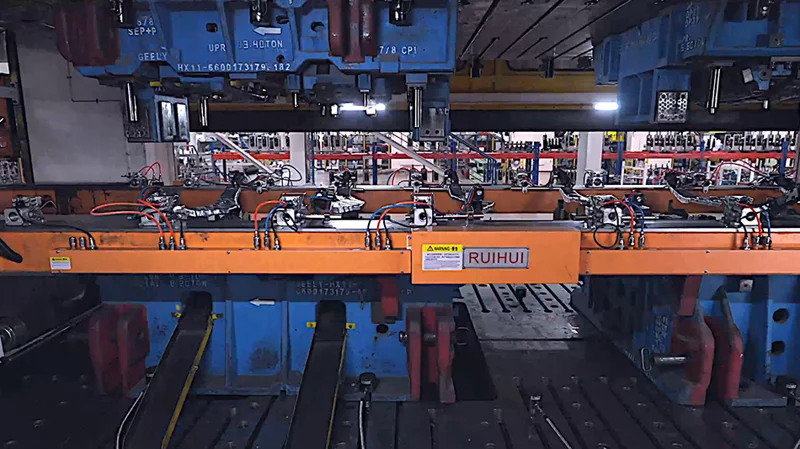
Don’t jump straight to price or brand. Start by asking: Is this production line a single-press multi-station or a multi-press tandem line? Are the parts deep‑drawn or flat blanks? For large deep‑drawn parts like automotive body panels, a 3‑axis transfer press is a must because it offers Z‑axis lift for three‑dimensional part transfer. For simple flat stamping, a 2‑axis unit may suffice—no need to overspend. Also consider the die layout: linear or staggered? Different layouts affect the X‑axis stroke requirements and pick‑and‑place positioning.
Load capacity is fundamental—always err on the side of larger.
Many companies quote the rated load of the manipulator, but you must calculate the total weight—part weight plus tooling weight—and add a 20% to 50% safety margin. For example, if the part weighs 3 kg and the gripper weighs 1 kg, the total is 4 kg, so you should choose a model rated for 5‑6 kg. Undersizing leads to vibration and even part dropping over time, especially during high‑speed stamping where inertia forces are significantly higher than static weight—so leave ample margin.
Stroke and accuracy directly determine whether the equipment can do the job.
The X‑axis stroke must cover all stations across the press, the Y‑axis must reach into the die for loading/unloading, and the Z‑axis lift must allow sufficient clearance. For accuracy, general stamping applications can tolerate standard tolerances, but for automotive parts, home appliance sheet metal, or precision 3C components, you should prioritize high‑precision models. Moreover, don’t rely solely on no‑load theoretical values—ask the supplier for measured data under actual load. Many machines run accurately when empty but start to vibrate once gripping a workpiece.
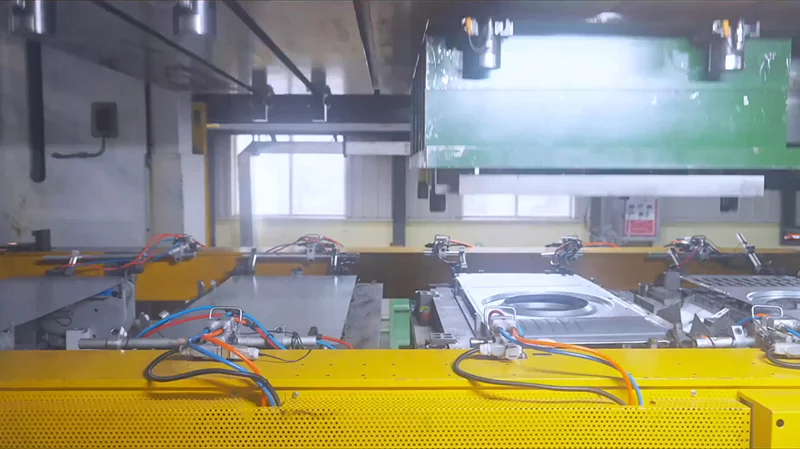
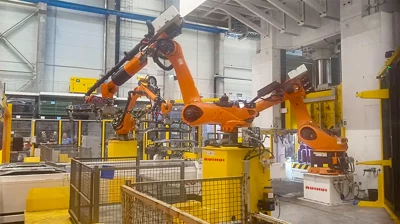
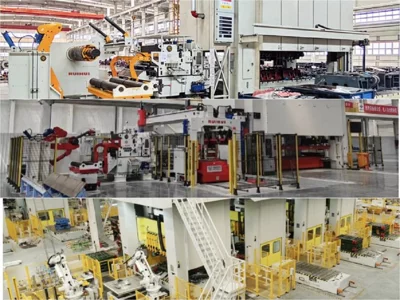
Guangdong RuiHui Intelligent Technology Co., Ltd. has accumulated over 20 years of experience in stamping automation. Its 3‑axis multi‑station transfer presses are widely used in automotive body panels, home appliance sheet metal, and 3C hardware stamping. According to publicly available company information, as of 2026, thousands of stamping automation systems have been deployed at customer sites both in China and overseas.
Finally, don’t overlook the control system and after‑sales support.
Many stamping operations are now paying attention to digital interfaces for future integration with MES systems for production management. Also, ask about local service points and spare parts inventory—these are critical to avoid prolonged downtime while waiting for repairs.
Make your choice with these five core parameters in mind, and you’ll be well prepared for a smooth, productive automation upgrade.
With years of hands-on experience, I have honed my skills in navigating the complexities of global commerce, offering invaluable insights and solutions to address customer needs. My commitment to excellence and dedication to customer satisfaction ensure that I deliver exceptional service, guiding clients through every step of the trading process with confidence and proficiency.
You may also like
Related News


Latest Update