

RUIHUI Intelligent Appears at Hot Forming Industry Symposium-Focusing on AI Applications and Hot Stamping Technology Frontiers
Share to : 


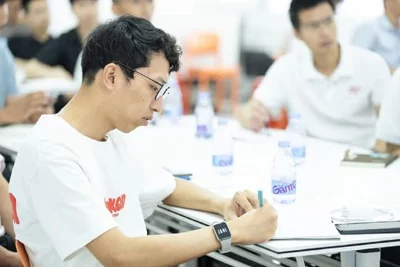
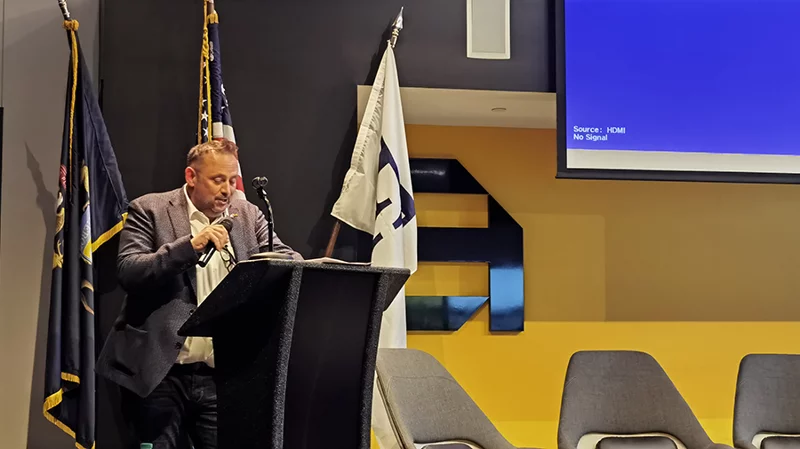
In September 2026, representatives of Guangdong RUIHUI Intelligent Technology Co., Ltd. were invited to attend a series of hot forming industry symposia, joining representatives from global automotive OEMs, Tier 1 suppliers, and equipment manufacturers to engage in in-depth exchanges on frontier topics including the implementation of AI in manufacturing, hot stamping of high-strength steel, laser welding, die design, and sensor monitoring.
The symposia covered multiple topics including AI application analysis, automotive industry trends, high-speed stamping technology, industrial equipment, laser welding processes, material performance, piercing processes, sensor systems, silicon carbide rollers, TemperBox technology, and welding simulation, presenting the latest research achievements and industrialization progress in the hot forming field.

Hot Stamped High-Strength Steel: Moving from 1500MPa toward 2400MPa
The material performance analysis session reviewed the strength evolution of hot stamped high-strength steel: from the early 2000MPa target to last year's achievement of 22MPa and HDIS reaching 24MPa, the industry's understanding of high-strength steel is being refreshed. The report noted that cold forming has hard limits in terms of strength, springback, and press force, while hot stamping (PHS) offers greater potential for lightweighting and crash performance, reaching up to 2400MPa. In the future, cold forming, hot stamping, and other forming processes will each occupy segmented application areas and compete over the long term.
In high-speed stamping technology, Gestamp shared its three core technical pillars: "shortened cycle time, laser cutting elimination, and optimized cooling." Its Hassmote system can achieve 5–7 second cycle times with 3–6 consecutive operations; large hot stamping adopts a two-stroke design and is being iterated to eliminate downstream laser cutting. Tests showed that all combinations achieved 1500MPa-class target mechanical properties and a fully martensitic structure, with hydrogen content below 0.15ppm and zero failures in 300-hour testing. Currently, the multi-station high-speed solution has been fully industrialized, the rapid forming solution is being deployed, and future exploration will focus on AI integration in key control nodes such as temperature management.
Laser Welding: Combi Beam and BrightLine Weld in the Spotlight
The laser welding process session focused on the welding challenges of Al-Si coated hot stamped steel. The traditional double-sided coating removal process is mature but requires offline pretreatment and is costly; the approach of using only filler wire without coating removal was verified as "not robust and inefficient," with welding speed only 50% of the Combi Beam solution.
The Combi Beam process, through a combination of "single-sided coating removal + dedicated nickel-containing filler wire," raises the aluminum content tolerance threshold to 1.2%, achieves 6 Sigma robustness, eliminates the need for offline pretreatment, doubles welding speed, and reduces costs by approximately 15%. This process has been validated in mass production by global OEMs.
Trumpf showcased its BrightLine Weld core-ring fiber technology and multi-focus technology. By independently adjusting the power of the central core and outer ring, heat input can be precisely controlled, the keyhole stabilized, and spatter reduced; the multi-focus technology splits a single beam into 4 static sub-spots, acting as a "stirring tool" to improve melt pool uniformity and solve insufficient filling issues under zero-gap or high wire feed speed conditions. The conference noted that welding speed is a "hidden killer" of mechanical properties, with an upper limit of 12 m/min when using filler wire; exceeding this leads to uneven hardness and hidden failures.
Dies and Processes: TemperBox, In-Die Piercing, and Cooling Design
TemperBox technology was shared by GEDIA. This technology adds an intermediate chamber with a non-contact water-cooled heat shield after full austenitization in hot stamping, enabling customized distribution of soft and hard zones on the part. The transition zone width can be adjusted between 30–70 mm, with narrower transition zones being more favored by mass production customers due to better consistency. This technology is compatible with monolithic blanks, laser-welded blanks, and tailor-rolled blanks, requires no special dies, and has been applied in mass-produced models at the Mercedes-Benz Georgia plant for 4 years.
In the in-die piercing session, Telos Global introduced an integrated process for completing piercing within the hot stamping die: blanking, forming, quenching, and in-die piercing are completed during die closure, eliminating the need for downstream laser cutting. Low-flow-rate piercing produces a smooth shear surface, minimizing burrs and edge crack risk. Piercing can be completed before the martensitic transformation at 400°C. Piercing solutions include hydraulic piercing, fixed piercing, and cam piercing, which must be selected based on part geometry and production cycle time. The core balancing principle of cooling system design is: keep the die cold, the punch warm, and the temperature curve stable.
Sensors and Monitoring: Infrared Temperature Measurement and AI Edge Computing
In the sensor systems session, an infrared sensor-based monitoring solution for hot stamping lines was introduced. The core selection rule is to prioritize short-wavelength sensitive sensors for optimal accuracy: 1–1.6 μm for hot blanks at the press entry, and 3–5 μm at the exit, with accuracy up to 1% of reading. The system supports 24/7 continuous operation, and some industrial-grade sensors have been running stably for over 20 years. Remote calibration kits eliminate the need for on-site engineer travel; customers simply connect the device and clean the lens to complete calibration within one working day.
Fraunhofer IZFP showcased 3MA micromagnetic testing and EMAT electromagnetic ultrasonic technology. 3MA can non-destructively evaluate material hardness, strength, coating thickness, and transition zone position and gradient within seconds; EMAT can detect weld defects, necking, and cracks without couplant, making it suitable for hot, coated, or contaminated surfaces. Combined, the two can cover full-process quality decisions from raw material to final part.
RUIHUI Perspective: Empowering Hot Forming Industry Upgrade with Intelligent Equipment
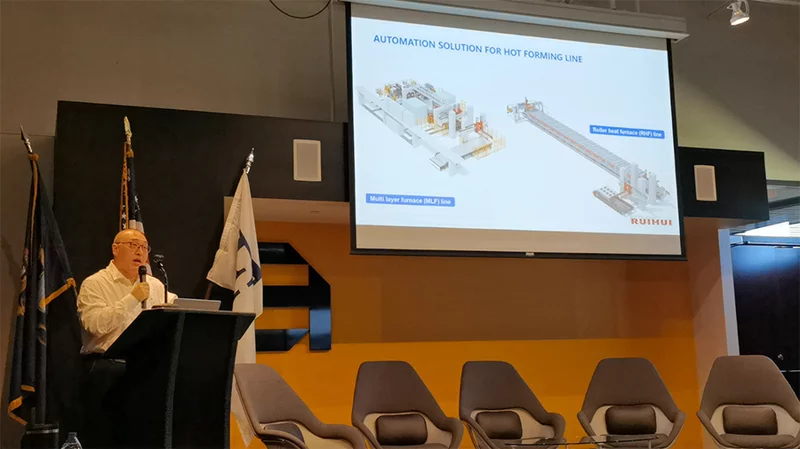
As a provider of intelligent equipment and automation solutions, Guangdong RUIHUI Intelligent Technology Co., Ltd. has long served the fields of automotive hot stamping, metal forming, and automated production lines. The directions covered in this symposium—including high-speed stamping, in-die piercing, laser welding, sensor monitoring, and AI quality control—are highly aligned with RUIHUI's business in automated stamping lines, die design, process optimization, and intelligent inspection.
During the conference, RUIHUI representatives held in-depth exchanges with multiple OEMs, suppliers, and technology partners on topics such as automation integration for hot stamping lines, welding process optimization, die cooling design, and AI quality prediction. Going forward, RUIHUI will continue to follow frontier technologies in the hot forming industry, working with upstream and downstream partners to drive the practical application of intelligent equipment and process innovation in automotive lightweighting and safety performance improvement.
With years of hands-on experience, I have honed my skills in navigating the complexities of global commerce, offering invaluable insights and solutions to address customer needs. My commitment to excellence and dedication to customer satisfaction ensure that I deliver exceptional service, guiding clients through every step of the trading process with confidence and proficiency.