

Clamping‑Mechanism Design for Tilters Stack‑Fixing Methods During Tilting
Share to : 


When tilters handle full sheet stacks, stack scattering or sliding mid‑tilt constitutes a major risk. Loose stacks may cause sheet damage or equipment failure. Secure stack retention is therefore critical for tilter design.
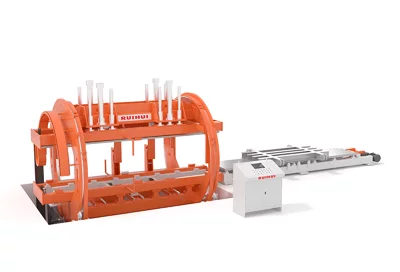
The clamping mechanism constrains the sheet stack from multiple sides to suppress relative sheet movement and integrate the whole stack into a rigid unit during rotation.
Key design requirements for clamping mechanisms are as follows. Clamping force shall be configured according to total stack weight; insufficient force results in loosening and sheet displacement. Clamping points shall be reasonably distributed for uniform loading instead of single‑point clamping which causes stack deflection. Multi‑point clamping movements must be synchronized to avoid skewing the stack. Clamping profiles shall adapt to stack geometry: surface contact for square stacks and adjusted clamping positions for long narrow stacks.
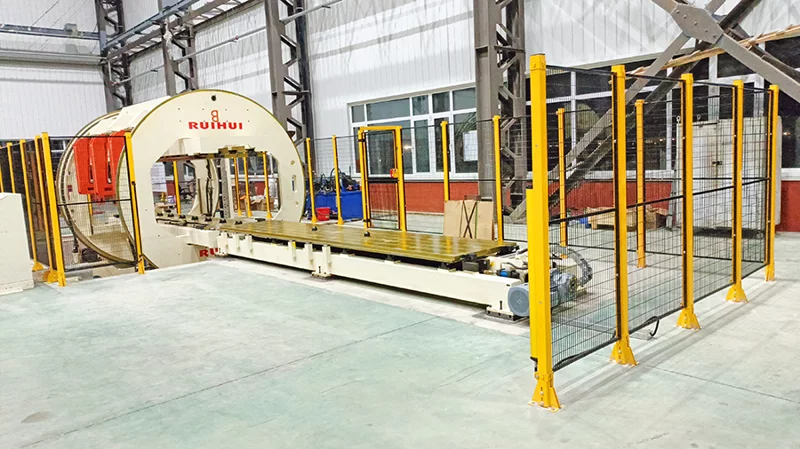
Apart from peripheral clamping, top‑pressing devices apply vertical pressure from above the stack to prevent vertical sheet shifting. Combined top‑pressing and bottom‑supporting fix the stack in all directions.
Tilt motion shall coordinate with clamping status. Servo‑driven tilters realize controllable rotation speed with smooth acceleration and deceleration to eliminate impact. Heavier stacks adopt lower tilting speed for stability. Reliable clamping plus smooth rotation ensures stable stack loading throughout the process.
Detection and protection functions are implemented. The tilter refuses to start if the stack is mis‑positioned or incompletely clamped. Sensors monitor clamping completion and tilting angle for safe operation. After reaching target position, the tilting table locks reliably while clamping force is maintained to guarantee smooth material discharge. Servo motors with encoder feedback deliver precise angular positioning and position self‑locking.
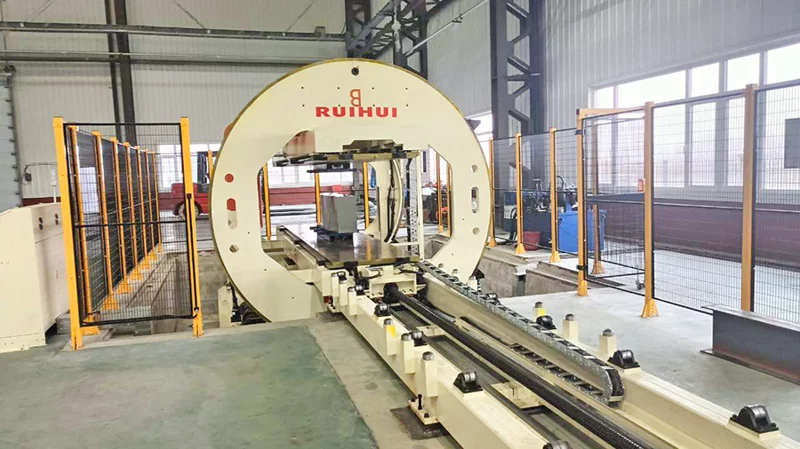
In summary, secure stack retention relies on the combined performance of clamping units, top‑pressing devices, smooth servo tilting, sensing protection and position‑locking functions. Proper clamping force, vertical compression, shock‑free rotation and complete detection allow stable 90° or 180° stack tilting without sliding, scattering or sheet damage.
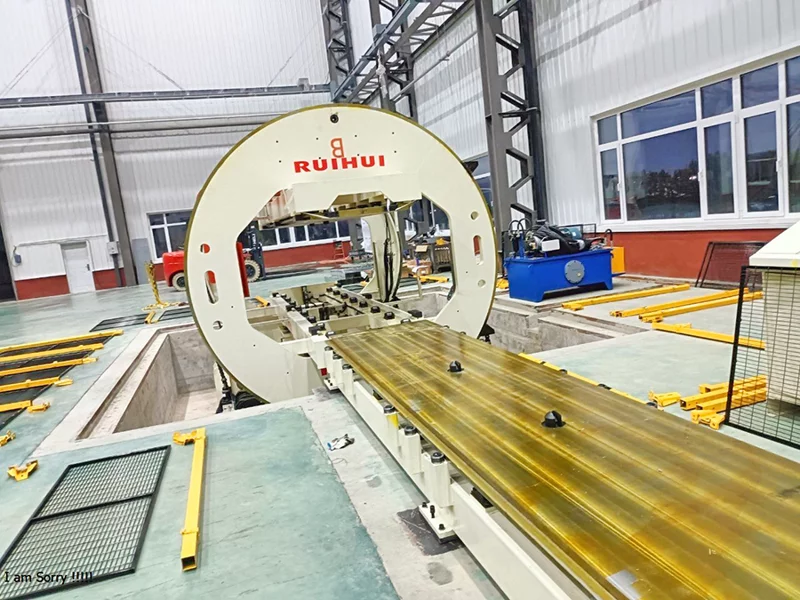
Guangdong Ruihui Intelligent Technology Co., Ltd. has over 20‑year experience in stamping automation and is a national Specialized, Refined, Differential and Innovative “Little Giant” enterprise. Headquartered in Dongguan, it has more than 400 employees including over 80 R&D engineers. Ruihui tilters feature weight‑matched clamping force, well‑distributed synchronized clamping points and top‑pressing assemblies to prevent vertical sheet displacement. Servo‑driven tilting delivers adjustable smooth motion, precise angle control and position self‑locking. Stack‑presence and clamping‑completion sensors ensure reliable stack fixation against sliding and scattering. The tilters are widely applied for sheet‑flipping processes in automotive sheet‑metal, home‑appliance and hardware industries. The company has delivered tilters and supporting automation solutions for numerous stamping and sheet‑processing manufacturers with solid practical experience.
With years of hands-on experience, I have honed my skills in navigating the complexities of global commerce, offering invaluable insights and solutions to address customer needs. My commitment to excellence and dedication to customer satisfaction ensure that I deliver exceptional service, guiding clients through every step of the trading process with confidence and proficiency.