

Continuous Production of 3C Hardware Parts – Application Scenarios for a Single Press with 3D Transfer Robot
Share to : 


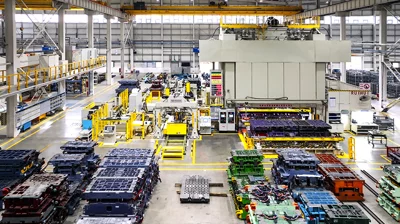
3C products are characterized by rapid iteration, a wide variety of models, and high precision. The number of small‑batch, high‑mix orders for stamped parts is constantly increasing, placing greater demands on production line flexibility. The solution of a single press paired with a 3D transfer robot is becoming increasingly popular in 3C hardware part manufacturing, primarily because it offers fast changeover, a small footprint, and suitability for continuous production of multiple product variants.
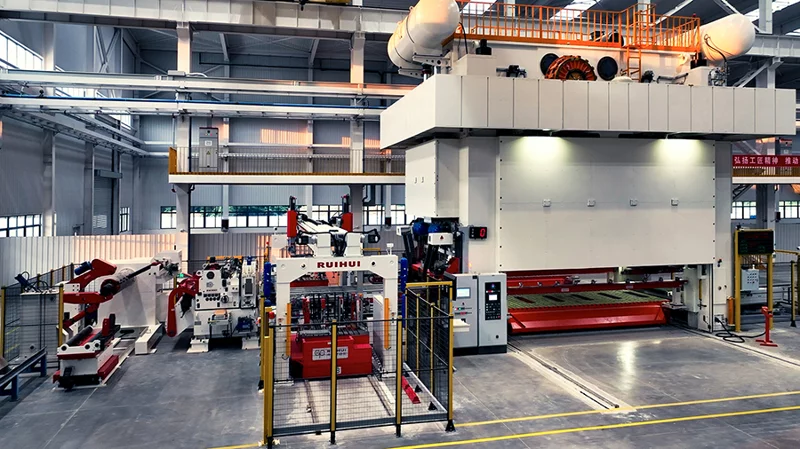
3C hardware parts share common traits: small dimensions, high precision, large total output, but frequent batch changes. Products like mobile phone frames, shielding covers for computers, and connector terminals often come in batches of a few thousand to tens of thousands of pieces, after which the line must switch to the next model. With a tandem line of multiple presses, each changeover requires adjusting several presses, changing multiple dies, and reprogramming robot trajectories—consuming half a day each time. The single‑press, multi‑station solution, however, requires changing dies and adjusting programs on only one press, significantly shortening changeover time. Given the fast renewal cycle of 3C products—you might be making one model of phone frame this month and a new version next month—the flexibility of the single‑press multi‑station line becomes a decisive advantage.
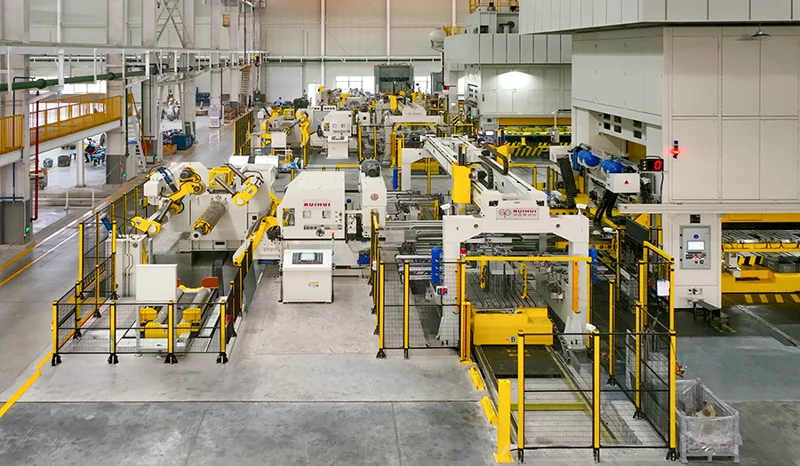
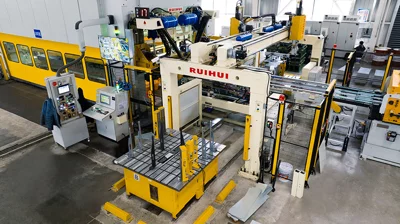
The 3D transfer robot is responsible for moving workpieces from one station to the next within the single press. It can move in three dimensions—forward/backward, left/right, and up/down—making it ideal for picking and placing parts between dies. Since 3C parts are small, the robot does not need a high load capacity, but it does demand extremely high positioning accuracy. A deviation of a few tenths of a millimeter might be negligible for large automotive panels, but on a mobile phone frame it would mean a reject. Phone frame tolerances are typically measured in hundredths of a millimeter; even a few such deviations can prevent the frame from fitting the screen. Therefore, in 3C applications, the repeat positioning accuracy of 3D transfer robots is usually one grade higher than that of conventional stamping robots. This high repeatability is achieved through precision guide rails, ball screws, servo systems, and a rigid machine structure.
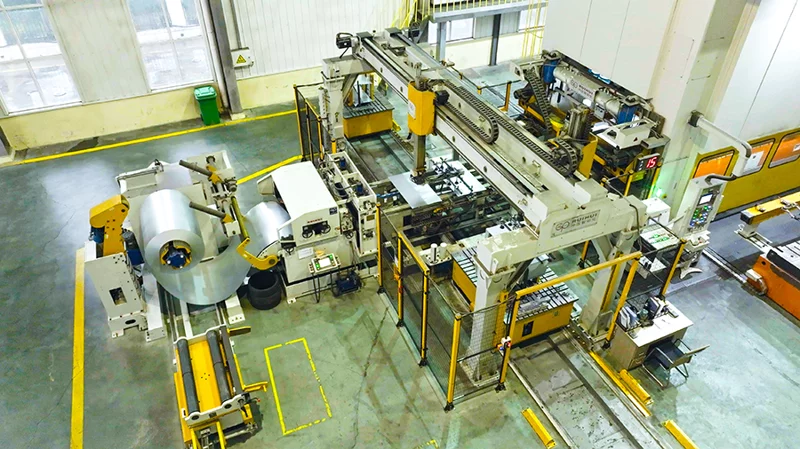
Another advantage of the single‑press multi‑station line in 3C production is its small footprint. A single‑press line occupies far less floor space than a tandem line. In 3C electronics factories, where workshop rent is often high and space is at a premium, every square meter saved counts. Moreover, since all operations are completed within one press, workpieces do not need to be transferred between multiple machines, reducing the risk of collisions and surface damage. 3C products have extremely strict appearance requirements—any slight scratch on a phone frame or laptop casing is unacceptable. In a tandem line, parts are transferred between different machines, which inherently increases the risk of scratches and bumps.
The control system of the 3D transfer robot is also a critical factor. Today's advanced 3D transfer robots support graphical programming and can store hundreds of product programs. During changeover, the operator simply recalls the appropriate program with one click, eliminating the need for technicians to re‑teach the robot. Graphical programming displays the robot's motion paths on a screen as graphics; operators can drag and drop icons to create programs without writing code. Given the wide variety of 3C models and frequent changeovers, this capability has significant practical value.
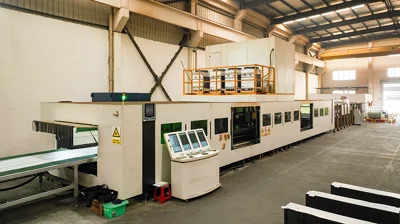
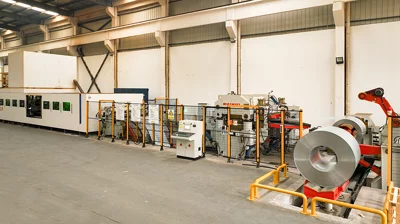
Guangdong RuiHui Intelligent Technology Co., Ltd. has mature applications of its 3D multi‑station transfer robots in the stamping of 3C hardware parts. Their equipment offers high load accuracy and flexible control systems, well‑suited to the small‑batch, high‑mix characteristics of 3C production, and can work with a single press to complete continuous multi‑stage stamping. RuiHui has accumulated extensive case studies in the 3C field, with in‑depth knowledge of stamping processes for various 3C hardware parts, including those used in mobile phones, computers, and communication equipment.
With years of hands-on experience, I have honed my skills in navigating the complexities of global commerce, offering invaluable insights and solutions to address customer needs. My commitment to excellence and dedication to customer satisfaction ensure that I deliver exceptional service, guiding clients through every step of the trading process with confidence and proficiency.