

Cut-to-Length Line Solution for Stamping Workshop Blanking
Share to : 


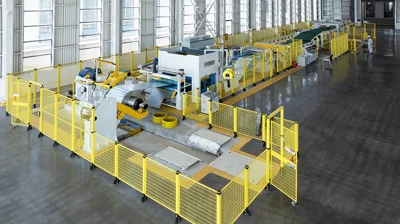
In stamping workshop production, the first operation is blanking—turning coils into individual sheets suitable for stamping. How well blanking is done directly affects the quality and efficiency of subsequent stamping. Many stamping workshops use cut-to-length lines for blanking, decoiling, leveling, and cutting coils to length into flat, cut-to-length sheets before sending them to stamping. So how does a cut-to-length line meet the blanking needs of a stamping workshop? In a complete solution, several steps must be coordinated.
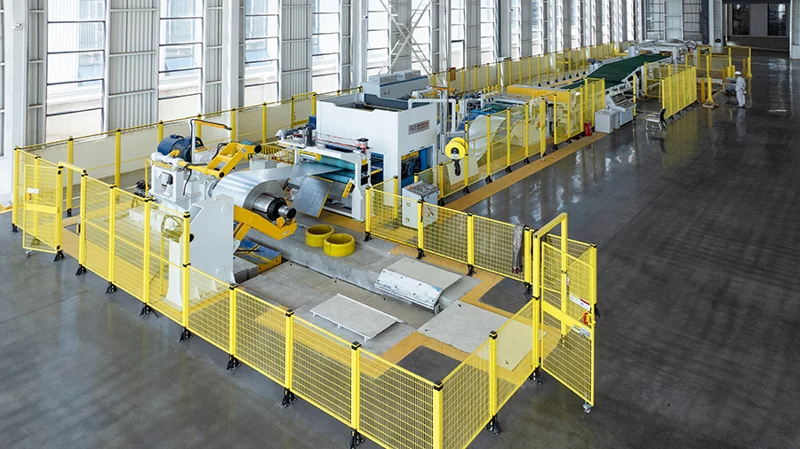
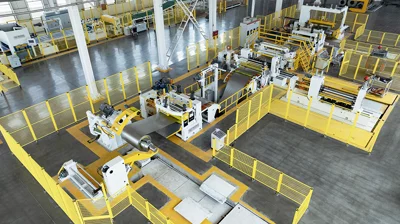
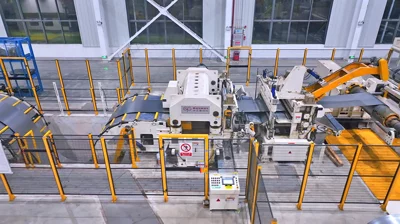
First, the position of the cut-to-length line in the stamping workshop. The cut-to-length line processes coils. From coil loading, decoiling, leveling, and cut-to-length shearing to sheet stacking, the line turns coils into neat stacks of cut-to-length sheets. These sheets then enter a destacker and are fed one by one to the press for stamping. The cut-to-length line is the core equipment in the stamping workshop's blanking stage. Its output and quality determine how much material and what quality of material the subsequent stamping process can handle.
Next, several key points of the solution. The first is cut-to-length accuracy. Sheets used for stamping must be dimensionally accurate. If sheet dimensions are out of tolerance, the die will not align during stamping, resulting in more rejects. The cut-to-length line's servo cut-to-length feeding uses encoder feedback of the fed length in real time, precisely controlling the cut length and ensuring good sheet dimensional consistency. This is the first quality gate in stamping blanking.
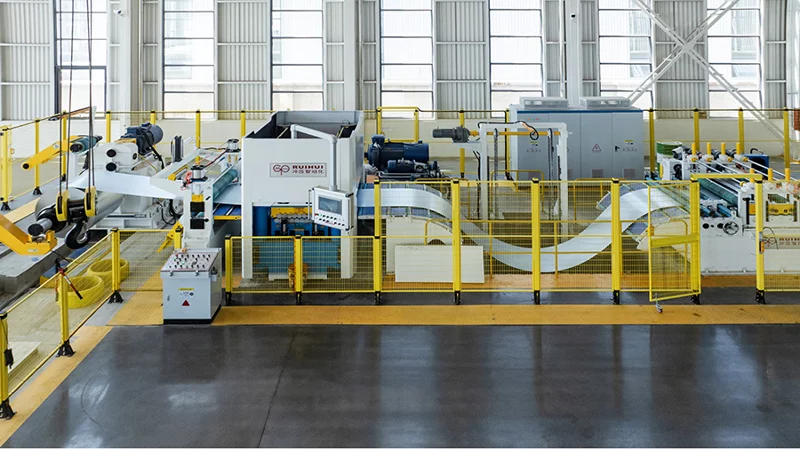
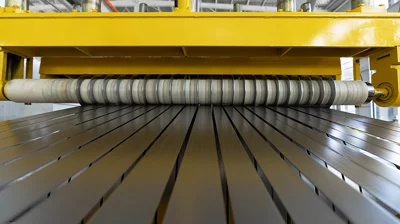
The second is sheet flatness. Coils contain internal stresses. If the strip is not flat, the cut sheets will be warped and cannot lie flat during stamping, causing stamped parts to be misaligned. The leveling mechanism of the cut-to-length line eliminates internal stresses. Once the strip is flat and straight, the cut sheets are flat, providing a basic guarantee for stamping quality.
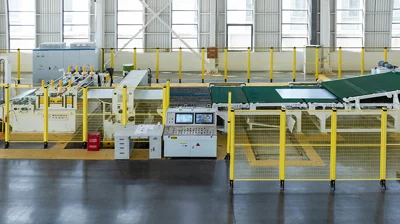
The third is neat stacking. Cut sheets must be stacked into neat piles for easy storage, transfer, and subsequent destacking and feeding. The cut-to-length line is equipped with automatic stacking, so sheets are stacked neatly and the stack shape is regular. This makes destacking easier and prevents uneven stacks from affecting feeding. The stacking method is selected according to sheet material and surface requirements: gravity palletizing for ordinary sheets, and magnetic palletizing for sheets with high surface requirements.
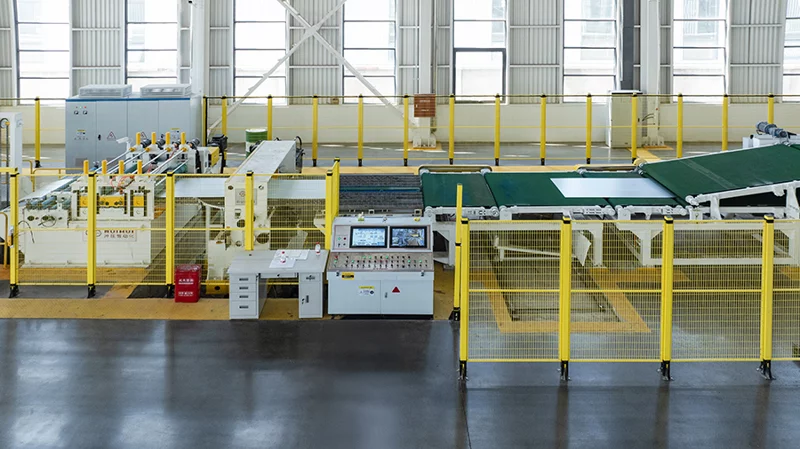
The fourth is efficiency matching. The shearing speed of the cut-to-length line must match the needs of the stamping workshop. If the stamping workshop consumes material quickly, the cut-to-length line must keep up; otherwise, the blanking stage becomes a bottleneck. Only when the cut-to-length line runs continuously with a stable shearing cycle can the stamping workshop be assured of an uninterrupted material supply.
The fifth is full-line automation. In the stamping blanking stage, the biggest concerns are excessive manual labor and poor coordination. The cut-to-length line is fully automated from coil loading to sheet stacking. Workers only need to operate when changing coils. The blanking stage requires fewer people and connects smoothly. Coil goes in, stacked sheets come out, and no single sheet needs to be manually handled in between.
There is also flexible changeover. Stamping workshops have many products and a mix of sheet specifications. A cut-to-length line with recipe management can store shearing parameters for different specifications as recipes, recalled directly when changing specifications. Changeover is fast, and multi-specification blanking is convenient.
Guangdong RuiHui Intelligent Technology Co., Ltd. has been deeply engaged in the field of stamping automation for over twenty years. It is a national "Specialized and Sophisticated" "Little Giant" enterprise, headquartered in Dongguan, with more than 400 employees and over 80 R&D personnel. RuiHui's cut-to-length lines are maturely applied in the blanking stage of stamping workshops. They provide complete line solutions from coil loading, decoiling, leveling, and servo cut-to-length shearing to automatic stacking. With high cut-to-length accuracy, flat sheets, and neat stacking, and equipped with automatic loading trolleys and a recipe management system, they integrate smoothly with the destacking and feeding stages of stamping workshops. They are widely used in automotive, home appliance, hardware, and other stamping industries. RuiHui has nearly 5,000 sets of equipment operating at customer sites both domestically and internationally, serving well-known OEMs and first-tier suppliers such as BYD, Geely, Volkswagen, Tesla, BMW, Mercedes-Benz, Honda, and Land Rover Jaguar, with rich experience in blanking line integration.
With years of hands-on experience, I have honed my skills in navigating the complexities of global commerce, offering invaluable insights and solutions to address customer needs. My commitment to excellence and dedication to customer satisfaction ensure that I deliver exceptional service, guiding clients through every step of the trading process with confidence and proficiency.
You may also like
Related News
Latest Update