

Laser Blanking Line for Hardware Parts Sheet Metal Processing – A Case Study
Share to : 


The hardware parts industry is characterized by a wide variety of products, complex shapes, and order batches of varying sizes. The traditional die‑based blanking approach struggles with small‑batch, high‑mix orders—you can't justify the die cost for every new part, but without a die you simply can't produce the part. The laser blanking line resolves this dilemma perfectly, allowing hardware parts manufacturers to accept small‑batch orders without bearing the heavy burden of die costs.
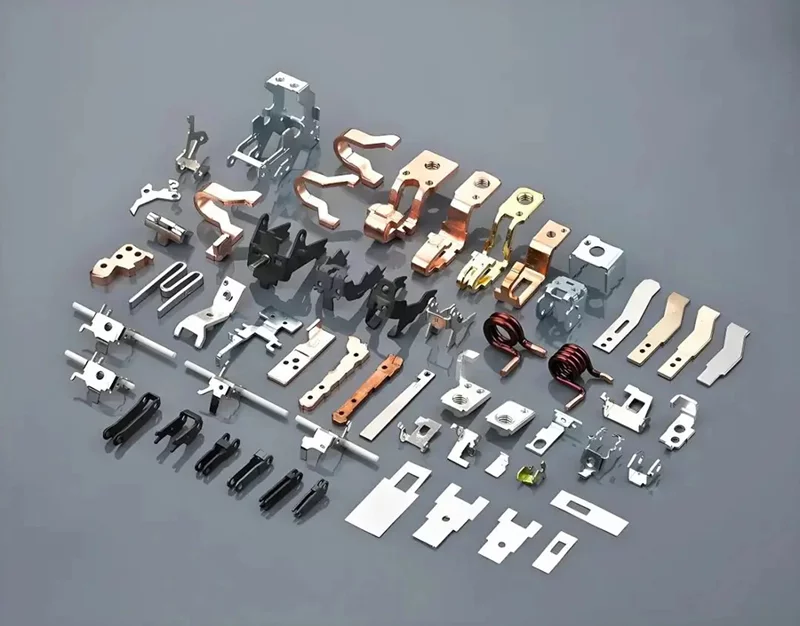
Take a real‑world example. A manufacturer in Kunshan, specializing in automotive parts such as various brackets and connectors—all typical hardware components—faced exactly this challenge. They had many product variants, each with relatively small order quantities, yet customers demanded high dimensional accuracy and surface quality. Previously, they used die stamping for blanking. Every time they switched to a new product, they had to build a new die—costly and time‑consuming. Worse, some parts with complex geometries simply couldn't be formed with dies, so they had to outsource those jobs, losing control over both cost and delivery. A typical stamping die for hardware parts could cost anywhere from tens of thousands to hundreds of thousands of yuan, depending on complexity, yet a given product might only generate a few thousand pieces of orders per year. The die cost per part was simply too high to make economic sense. But they couldn't turn down their long‑standing customers either.
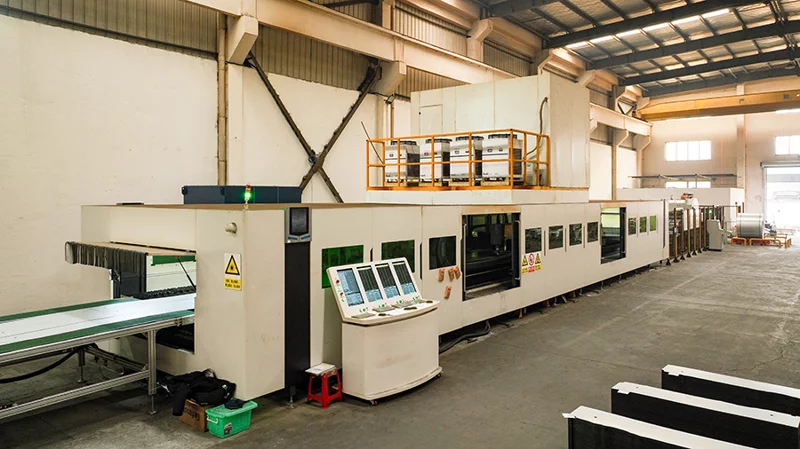
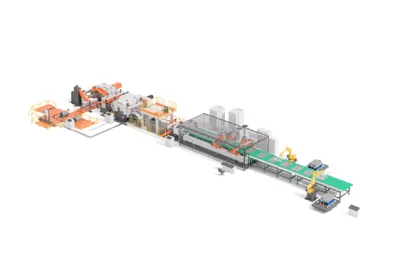
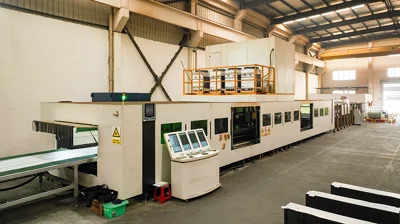
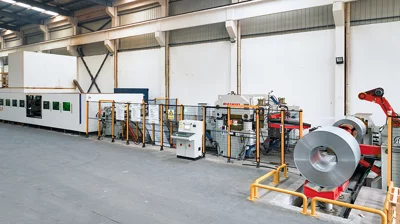
After they installed a laser blanking line, everything changed. From coil decoiling and leveling to laser cutting and finished‑part stacking, the entire process runs automatically. When switching products, the operator simply calls up the corresponding cutting program on the computer—changeover takes just minutes. Previously, building a new die would take ten days to half a month; now, programming a new part takes only a few hours, dramatically speeding up response to customer orders. If a customer adds an urgent order or changes specifications, the line can be adjusted on the fly without waiting for a new die, significantly shortening delivery lead times. In the past, outsourcing required accounting for transport time and the subcontractor's production schedule, meaning orders had to be placed at least two weeks in advance. Now, with their own laser blanking line, they can deliver within three to five days after receiving an order, boosting both competitiveness and customer satisfaction.
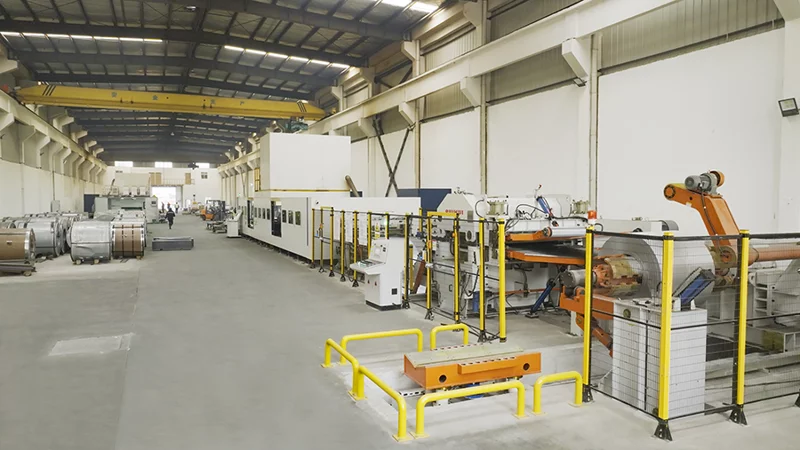
Material utilization also improved. Laser cutting enables tight nesting, allowing multiple parts to be arranged on a single sheet to minimize scrap. Hardware parts are generally small—on a sheet over a meter wide, dozens or even hundreds of parts can be nested. How they are arranged directly affects material utilization. The nesting software on the laser blanking line has an automatic nesting function that calculates the optimal layout, reducing the gap between parts to a minimum. For complex‑shaped but small hardware parts, laser blanking typically achieves significantly higher material utilization than die stamping. The savings on material, accumulated over time, are substantial—especially for expensive materials like stainless steel and copper, where even a few percentage points in utilization improvement make a big difference.
In terms of accuracy, laser blanking offers even more clear advantages. Laser cutting is a non‑contact process, producing high‑quality cut edges without the burrs common in die stamping. Many hardware parts undergo subsequent welding and assembly operations; smoother cut edges mean less post‑processing, smoother assembly, and better weld quality.
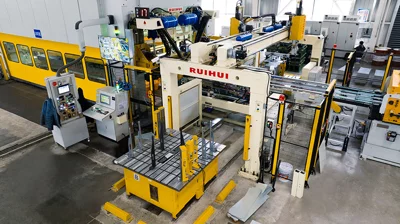
Guangdong RuiHui Intelligent Technology Co., Ltd. provides laser blanking line solutions within its stamping automation offerings, covering a wide range of sheet metal processing applications—from automotive parts to home‑appliance sheet metal and 3C hardware—with configurations tailored to each scenario. RuiHui has a wealth of real‑world cases in laser blanking for hardware parts, with mature process parameters for different materials and thicknesses, helping customers make a swift transition from die‑based blanking to laser blanking.
With years of hands-on experience, I have honed my skills in navigating the complexities of global commerce, offering invaluable insights and solutions to address customer needs. My commitment to excellence and dedication to customer satisfaction ensure that I deliver exceptional service, guiding clients through every step of the trading process with confidence and proficiency.