

Laser Blanking Line Delivers High Cutting Speed and Production Efficiency
Share to : 


Traditional stamping blanking has always depended on dies. A single die takes a long lead time from design to production and involves a significant investment. Moreover, a die is dedicated to one product shape—change the product, and you have to change the die. In recent years, laser blanking lines have become increasingly popular in the stamping industry, for one core reason: they cut fast and are extremely flexible.
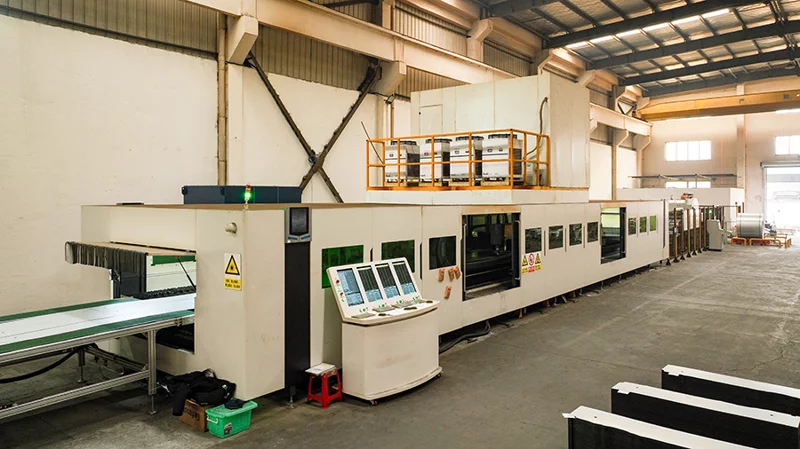
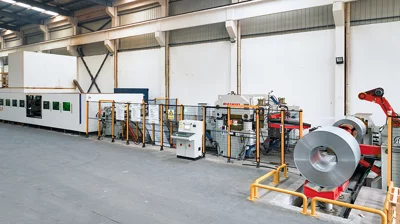
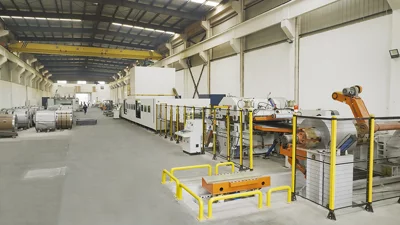
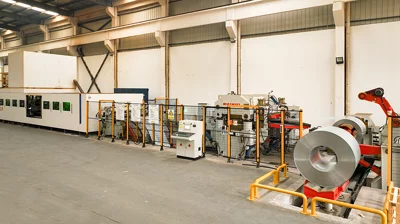
The working principle of a laser blanking line is fundamentally different from die‑based blanking. After the coil is uncoiled and leveled, the laser head cuts the sheet according to a program pre‑loaded in the computer, producing the required shapes, while finished parts and scrap are automatically separated and stacked. The entire process requires no dies—it relies entirely on software programming. The laser cutting principle uses a high‑power‑density laser beam focused on the material surface, instantly melting or vaporizing the material, while an assist gas blows away the molten residue to form the kerf. The movement path of the laser head is completely controlled by the program, allowing any shape to be cut without limitation.
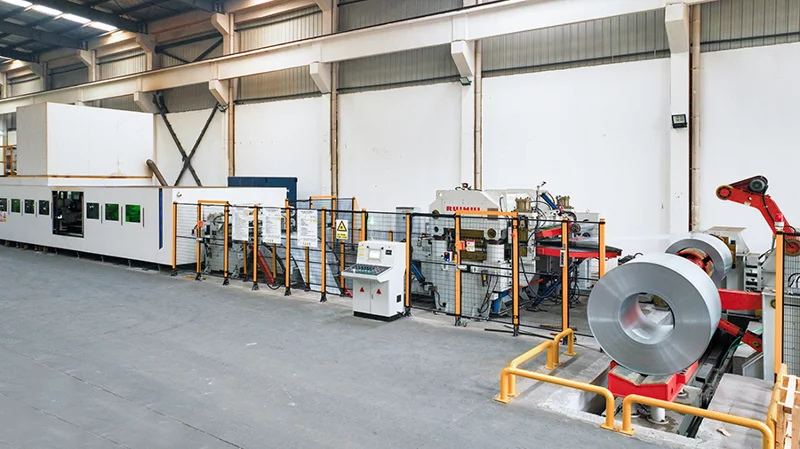
In terms of cutting speed, laser blanking lines have already reached levels comparable to traditional stamping blanking. Multi‑head, multi‑station step‑feed laser blanking lines can achieve processing efficiencies of over 90% of mechanical stamping blanking lines, and some better‑equipped models can even approach or match the efficiency of mechanical stamping blanking. With dual‑head synchronous cutting technology, the loading and unloading processes are seamlessly connected, further boosting production efficiency. Dual‑head synchronization means two laser heads work simultaneously—as soon as one finishes cutting a zone, the other immediately takes over the next zone, eliminating idle gaps. The sheet moves forward continuously while the laser heads cut on the fly, perfectly matching cutting speed with feed speed, so the entire line runs at full capacity at all times.
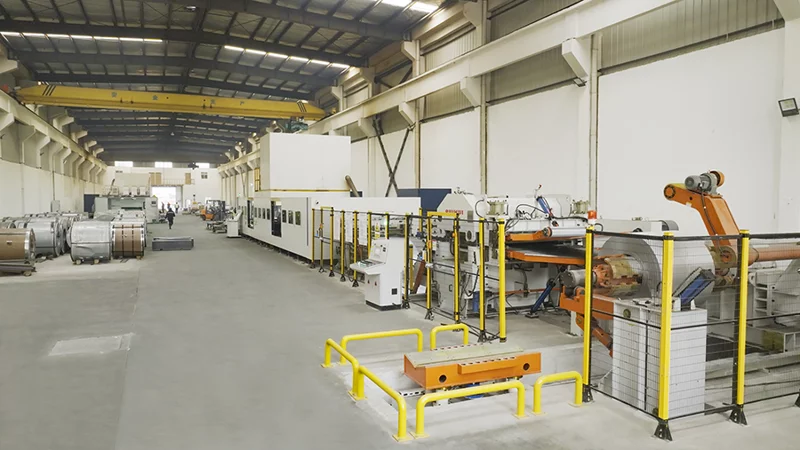
Another efficiency advantage of laser cutting is changeover time. In traditional die‑based blanking, switching products requires changing the die—a process that takes at least one or two hours, and for large dies, possibly half a day. Dies are heavy and bulky; changeover requires overhead cranes and re‑positioning the die on the press. With a laser blanking line, changing products simply means calling up the corresponding cutting program; the equipment automatically adjusts cutting parameters, and production of the new product can begin within minutes. For factories with many order batches and small lot sizes, the value of this capability is direct—less machine downtime means more actual production time. A batch of a few thousand parts can be produced in half a day on a laser blanking line, with only minutes spent on changeover; the next day, another order can be run, achieving high equipment utilization.
Laser blanking lines also have a natural advantage when handling complex shapes. No matter the irregular shape, as long as you can draw it in a CAD file, the system can cut it—there's no need to worry about whether a die can be made or how difficult it would be to repair. Die‑based blanking for irregular shapes requires extremely complex die structures, leading to high die costs, long manufacturing cycles, and difficult maintenance. Laser blanking has none of these issues—just import the drawing and start cutting. For irregularly shaped parts in automotive body panels or home‑appliance casings, laser blanking is often more convenient than opening a die. Moreover, laser cutting produces high‑quality cut edges that are smooth and burr‑free, eliminating the need for post‑processing.
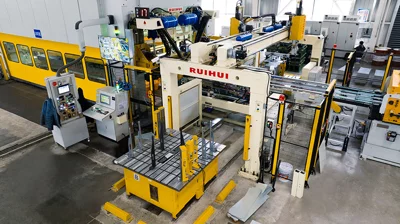
When providing complete stamping automation line solutions, Guangdong RuiHui Intelligent Technology Co., Ltd. includes the laser blanking line as an important front‑end option. RuiHui evaluates the customer's product mix, batch sizes, and material types to help them determine which blanking method is more suitable, without blindly promoting any single solution. For scenarios with a wide variety of products, complex shapes, and moderate batch sizes, the laser blanking line is a highly competitive choice.
With years of hands-on experience, I have honed my skills in navigating the complexities of global commerce, offering invaluable insights and solutions to address customer needs. My commitment to excellence and dedication to customer satisfaction ensure that I deliver exceptional service, guiding clients through every step of the trading process with confidence and proficiency.