

Laser Blanking Line Solution for Cutting New Energy Battery Enclosure Sheets
Share to : 


Sheet cutting for new energy battery enclosures follows a different approach from ordinary sheet metal parts. Materials used for battery enclosures include nickel-plated steel strip, aluminum strip, and pre-nickel-plated steel strip, with thicknesses generally between 0.3 and 1.0 mm. These materials have two characteristics: first, extremely high surface quality requirements—battery enclosures are sealing components, and any scratch, pressure mark, or burr on the surface can affect the sealing performance and corrosion resistance of the enclosure; second, diverse cutting shapes—cylindrical battery enclosures, prismatic battery enclosures, and blade battery enclosures all have different unfolded shapes, and battery models iterate quickly. Today you cut one model, and tomorrow you may need to switch to a new shape.
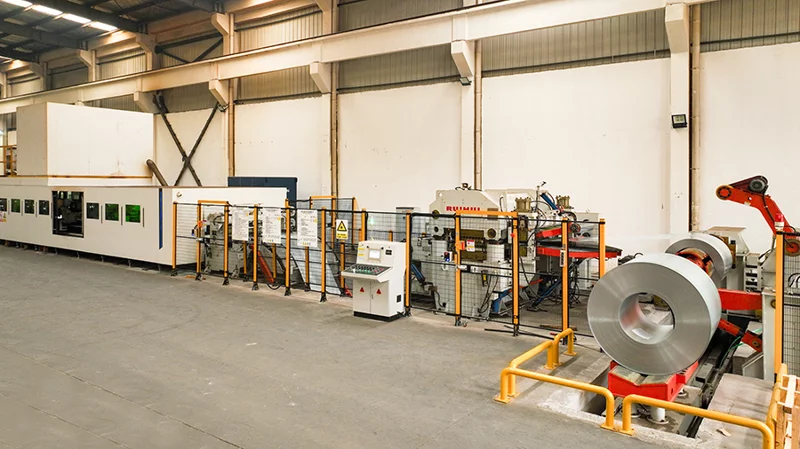
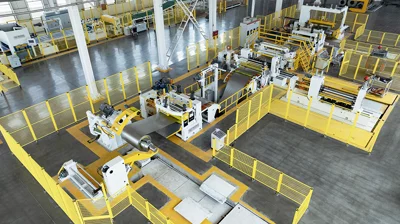
Laser blanking lines for battery enclosure sheet cutting match these needs precisely. No dies are required—when changing products, simply import the new drawing, eliminating the time and cost of making dies. Battery models update quickly, and laser blanking lines easily keep pace with product iteration. In terms of cutting accuracy, the positioning accuracy of a laser blanking line can reach ±0.05 mm, and the cut battery enclosure blanks have excellent dimensional consistency. During subsequent stamping, material flow is more uniform, ensuring consistent wall thickness of the enclosure.
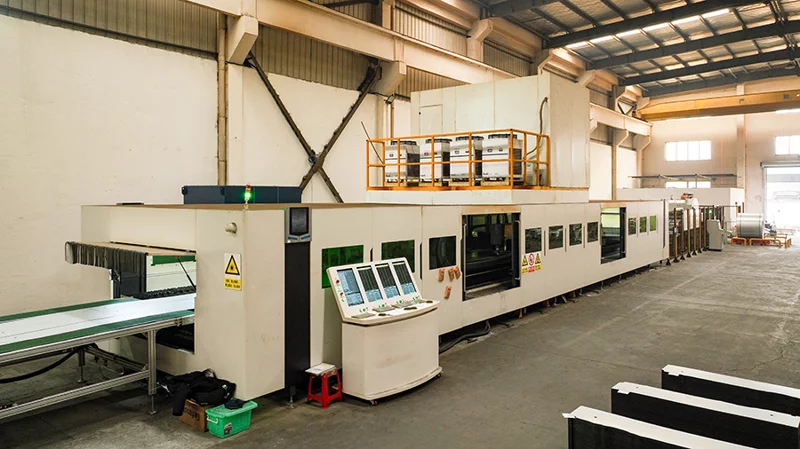
Battery enclosure material cutting has several special requirements that must be considered during solution configuration.
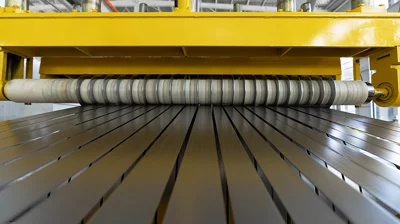
The first is cut cross-section quality. The nickel layer on nickel-plated steel strip must remain intact at the cut edge—no tearing or peeling. Laser cutting has a small heat-affected zone and a narrow kerf, causing less damage to the nickel layer than mechanical shearing. However, laser power and cutting speed must be properly matched. Too much power will burn off the nickel layer; too little power will not cut through. When cutting aluminum strip, care must be taken to prevent aluminum chips from adhering to the kerf. The pressure and type of assist gas must be correctly selected.
The second is surface protection. Battery enclosure materials on a laser blanking line—from decoiling to cutting to unloading—must not be scratched at any point. The expansion/contraction structure of the decoiler, the roll surfaces of the leveler, the pinch rolls of the feeding mechanism, and the support plates in the cutting area—all parts that contact the material—must undergo surface protection treatment. Some laser blanking lines add a soft padding layer to the conveyor belt to prevent scratching the bottom of the sheet. Smoke and debris generated during cutting must be extracted promptly and must not fall onto the sheet surface.
The third is matching cutting efficiency with cycle time. Battery enclosure production volumes are huge—a single battery production line may use several million or even tens of millions of enclosures per year. The cutting speed of the laser blanking line must keep up with the cycle time of the downstream stamping line. For nickel-plated steel strip around 0.5 mm thick, fiber laser cutting speed can be very fast. Combined with multiple cutting heads working simultaneously or dynamic follow-up cutting, the entire line's output cycle can meet the demands of large-scale production.
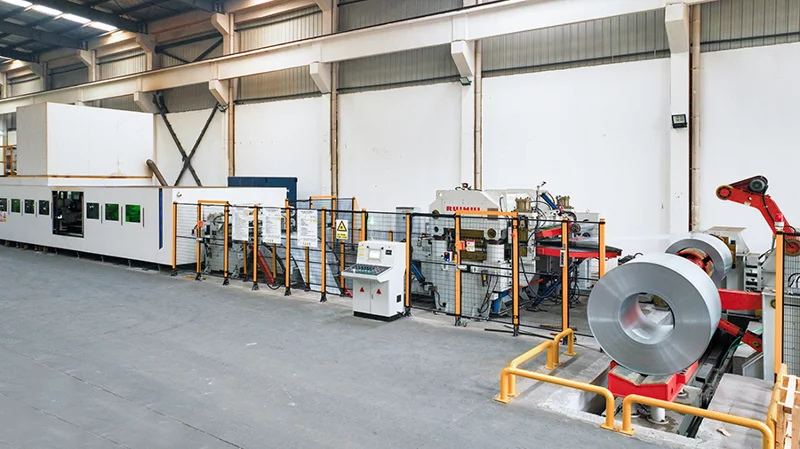
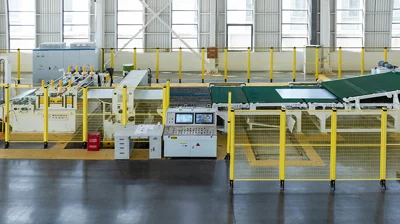
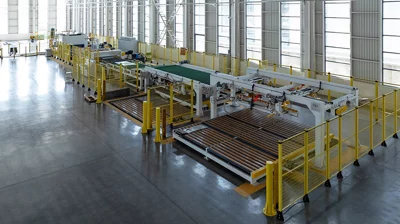
The fourth is automatic loading/unloading and stacking. After battery enclosure blanks are cut, they must be neatly stacked and sent to the stamping line for forming. Laser blanking lines are equipped with automatic unloading and stacking devices. The cut blanks are conveyed out and stacked in preset quantities by the stacking device. Stacking neatness and surface protection must be ensured to prevent blanks from being bumped during stacking. Battery enclosure materials themselves are magnetic. If magnetic stacking is used at the stacking stage, magnetic transfer provides better surface protection.
In battery enclosure sheet cutting scenarios, the most direct improvement from replacing manual labor with automation is surface quality and consistency. Manual loading, unloading, and handling—hand contact with the material, friction against the worktable, and collisions during stacking—can all cause surface damage. Laser blanking lines are fully automated, with the material never touched by human hands, resulting in stable surface quality. Cutting accuracy consistency is also far higher than manual work—every blank has the same dimensions, and the subsequently stamped enclosure has uniform wall thickness, ensuring sealing performance. At the same time, battery enclosure materials are thin with sharp edges, and manual handling easily causes cuts. After automation, workers are kept away from these risks.
Guangdong RuiHui Intelligent Technology Co., Ltd. has been deeply engaged in the field of stamping automation for over twenty years. It is a national "Specialized and Sophisticated" "Little Giant" enterprise, headquartered in Dongguan, with more than 400 employees and over 80 R&D personnel. In the field of laser blanking lines, RuiHui offers cutting solutions specifically for new energy battery enclosure sheets, with targeted configurations in cutting parameter optimization, surface protection, and automatic stacking, meeting the requirements of battery enclosure materials for cutting accuracy and surface quality. RuiHui has nearly 5,000 sets of equipment operating at customer sites both domestically and internationally, serving well-known OEMs and first-tier suppliers such as BYD, Geely, Volkswagen, Tesla, BMW, Mercedes-Benz, Honda, and Land Rover Jaguar.
With years of hands-on experience, I have honed my skills in navigating the complexities of global commerce, offering invaluable insights and solutions to address customer needs. My commitment to excellence and dedication to customer satisfaction ensure that I deliver exceptional service, guiding clients through every step of the trading process with confidence and proficiency.
You may also like
Related News
Latest Update