

What to Consider When Selecting a Laser Blanking Line
Share to : 


Laser blanking lines have become increasingly popular in the stamping industry in recent years. They eliminate the need for dies, offer fast changeovers, and deliver excellent cutting quality, solving many problems that traditional blanking cannot handle. However, a laser blanking line is complete line equipment, and there are many factors to consider during selection. Poor choices can lead to wasted money and unnecessary detours. Here are the key points to focus on when selecting a laser blanking line.
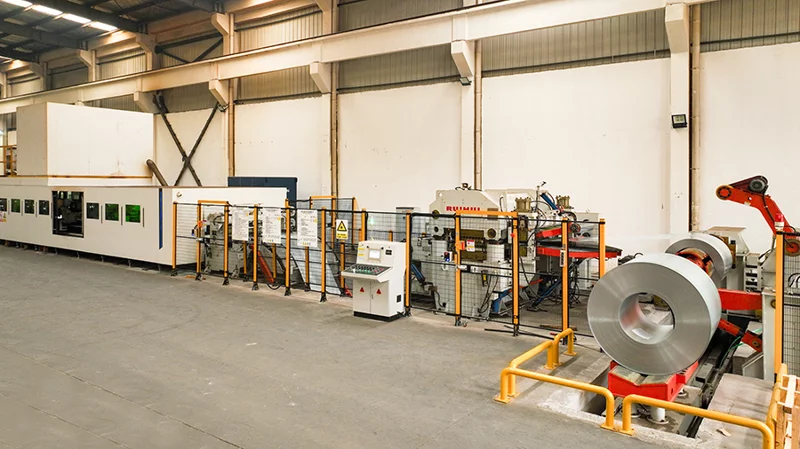
First, consider laser power and cutting capability. The core of a laser blanking line is the laser source, and its power directly determines how thick a sheet can be cut and how fast. The materials and thickness ranges you commonly process determine the laser power you need. Insufficient power means thick sheets cannot be cut, or cutting is slow and quality suffers. Excessively high power not only wastes cost but can also cause overburning when cutting thin sheets. Before selecting, make a list of the sheets you commonly process, including the thickest and thinnest, and have the manufacturer configure the power based on this range—this is the most reliable approach.
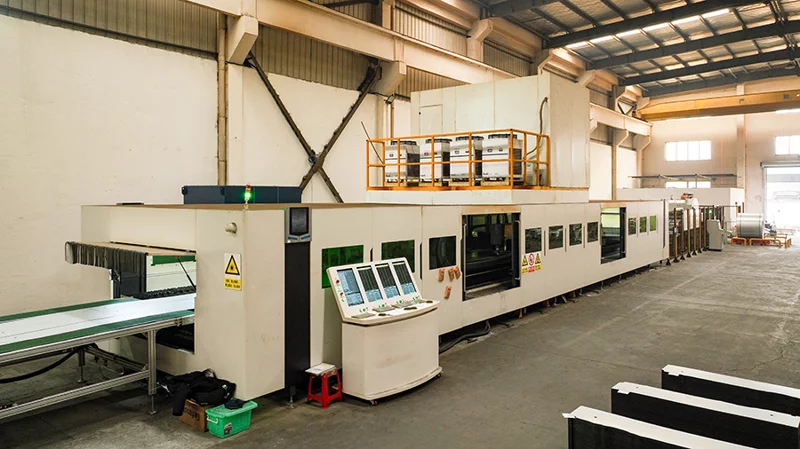
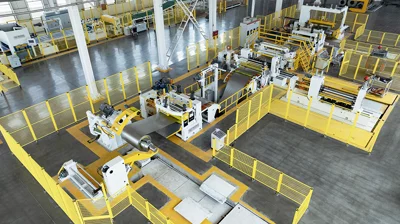
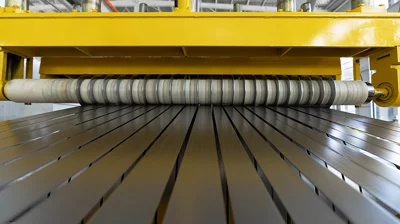
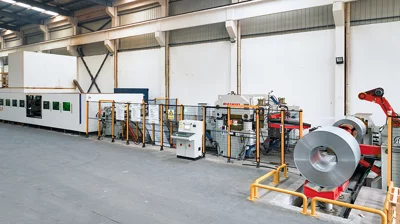
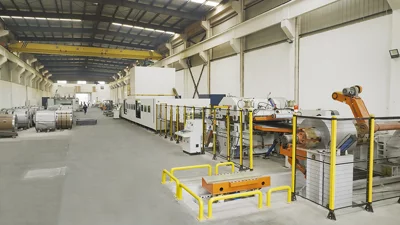
Second, consider the degree of line automation. A laser blanking line is not simply a laser cutting machine—it is a complete line with many stages, from decoiling, leveling, and feeding to cutting, sorting, and stacking. The level of automation and the smoothness of transitions between stages directly affect actual production efficiency. Some lines still require manual handling between stages, which means they are not truly integrated blanking lines. When selecting, ask clearly: Is coil loading automatic? Is the strip automatically leveled and fed? Are cut parts automatically sorted and stacked? Can the entire line run continuously?
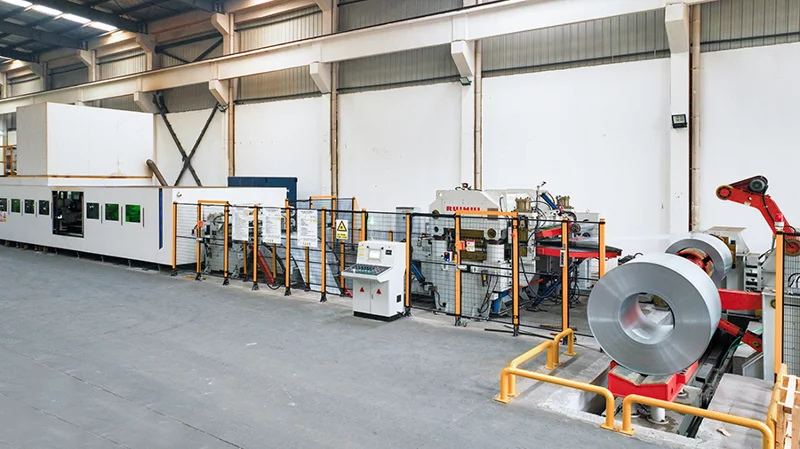
Third, consider feeding accuracy. The positional accuracy of laser cutting depends largely on the accuracy of the feeding mechanism. If the feed pitch is inaccurate, the cut parts will be mispositioned, and dimensional consistency will suffer. A servo feeding mechanism with encoder feedback is standard, and the feeding accuracy must meet your part tolerance requirements.
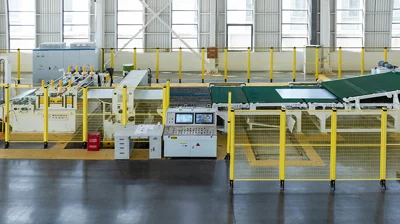
Fourth, consider the control system and nesting capability. The greatest advantage of a laser blanking line is flexibility—it can handle high-mix, low-volume production. This advantage relies on the control system and nesting software. Can it nest flexibly and automatically? Can it change programs quickly? Can it store multiple product recipes? These factors directly determine changeover speed and material savings. The ease of operation of the control system should also be examined—a system that is intuitive for workers will yield higher efficiency.
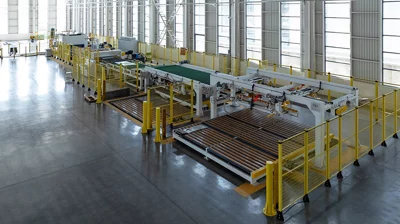
Fifth, consider sorting and stacking support. How cut parts are collected is an easily overlooked aspect of laser blanking lines. Parts exiting the cutting zone must be automatically sorted and stacked, matching the cutting speed—you cannot cut fast but collect slowly, creating a bottleneck at the collection stage. Some lines are equipped with magnetic stacking to protect part surfaces, while others use turnover mechanisms to adjust part orientation. These supporting features should be determined based on your part characteristics.
Finally, the selection approach. The core of selecting a laser blanking line is "matching"—power matching the sheet, accuracy matching the tolerance, speed matching the cycle time, and supporting equipment matching the parts. Think clearly about your product situation, output requirements, and commonly used materials, and communicate fully with a manufacturer experienced in complete line integration. Let them propose a targeted complete line solution—this is far more reliable than piecing together equipment yourself.
Guangdong RuiHui Intelligent Technology Co., Ltd. has been deeply engaged in the field of stamping automation for over twenty years. It is a national "Specialized and Sophisticated" "Little Giant" enterprise, headquartered in Dongguan, with more than 400 employees and over 80 R&D personnel. RuiHui's laser blanking lines provide complete line integration from decoiling, leveling, and servo feeding to laser cutting, sorting, and stacking. Laser power, feeding accuracy, and cutting format can all be customized according to the customer's sheet material and thickness range. The control system supports flexible nesting and rapid program changes, making it suitable for high-mix flexible production. RuiHui has laser blanking line applications in the automotive parts, hardware components, and other industries. With nearly 5,000 sets of equipment operating at customer sites both domestically and internationally, serving well-known OEMs and first-tier suppliers such as BYD, Geely, Volkswagen, Tesla, BMW, Mercedes-Benz, Honda, and Land Rover Jaguar, RuiHui has rich experience in complete line integration.
With years of hands-on experience, I have honed my skills in navigating the complexities of global commerce, offering invaluable insights and solutions to address customer needs. My commitment to excellence and dedication to customer satisfaction ensure that I deliver exceptional service, guiding clients through every step of the trading process with confidence and proficiency.
You may also like
Related News
Latest Update