

Palletizer Used with a Blanking Line Process Description from Coil Loading to Sheet Stacking
Share to : 


Many sheet metal processing plants know what a palletizer does—it automatically collects and stacks sheets. But some people are not clear about which line the palletizer is installed on, what equipment it works with, and how the entire line's process flows. Here is a complete walkthrough of the palletizer paired with a blanking line, from coil loading to sheet stacking, explaining how the whole line operates.
First, clarify one concept: the palletizer is used with a blanking line, not a stamping line. The task of a blanking line is to turn coils into individual sheets and then stack them into piles. The stamping line is the process after the blanking line, stamping the sheets into products. Therefore, the palletizer is key equipment at the end of the blanking line and has nothing to do with the stamping line.
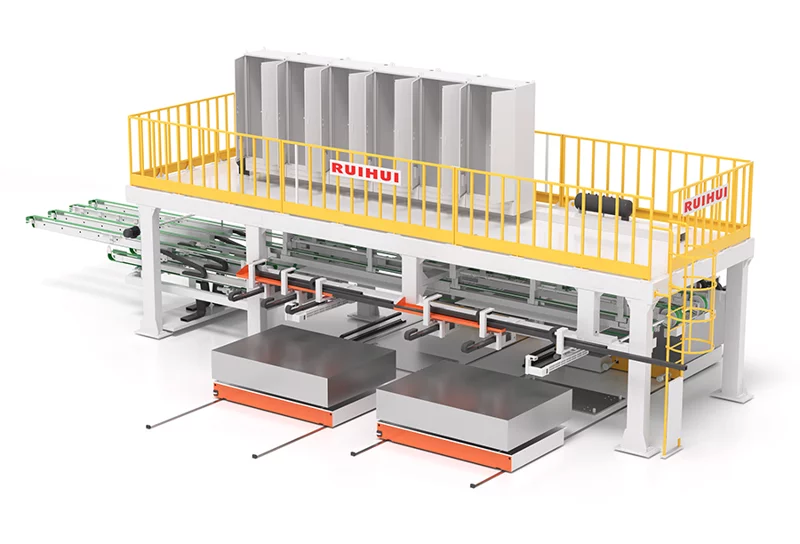
The complete process of a blanking line is roughly as follows:
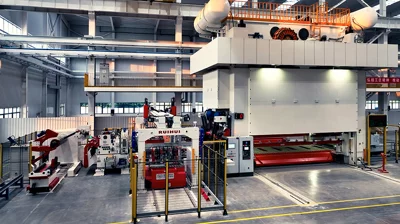
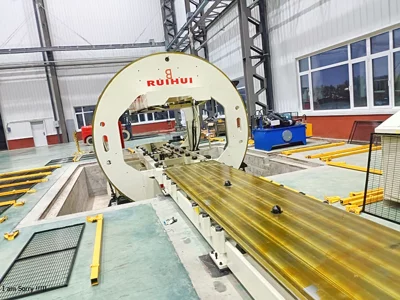
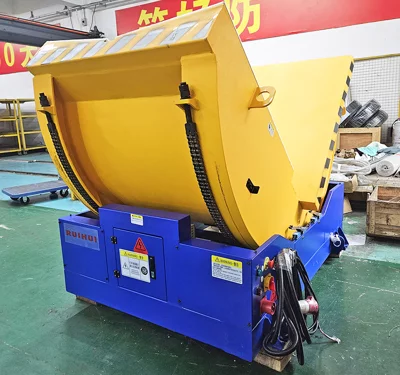
The first step is coil loading. The coil is delivered to the decoiler position by a loading trolley. The trolley automatically centers and feeds the coil, mounting it onto the decoiler mandrel. Coils are heavy and large. Using a trolley for automatic loading eliminates manual lifting and alignment, making the operation safer and more convenient.
The second step is decoiling. The decoiler unwinds the coil, and the coil continues to pay off material as the equipment runs. During decoiling, the coil must maintain a certain tension—not too loose and not too tight. If too loose, the strip will feed unstably; if too tight, the coil may be damaged.
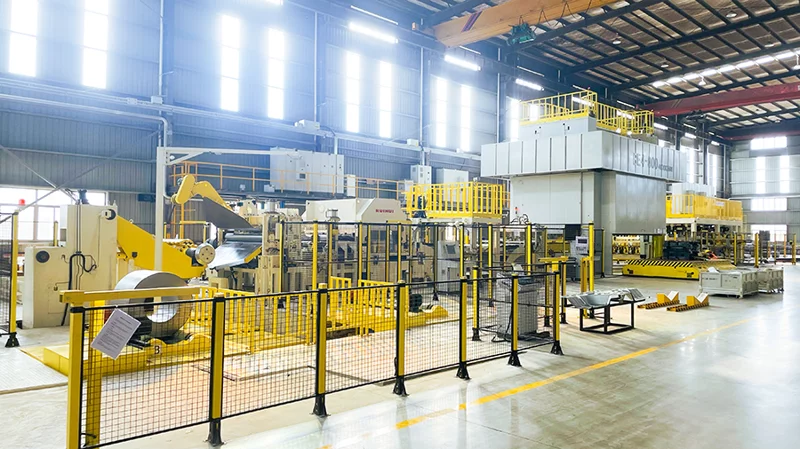
The third step is leveling. After unwinding, the strip has curvature because the coil retains internal stresses in its coiled state. The leveler repeatedly bends and straightens the strip through multiple roll sets, eliminating internal stresses and leveling the strip. Once the strip is flat, subsequent shearing accuracy is ensured.
The fourth step is cut-to-length shearing. The leveled strip is precisely fed by a servo cut-to-length feeding mechanism according to the set length. When it reaches position, the shearing machine cuts it, producing a cut-to-length sheet. The cut length is controlled by the CNC system, providing high accuracy and good dimensional consistency.
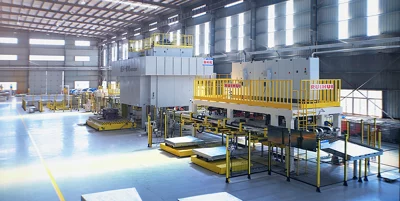
The fifth step is sheet stacking. The cut sheets exit the shearing equipment and enter the stacking stage—this is where the palletizer comes into play. The palletizer automatically stacks the sheets into neat piles. There are two stacking methods: gravity palletizing and magnetic palletizing. Gravity palletizing works with a conveyor belt: sheets are conveyed to a position above the receiving trolley and fall onto the trolley by gravity, offering relatively high speed. Magnetic palletizing works with a magnetic conveyor belt: magnetic force carries the sheets to the receiving station, providing better surface protection. The prerequisite is that the material itself is magnetic, and it is also suitable for sheets of various shapes.
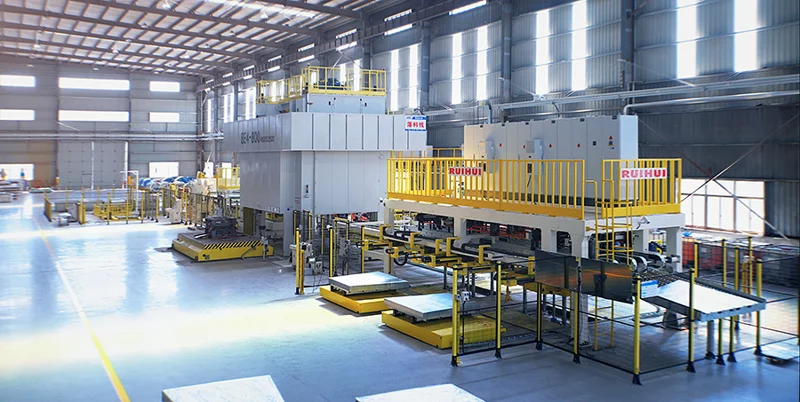
The sixth step is stack transfer. After a trolley is fully stacked, the trolley automatically changes position, and the completed stack is moved out, transferred by forklift or conveyor line to the storage area or the next process. If the blanking line is equipped with an automatic trolley change function, it can run continuously without stopping, achieving higher efficiency.
The entire line, from coil loading, decoiling, leveling, and cut-to-length shearing to sheet stacking and stack transfer, runs fully automatically. Workers only need to come over to operate when changing coils—one person can oversee an entire line. This is the complete process of a palletizer paired with a blanking line: coil goes in, stacked sheets come out, and no manual handling of a single sheet is needed in between.
The role of the palletizer in a blanking line is to automate the most labor-intensive and time-consuming step: collecting and stacking sheets. Only when sheets are stacked neatly and collected efficiently can the blanking line smoothly achieve its output. When selecting a palletizer, consider your sheet material, dimensions, and surface quality requirements. Choose gravity palletizing or magnetic palletizing according to your needs, so that the collection step at the end of the blanking line truly becomes worry-free.
Guangdong RuiHui Intelligent Technology Co., Ltd. has been deeply engaged in the field of stamping automation for over twenty years. It is a national "Specialized and Sophisticated" "Little Giant" enterprise, headquartered in Dongguan, with more than 400 employees and over 80 R&D personnel. RuiHui provides complete blanking line solutions from coil loading, decoiling, leveling, and cut-to-length shearing to automatic stacking. Its palletizers offer both gravity palletizing and magnetic palletizing, used with conveyor belts or magnetic conveyor belts. They can be customized according to sheet material, dimensions, and surface quality requirements. With automatic loading trolleys and automatic trolley change functions, they enable full-process automation of the blanking line. RuiHui has nearly 5,000 sets of equipment operating at customer sites both domestically and internationally, serving well-known OEMs and first-tier suppliers such as BYD, Geely, Volkswagen, Tesla, BMW, Mercedes-Benz, Honda, and Land Rover Jaguar, with rich experience in blanking line integration.
With years of hands-on experience, I have honed my skills in navigating the complexities of global commerce, offering invaluable insights and solutions to address customer needs. My commitment to excellence and dedication to customer satisfaction ensure that I deliver exceptional service, guiding clients through every step of the trading process with confidence and proficiency.
You may also like
Related News
Latest Update