

Application Case of Three-in-One Feeder for New Energy Battery Enclosures
Share to : 


New energy has developed rapidly in recent years, and battery enclosure stamping has taken off along with it. Whether for cylindrical batteries, prismatic aluminum shells, or blade batteries, the enclosures are all produced by stamping. Battery enclosures are different from ordinary sheet metal parts—they must ensure dimensional accuracy while also meeting extremely high surface quality requirements. Even a single scratch can affect the sealing performance and safety of the battery. Therefore, battery enclosure stamping lines place very stringent demands on the front-end feeding equipment.
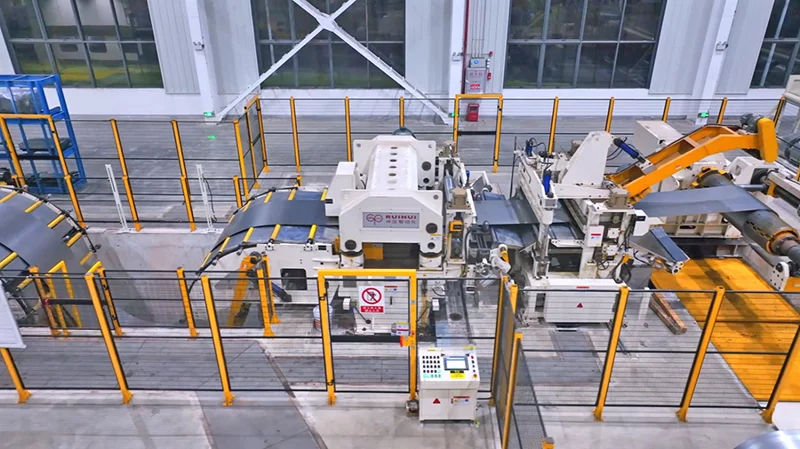
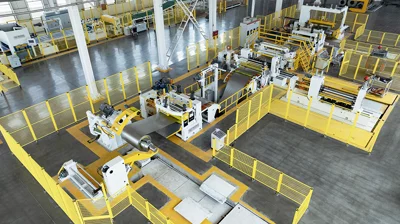
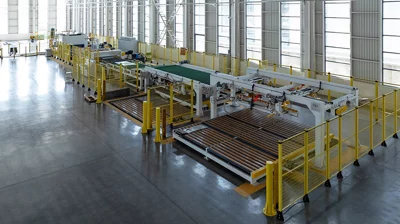
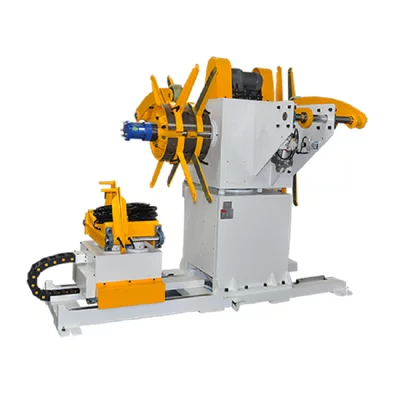
Currently, the mainstream approach in the industry is to use a three-in-one feeder together with a large-tonnage press and progressive dies to produce battery enclosures. The three-in-one feeder integrates decoiling, leveling, and feeding, delivering flat sheets with high precision—exactly meeting the strict material requirements of battery enclosure stamping. It also occupies little space and centralizes operation, so one person can monitor an entire line, unlike the old setup with three separate machines each managed independently.
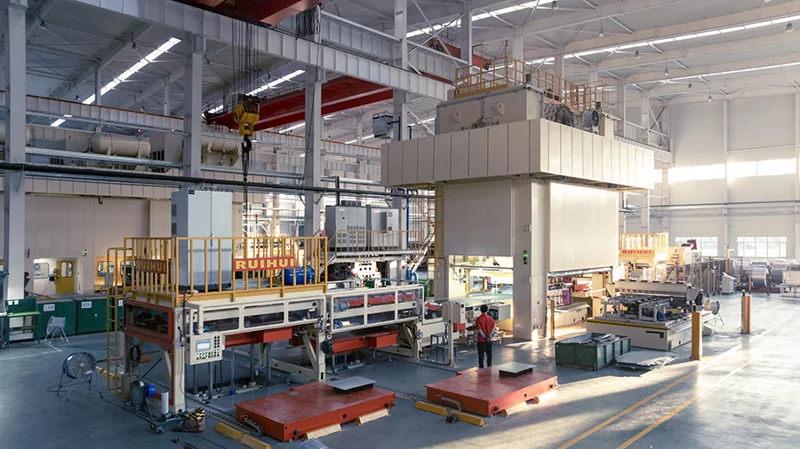
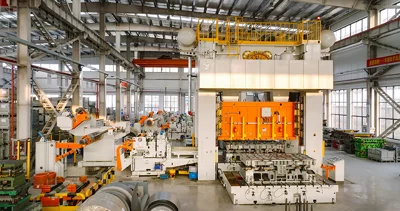
Let's look at a real case. A new energy battery manufacturer in South Korea produces power battery enclosures. Their production line uses a 1,200-ton press with progressive dies, combined with a three-in-one feeder and robots working in coordination. The three-in-one feeder they purchased has a special function called "oscillating feeding." Why oscillate? Because most battery enclosure products are circular. With traditional straight-line feeding, circular parts cannot be nested tightly on the sheet, resulting in significant scrap at the edges. Oscillating feeding means the feeder slightly adjusts left and right during feeding, allowing circular parts to be arranged in a "circle-to-circle tangent" nesting pattern, which immediately improves material utilization.
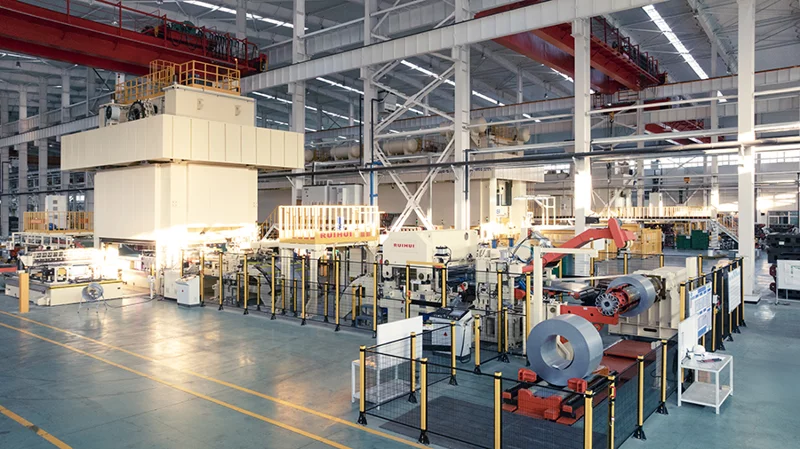
According to customer feedback, this oscillating three-in-one feeder reduces material waste by about 10% for every three oscillations. Battery enclosures are not made from cheap materials—nickel-plated steel strip is costly. Saving 10% on material costs can add up to the price of an entire machine in a year. Moreover, this feeder coordinates smoothly with the 1,200-ton press and 3D transfer robot, keeping the entire line's cycle stable and achieving a good yield rate.
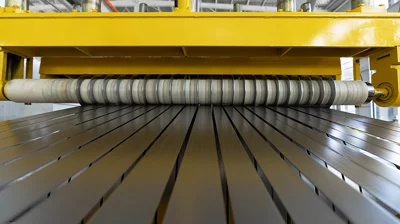
Battery enclosure stamping has another characteristic: the material is relatively thin, placing high demands on leveling. If the coil has wavy edges or warping when unwound, the stamped enclosure wall thickness will be uneven, which can cause problems in subsequent welding or assembly. Therefore, the leveling mechanism of the three-in-one feeder is critical—it should have a sufficient number of rolls, smooth roll surfaces, and ideally the ability to automatically adjust leveling pressure based on material thickness. Some feeders are also equipped with hydraulic expansion systems and automatic loading trolleys, making coil loading convenient and eliminating the need for manual handling of coils weighing tens or even hundreds of kilograms.
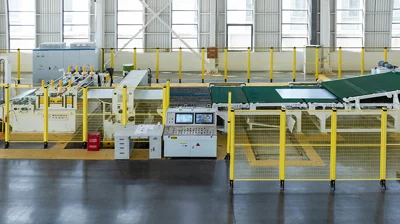
In addition, battery enclosure production lines have changeover requirements. Different battery models have different enclosure widths, depths, and wall thicknesses. When changing products, the feeder parameters must also be adjusted. A good three-in-one feeder can store multiple process recipes on its touchscreen, recalled with a single touch during changeover, eliminating the need to reset parameters one by one and saving considerable downtime.
Guangdong RuiHui Intelligent Technology Co., Ltd. has been deeply engaged in the field of stamping automation for over twenty years. It is a national "Specialized and Sophisticated" "Little Giant" enterprise, headquartered in Dongguan, with more than 400 employees and over 80 R&D personnel. RuiHui's three-in-one feeders are widely used in the new energy industry. Tailored to the feeding characteristics of battery enclosure aluminum and coated steel sheets, they offer an integrated decoiling, leveling, and feeding design, and can be equipped with automatic loading trolleys and oiling devices. Servo drive ensures feeding accuracy, and recipe memory supports rapid changeover for multiple specifications. They have mature applications in new energy battery enclosure stamping, automotive parts, home appliances, and other industries. RuiHui has nearly 5,000 sets of equipment operating at customer sites both domestically and internationally, serving well-known OEMs and first-tier suppliers such as BYD, Geely, Volkswagen, Tesla, BMW, Mercedes-Benz, Honda, and Land Rover Jaguar, with rich experience in the new energy field.
With years of hands-on experience, I have honed my skills in navigating the complexities of global commerce, offering invaluable insights and solutions to address customer needs. My commitment to excellence and dedication to customer satisfaction ensure that I deliver exceptional service, guiding clients through every step of the trading process with confidence and proficiency.
You may also like
Related News

Latest Update