

Can a Single-Press Multi-Station Robotic Transfer Press Line Handle Multi-Variety Small-Batch Production
Share to : 


A notable trend in today’s manufacturing landscape is rapidly shifting market demand and increasingly fragmented orders. Products that once ran continuously for a year now may require multiple die changes per week. This has led many companies to question: does adopting an automated production line mean losing flexibility? Can we still take on multi-variety, small-batch orders? And is a single-press multi-station robotic transfer press line truly flexible enough?
The short answer is yes—but only with proper planning at the design stage.
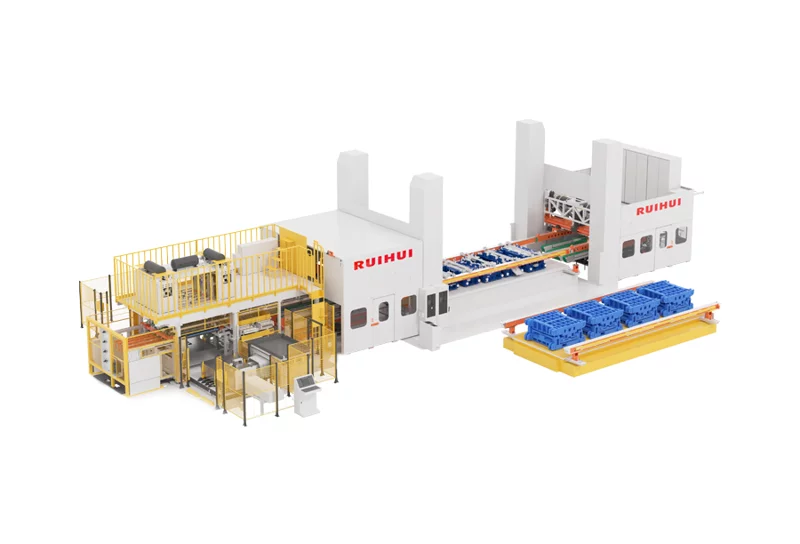
At its core, a single-press multi-station line consists of a 3-axis transfer robot paired with a large-tonnage press, completing multiple stamping operations within a single press. This configuration offers greater flexibility than a tandem line of multiple presses, since all processes are concentrated on one machine, eliminating the need to synchronize several presses during changeovers. However, this requires that the robot's programming capabilities be sufficiently flexible, with the ability to store multiple product programs and recall them with a single command during changeovers—without the need for reteaching. Today, some 3-axis transfer robot control systems support graphical programming, which also shortens operator training time.
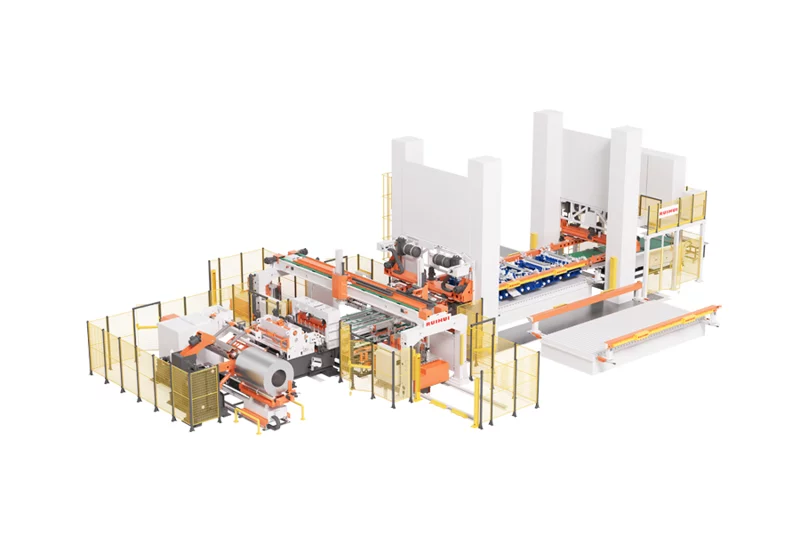
Two key factors in multi-variety production are changeover speed and program management.
If each changeover requires swapping dies, the quick-die-change system must keep pace. Some solutions incorporate quick-die-change devices paired with automatic gripper-changing functions, reducing changeover time from hours to minutes. Additionally, the robot control system needs ample program storage capacity to hold process parameters for multiple products, allowing direct recall without reprogramming. One often-overlooked issue is the storage and management of removed dies and grippers—this requires supporting improvements in workshop tooling management workflows.
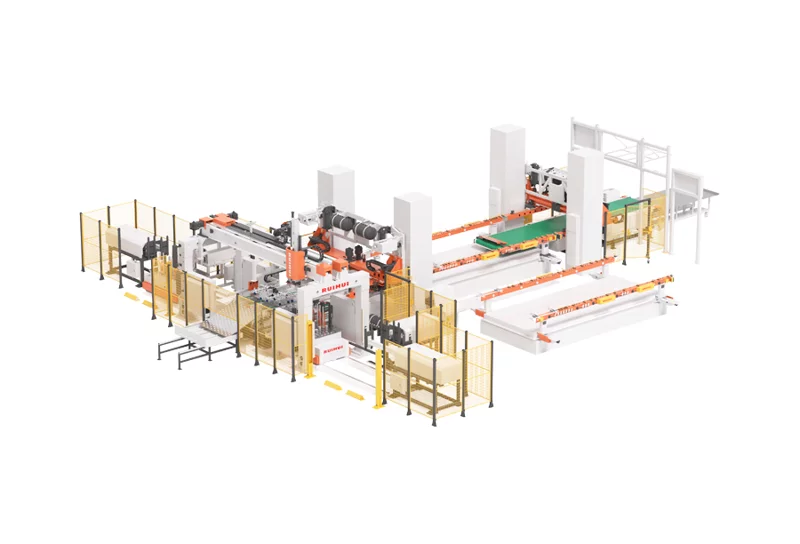
Not all low-volume scenarios are suited for automation.
If monthly output is extremely low, the economic viability of automation does require careful evaluation. Generally, the following situations are more suitable for automation: batch sizes that reach a certain scale, high precision requirements that are difficult to achieve consistently with manual labor, or when the shop floor faces genuine recruitment challenges. Under these premises, the single-press multi-station line is better suited for multi-variety, small-batch production than a tandem press line, because it centralizes processes, occupies less floor space, and offers relatively quick changeovers. This is especially true for parts with complex geometries or irregular die layouts—the 3-axis transfer robot can flexibly adjust transfer trajectories within the same press.
Guangdong RuiHui Intelligent Technology Co., Ltd. has been established for 26 years and has accumulated experience in delivering nearly 5,000 sets of equipment in stamping automation. They provide complete stamping automation solutions for industries including automotive parts, home appliances, and 3C digital products. Their single-press multi-station lines are widely applied in multi-variety production scenarios, and they have developed a large number of flexible automation solutions specifically for automotive parts stamping lines to meet the demands of mixed-model production.
With years of hands-on experience, I have honed my skills in navigating the complexities of global commerce, offering invaluable insights and solutions to address customer needs. My commitment to excellence and dedication to customer satisfaction ensure that I deliver exceptional service, guiding clients through every step of the trading process with confidence and proficiency.
You may also like
Related News
Latest Update