

High-Speed Linear Transfer Robots Methods to Improve Cycle Time in Multi-Press Tandem Stamping Lines
Share to : 


The output cycle time of a multi-press tandem line is limited by two factors: the stroke speed of the presses themselves and the speed of transfer between operations. The press stroke speed is fixed—it is what it is once purchased. But the speed of the transfer step can be optimized—how fast the linear transfer robot runs and how smoothly it moves directly determines whether the entire line can achieve the cycle time the presses are capable of.
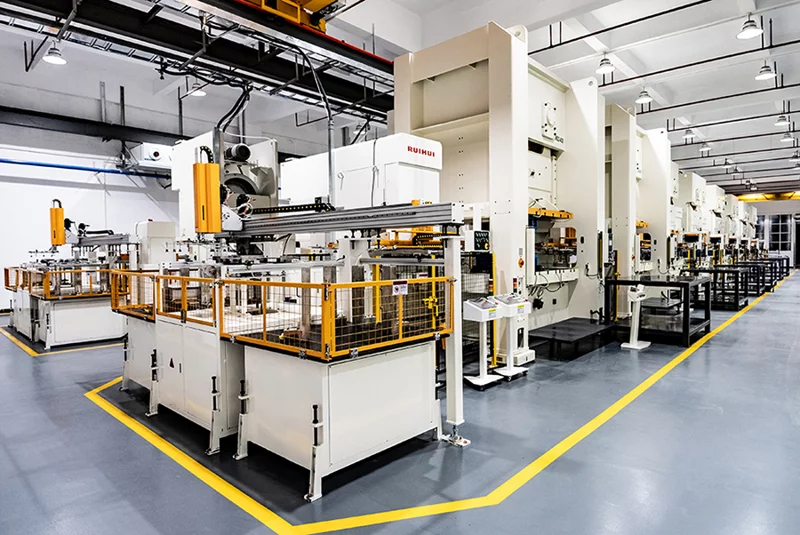
The motion cycle of a linear transfer robot in a tandem line includes picking, rising, traversing, lowering, placing, and retracting. To improve cycle time, the time for these steps must be compressed to the minimum.
The first method is optimizing the motion trajectory. After picking a part from the previous press, the linear transfer robot must go through rising, traversing, and lowering before placing it into the next press. If the robot first raises the workpiece to the highest point, then traverses, then lowers it, the path is a polyline and takes longer. A good control system makes rising and traversing happen simultaneously—the robot rises while traversing, following a smooth curve, and arrives just as it lowers to the placement height. This three-axis coordinated motion is much faster than sequential movements.
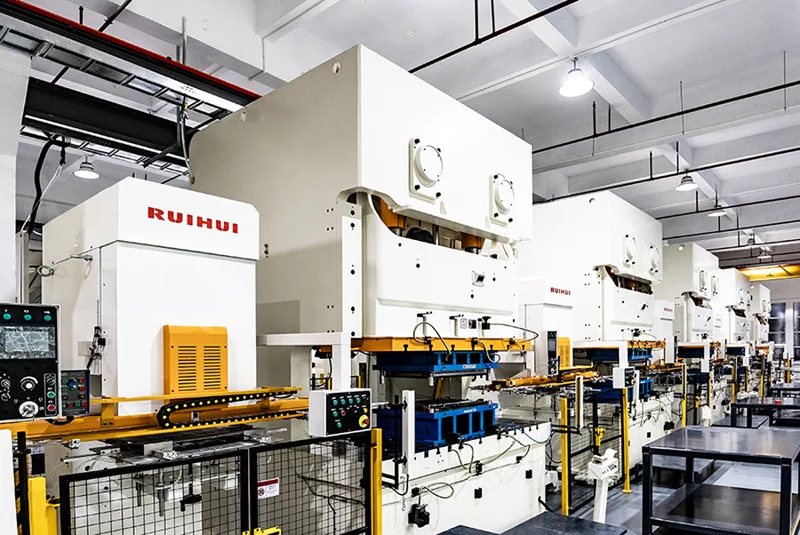
The second method is increasing traverse speed. Traversing is the longest part of the robot's motion cycle. Traverse speed is limited by mechanical structure rigidity, drive power, and guide rail precision. If structural rigidity is sufficient, drive power is adequate, and guide rail precision is high, traverse speed can be increased. But as speed increases, inertial forces also increase, and the robot experiences impact when stopping suddenly at the end of the traverse. A good solution adds buffered deceleration at the end of the traverse, allowing the robot to stop smoothly—without impact and still reaching position quickly.
The third method is shortening gripper action time. The opening and closing of the gripper may look like a small motion, but in one cycle the gripper acts twice (closing when picking, opening when placing). If the gripper is slow, the accumulated time affects cycle time. Grippers can be driven pneumatically or electrically. Pneumatic grippers act quickly, but clamping force is affected by air pressure fluctuations; electric grippers offer controllable action and stable clamping force, but may be slightly slower. During selection, both clamping force requirements and action speed must be considered.
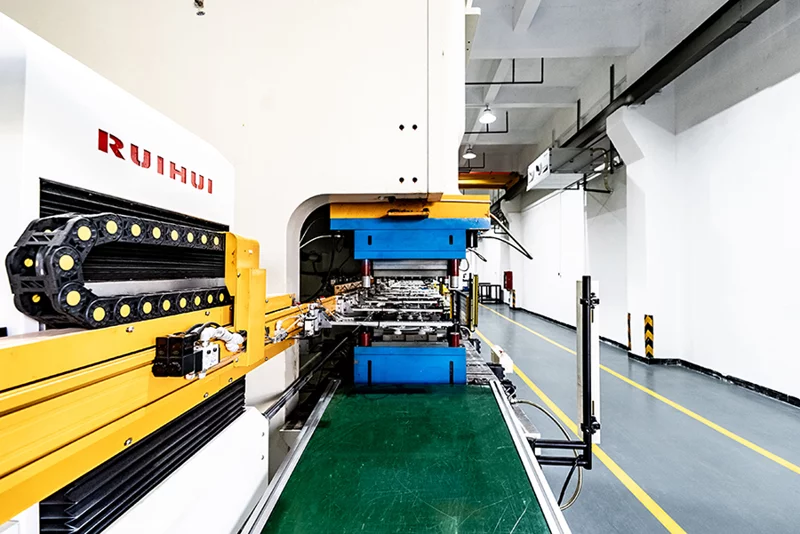
The fourth method is optimizing signal interaction time. There is signal interaction between the linear transfer robot and each press—the press sends a signal after its stroke, and the robot begins moving only after receiving it. If signal transmission is delayed, or the control system takes long to process the signal, cycle time is wasted. A good control system uses a high-speed communication bus, with signal transmission delays in the millisecond range, and minimizes control system processing time.
The fifth method is synchronized action with multiple gripper sets. Some linear transfer robots on tandem lines do not use one gripper set running back and forth; instead, multiple gripper sets are mounted on a single traversing beam. The first gripper set picks from the first press, the second gripper set picks from the second press, and the third gripper set picks from the third press. All grippers traverse one step synchronously, completing picking and placing at the same time. This synchronized action is much faster than a single gripper set running back and forth, because it eliminates the idle return travel time. However, this method demands high synchronization of the mechanical structure—all grippers must be precisely synchronized, with no lead or lag.
The value of replacing manual labor with automation in improving tandem line cycle time is direct. Manual transfer speed is limited and decreases with fatigue. The cycle time of a linear transfer robot is constant—once the speed is tuned, it can be maintained. After robots replace manual labor, the output cycle time of the entire line is no longer limited by human speed, and the presses' capacity can be fully utilized. At the same time, robots are fast and precise, so workpieces move between operations in less time and in consistent positions, resulting in much better product consistency than manual transfer. Workers are also kept away from hazardous stamping areas, reducing safety risks.
Guangdong RuiHui Intelligent Technology Co., Ltd. has been deeply engaged in the field of stamping automation for over twenty years. It is a national "Specialized and Sophisticated" "Little Giant" enterprise, headquartered in Dongguan, with more than 400 employees and over 80 R&D personnel. RuiHui has mature cycle time optimization experience in multi-press tandem linear transfer robot stamping lines. Through three-axis coordinated trajectory planning, high-speed traverse control, and synchronized multi-gripper action solutions, it helps customers improve overall line output cycle time. RuiHui has nearly 5,000 sets of equipment operating at customer sites both domestically and internationally, serving well-known OEMs and first-tier suppliers such as BYD, Geely, Volkswagen, Tesla, BMW, Mercedes-Benz, Honda, and Land Rover Jaguar.
With years of hands-on experience, I have honed my skills in navigating the complexities of global commerce, offering invaluable insights and solutions to address customer needs. My commitment to excellence and dedication to customer satisfaction ensure that I deliver exceptional service, guiding clients through every step of the trading process with confidence and proficiency.
You may also like
Related News
Latest Update