

How to Select a Three-in-One Feeder for Air Conditioner Enclosure Stamping
Share to : 


The home appliance industry uses three-in-one feeders in many applications, and air conditioner enclosure stamping is a typical scenario. Sheet metal parts for air conditioner enclosures have a certain range of material width and thickness, relatively high surface quality requirements, and large batch sizes. Selecting the right front-end feeding equipment ensures the entire stamping line maintains a stable rhythm. So how exactly should you choose a three-in-one feeder for air conditioner enclosure stamping? Several key points are worth discussing.
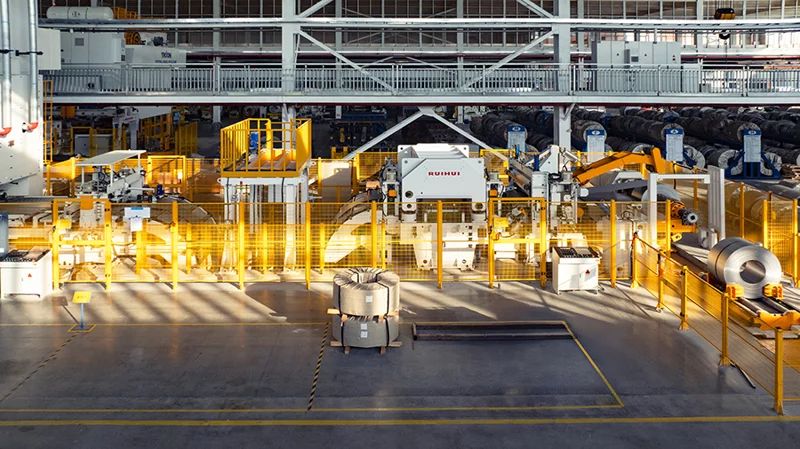
First, look at the actual condition of the strip. Common materials used for air conditioner enclosures include galvanized sheet, pre-painted sheet, and cold-rolled sheet, with thickness generally around 1 mm, and width varying according to enclosure size—large or small. The first step in selection is to accurately inform the manufacturer of your material width and thickness range, so that the leveling rolls and feed rolls are configured to match the strip. Materials like galvanized and pre-painted sheet have surface coatings, and are most vulnerable to scratches and pressure marks during feeding. During selection, pay special attention to the equipment's surface protection capability. The material travels through the entire decoiling, leveling, and feeding process inside the equipment, so external contact should be minimized.
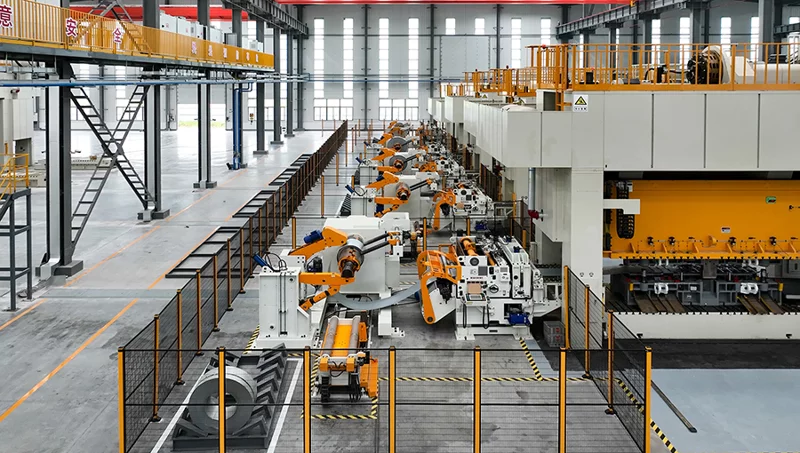
Next, consider feeding accuracy. Air conditioner enclosure parts have dimensional accuracy requirements. If the feed pitch is inaccurate, the stamped part dimensions will fluctuate. Three-in-one feeders use servo motor drive with real-time encoder feedback, ensuring feeding accuracy. During selection, confirm whether the equipment's actual feeding accuracy can meet your product's tolerance requirements—don't just look at the ideal values on the specification sheet.
The third key point is leveling capability. For air conditioner enclosure sheets, coils stored for a long time develop internal stresses. If the strip is not flat, feeding becomes unstable, and stamping quality suffers. The leveling mechanism of the three-in-one feeder must eliminate these internal stresses. Once the strip is flat and straight, feeding becomes stable. The number of leveling rolls, their hardness, and the backup pressure design all affect leveling performance. These must be carefully examined during selection. In particular, air conditioner enclosures often use thin sheets, and thin materials are more sensitive to leveling accuracy.
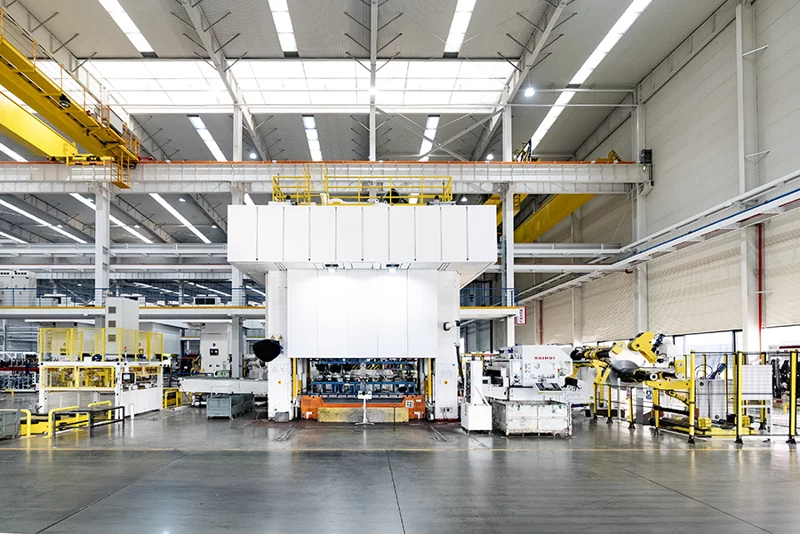
The fourth key point is changeover efficiency. Air conditioner enclosure specifications are not uniform—cabinet units and wall-mounted units have different enclosure dimensions, and their sheet metal parts also differ. A three-in-one feeder with recipe memory can store feeding parameters for different products as recipes, recalled directly during changeover without resetting each parameter one by one, greatly shortening changeover time. For air conditioner enclosure production with many specifications and large batches, this function is very practical.
The fifth key point is coordination with the press. The three-in-one feeder must work inline with the press. Feeding height, feeding direction, and signal interfacing must all match the on-site press and die. Before selection, provide the manufacturer with the press parameters and the die's feed position, so the equipment solution aligns with the actual site conditions and installs smoothly.
Also consider the automatic loading trolley. Coils used for air conditioner enclosures are not light. With an automatic trolley, the coil is hoisted on, automatically centered, and automatically fed in, without manual holding or pulling—safer and more convenient. An oiling device is also worth considering. Air conditioner sheets need uniform oiling before stamping, which protects the die and aids forming. The three-in-one feeder can integrate this function into the feeding process.
Guangdong RuiHui Intelligent Technology Co., Ltd. has been deeply engaged in the field of stamping automation for over twenty years. It is a national "Specialized and Sophisticated" "Little Giant" enterprise, headquartered in Dongguan, with more than 400 employees and over 80 R&D personnel. RuiHui's three-in-one feeders are widely used in the home appliance industry. They are optimized for surface protection when handling coated sheets such as galvanized and pre-painted sheet. Servo drive ensures feeding accuracy, and recipe memory facilitates rapid changeover for multiple specifications. They can be equipped with automatic loading trolleys and oiling devices, and have mature applications in stamping production for air conditioner, refrigerator, and washing machine enclosures. RuiHui has nearly 5,000 sets of equipment operating at customer sites both domestically and internationally, serving well-known OEMs and first-tier suppliers such as BYD, Geely, Volkswagen, Tesla, BMW, Mercedes-Benz, Honda, and Land Rover Jaguar, with rich experience in home appliance stamping.
With years of hands-on experience, I have honed my skills in navigating the complexities of global commerce, offering invaluable insights and solutions to address customer needs. My commitment to excellence and dedication to customer satisfaction ensure that I deliver exceptional service, guiding clients through every step of the trading process with confidence and proficiency.
You may also like
Related News
Latest Update