

Linear Transfer Robot Enables High-Speed Tandem Stamping with Multiple Presses
Share to : 


In the production workshops of industries such as home appliances, 3C electronics, and telecommunications, the stamping of medium-to-large sheet metal parts has long been a physically demanding job. After one press completes its cycle, workers had to manually remove the part and transfer it to the next press. With hundreds of bending and turning motions per day, and parts weighing anywhere from a few kilograms to over twenty kilograms, this work takes a serious toll on workers' backs over time. Moreover, manual loading and placement inevitably introduced variations in position each time, making it difficult to ensure consistent product dimensions. The linear transfer robot tandem stamping line was designed specifically to replace this manual handling with an automated solution.
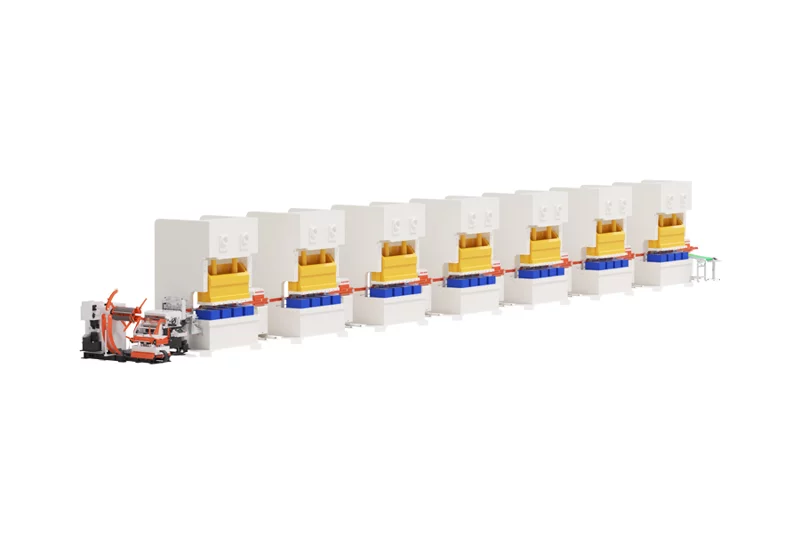
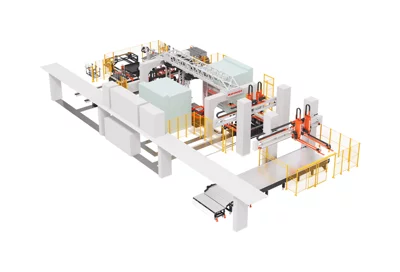
The basic configuration of a linear transfer robot tandem stamping line is as follows: multiple presses are arranged in a row according to the process sequence, with each press handling one operation. Between every two presses, a linear transfer robot is installed to remove the workpiece from the previous press's die and place it into the next press's die. Automatic feeding equipment is provided at the front end, and automatic collection equipment at the back end—the entire line, from blank loading to finished part collection, is fully automated. The linear transfer robot moves along a fixed track in forward/backward and up/down motions. Its path is simple, its speed is high, and its positioning is accurate, making it ideally suited for high-volume handling of relatively regular-shaped sheet metal parts.
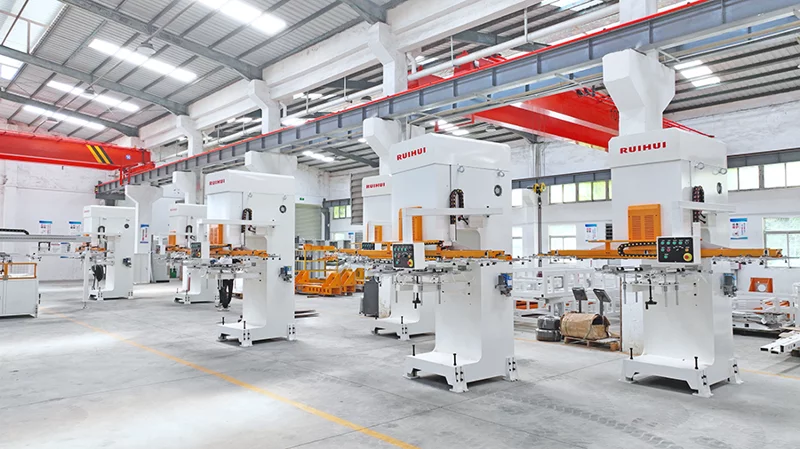
In the home appliance industry, products like refrigerator casings, air conditioner panels, and washing machine bodies are produced in large volumes, have regular shapes, and follow relatively fixed process sequences—making them excellent candidates for replacing manual handling with linear transfer robot tandem lines. Previously, stamping production for these products required one person stationed beside each press. The first press would finish, then the part was handed to the second press; after the second finished, it went to the third, and so on. A four-press tandem line required at least four people. Moreover, these four workers could not be easily swapped—each had different placement habits, leading to slight positional variations that caused dimensional fluctuations in the final products. The linear transfer robot takes over all handling tasks, placing every part with perfect repeatability, delivering far better product consistency than manual work. Manual handling also suffers from fatigue—by the late night shift, workers' hands are less steady, placement positions drift, and rejection rates rise. The linear transfer robot has no such issue; from start to finish, it places every part in exactly the same position, ensuring consistent quality.
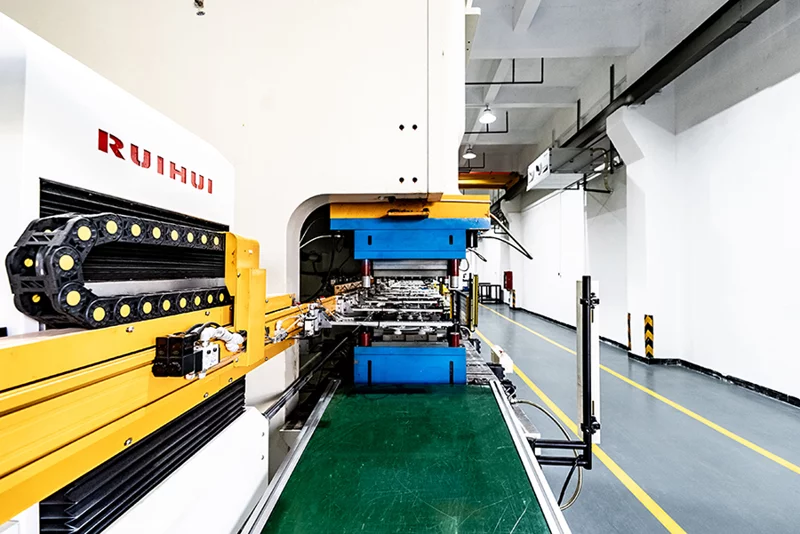
In the 3C and telecommunications industries, products such as computer chassis, communication cabinets, and server housings also share the characteristics of high volume and regular shapes, making the linear transfer robot tandem line the mainstream solution for replacing manual handling. These products typically involve large batch sizes and tight delivery schedules. Manual loading and unloading speeds cannot keep up with the press cycle—the press often finishes its stroke and has to wait for the worker to remove and reload the part, meaning the equipment's full capacity is not utilized. The linear transfer robot operates with high speed, completing each cycle in just a few seconds, perfectly matching the press rhythm. As soon as the press finishes, the robot is there to remove and transfer the part—no waiting, no idle time. Equipment utilization improves, and the same machines yield higher output.
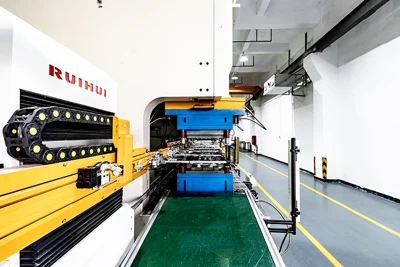
The structure of a linear transfer robot is relatively simple, primarily performing forward/backward and up/down movements. Driven by servo motors and equipped with precision guide rails and ball screws or rack‑and‑pinion transmissions, it achieves high positioning accuracy. Mounted on a gantry between presses, it does not occupy floor space or obstruct operator access. The control system is interlocked with the presses: after each press stroke, a signal is sent, and the linear transfer robot automatically enters the die area to retrieve the part, then places it into the next press's die, retracts, and the next press cycle begins—all without human intervention. For production scenarios with relatively fixed product specifications and infrequent changeovers, the linear transfer robot tandem line offers extremely high reliability, can run continuously for long periods, and requires simple maintenance.
The effectiveness of linear transfer robots in replacing manual labor is significant. Take a four‑press tandem line as an example: previously, four people were needed, one at each press, to handle parts. Now, only one person is required to monitor the line from a central control room. Labor demand is drastically reduced, recruitment pressure eases, and management costs decrease. Furthermore, workers no longer need to stand beside the presses, enduring noise and physical strain—the improved work environment makes it easier to retain staff. By replacing humans in the die area with robots, the risk of workplace injuries is also greatly reduced.
Guangdong RuiHui Intelligent Technology Co., Ltd. has extensive experience in linear transfer robots. Their linear transfer robots are specifically designed for the automation needs of multi‑press tandem lines, featuring compact construction, high operating speed, and precise positioning. They are widely used in stamping medium‑to‑large sheet metal parts in the home appliance, 3C, and telecommunications industries. RuiHui's linear transfer robots can be customized based on the customer's press spacing, part dimensions, and cycle time requirements, and they integrate with front‑end feeding and back‑end collection equipment to form a complete automated stamping production line. With over twenty years of experience in stamping automation and nearly 5,000 sets of equipment operating stably at customer sites both in China and overseas, RuiHui has delivered tangible results in replacing manual loading and unloading.
With years of hands-on experience, I have honed my skills in navigating the complexities of global commerce, offering invaluable insights and solutions to address customer needs. My commitment to excellence and dedication to customer satisfaction ensure that I deliver exceptional service, guiding clients through every step of the trading process with confidence and proficiency.