

Production of Large Automotive Parts – Case Studies of Multi‑Press Tandem Stamping Robots
Share to : 


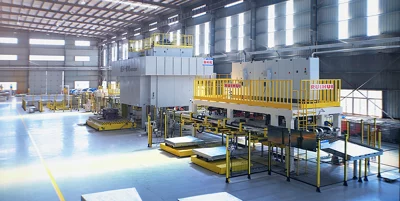
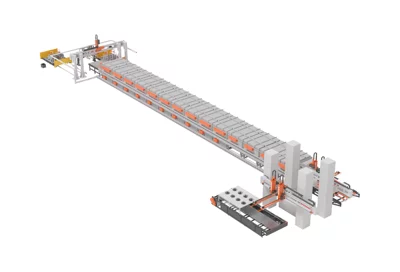
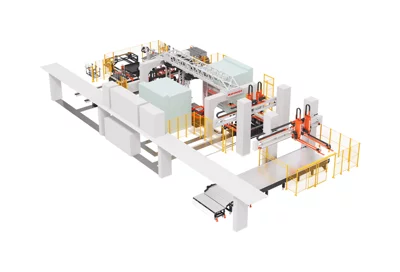
Many factories that produce large automotive body panels and structural parts used to rely on manual handling of workpieces between multiple presses. Several workers were needed to keep one line running, and during peak order times, labor was always tight. Worse, the manual placement of blanks often had positional deviations, leading to frequent rejects. Many solutions were tried, but none fully solved the pain points. Today, however, a growing number of plants have implemented automated tandem press lines equipped with linear transfer manipulators, which have effectively addressed the many challenges of mass‑producing large automotive parts. We have seen many real‑world cases that offer valuable lessons.
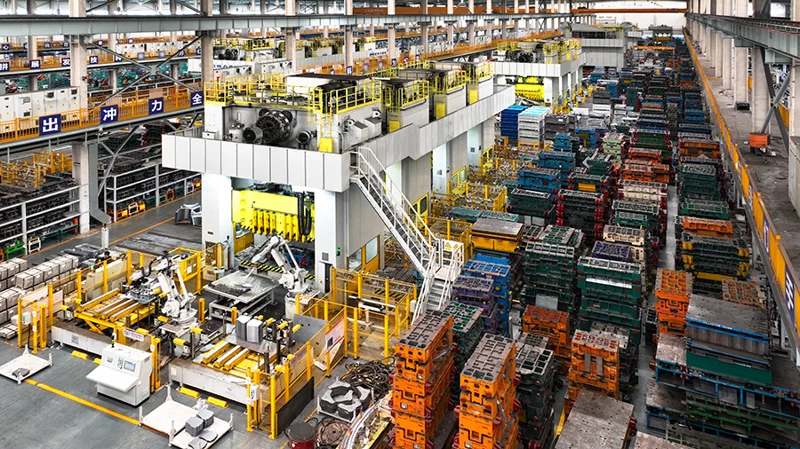
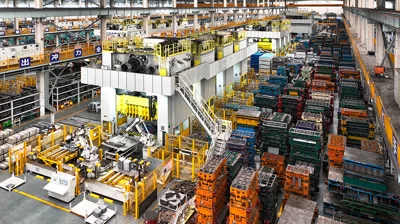
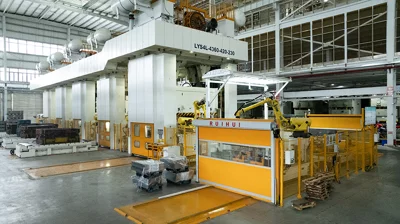
One example is a supplier to a major OEM, producing large body panels such as side frames and door panels. Their existing line had four large‑tonnage presses, and previously all workpiece transfer between stations was done manually. Each part was large and heavy, requiring considerable physical effort from workers. Positional deviations occurred with every placement, causing misalignment in the flanges of the stamped panels, which then required extensive rework in the subsequent welding process. They then introduced an automated line with four presses in tandem, with articulated robots placed between each press to automatically transfer parts from one station to the next. The robots provided consistent positioning accuracy, placing every blank precisely at the designated spot in the die. Since the line went into operation, not only has throughput increased significantly, but the consistency of the stamped parts has been excellent, and rework for subsequent assembly has been reduced by more than half. Over the long run, the improvement in production smoothness has been very noticeable.
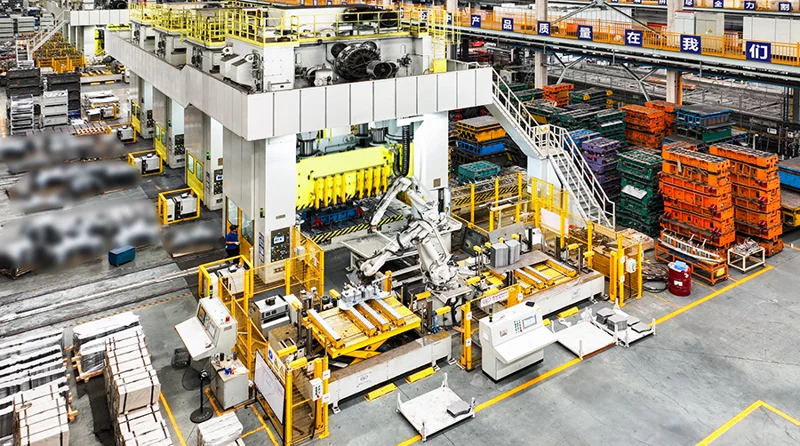
Another example is a factory producing large underbody structural parts for new energy vehicles. Their orders came in large batches, with each batch requiring several days of continuous production. The previous manual handling mode simply could not sustain round‑the‑clock operation. Workers would become fatigued after a few consecutive shifts, slowing down their pace and dragging down the overall line rhythm. After upgrading to a multi‑press tandem line, all workpiece transfer was handed over to robots, which could run continuously for 24 hours a day without any fatigue issues, maintaining a consistently high‑speed production rhythm. As a result, delivery lead times for large orders were significantly shortened, and there was no longer any need to arrange overtime shifts to meet deadlines. For these thick‑sheet parts, the end‑of‑arm tooling on the robots was specially adapted to ensure a firm grip during picking, so even large‑sized heavy blanks remained stable during high‑speed transfer, with no wobbling or shifting, eliminating any risk of impact deformation during transport.
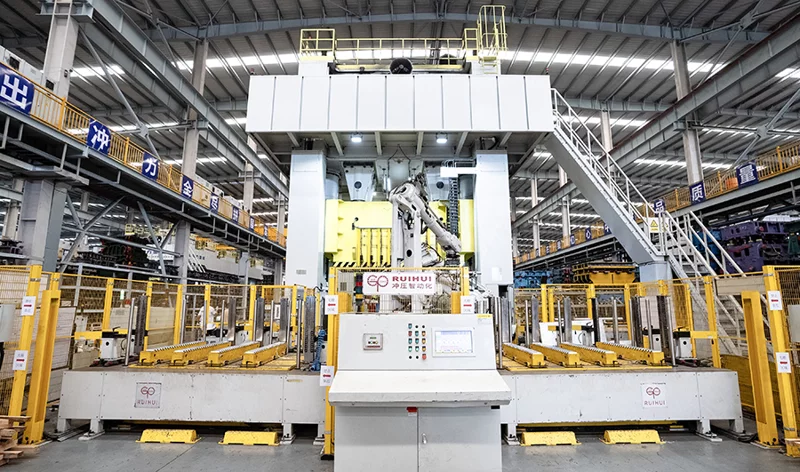
In many of these case facilities, a central supervisory system was also installed, allowing the status of all presses and robots on the line to be monitored from a central control room. Any abnormality triggers an immediate automatic alarm, so maintenance staff do not need to walk around to each station to locate faults—making upkeep much easier. The lines also come with digital interface ports pre‑reserved, enabling direct connection to the factory MES system. Production counts, equipment run times, downtime records, and other data are all automatically uploaded, eliminating the need for manual report writing and significantly improving production management efficiency.
Guangdong RuiHui Intelligent Technology Co., Ltd., with 26 years of history, has delivered nearly 5,000 units of stamping automation equipment and has served many globally renowned automotive OEMs and Tier‑1 suppliers. RuiHui's multi‑press tandem stamping robot solutions are already operating stably in numerous large‑scale automotive parts production workshops, with customized adaptations made for different part sizes and process layouts. Many customers have reported that after implementation, both batch production capacity and part quality have met their expectations.
These real‑world cases clearly demonstrate that for high‑volume production of large automotive parts, the multi‑press tandem stamping robot solution is fully capable of addressing the pain points of the workshop, helping factories achieve stable and efficient automated production—turning the productivity levels that were once unimaginable under manual modes into tangible reality.
With years of hands-on experience, I have honed my skills in navigating the complexities of global commerce, offering invaluable insights and solutions to address customer needs. My commitment to excellence and dedication to customer satisfaction ensure that I deliver exceptional service, guiding clients through every step of the trading process with confidence and proficiency.
You may also like
Related News
Latest Update