

Stacking Neatness of Palletizers How to Guarantee Sheet‑Metal Stacking Quality
Share to : 


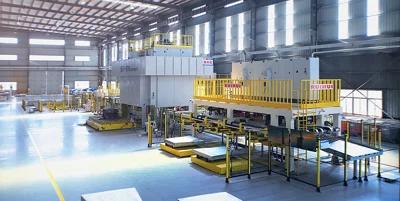
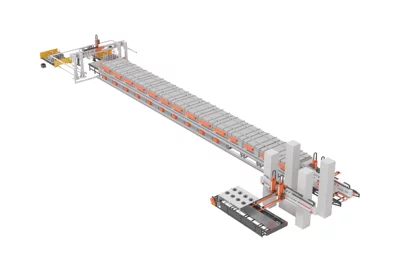
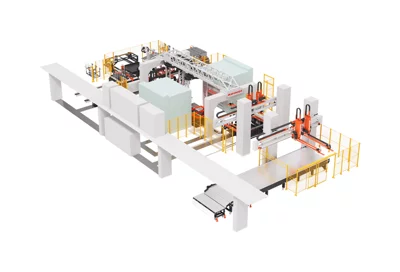
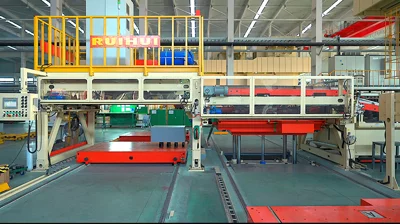
Palletizers perform sheet stacking at the outlet of blanking lines. Stack quality directly affects subsequent storage, transportation and downstream processing. Mis‑aligned stacks risk scattering during handling, occupy excessive space and cause positioning errors during destacking. Multiple factors determine stacking neatness.
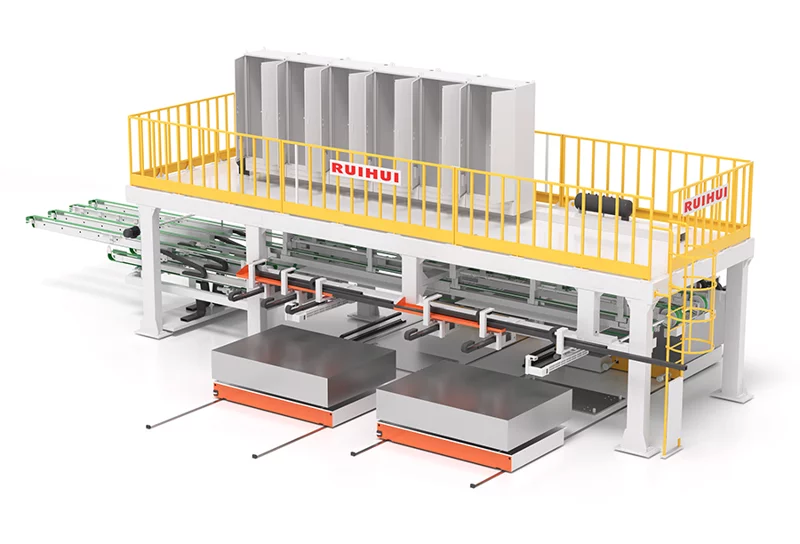
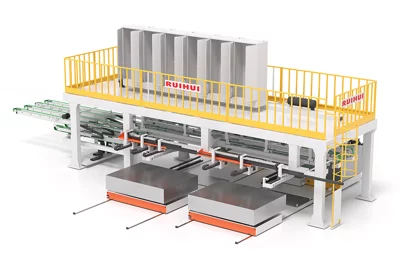
Firstly, coordinated lifting‑and‑lowering of the receiving trolley. As stack height increases, the trolley descends automatically to maintain constant drop height for incoming sheets. Excessive drop height leads to sheet bouncing and offset; insufficient clearance causes interference with conveyor ends. The trolley shall descend by exactly one sheet‑thickness after each sheet is stacked to keep consistent receiving elevation.
Secondly, edge‑squaring (tapping) devices. After sheets land on the trolley, peripheral tapping mechanisms align four edges of sheets. Tapping force must be moderate: insufficient force fails to square sheets, while excessive force deforms sheet corners. Tapping should be triggered right after sheet landing. Force and stroke are adjustable for thin and thick plates respectively.
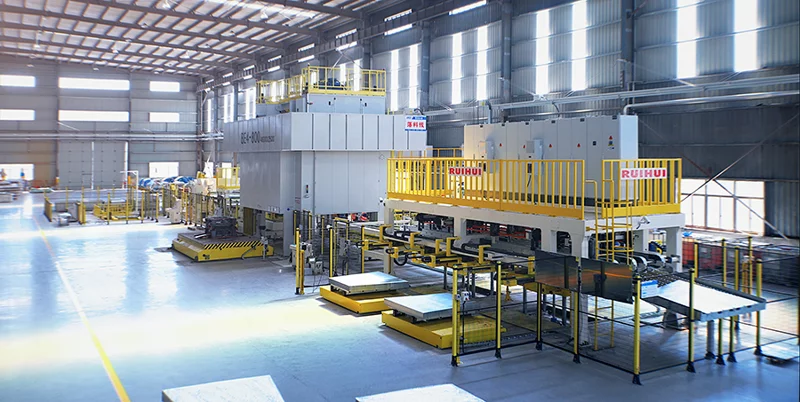
Thirdly, stable material conveyance. Smooth sheet transfer from shearing station to receiving trolley ensures accurate landing position. Conveyor linear speed shall match shearing speed to avoid sheet overshoot or piling. Proper belt tension prevents slipping or deviation. For magnetic stacking lines, magnetic belts shall deliver uniform magnetic force for stable sheet adsorption.
Fourthly, flatness of incoming sheets. Curved or warped raw sheets result in poor stacking quality, therefore upstream leveling performance of cut‑to‑length or blanking lines is essential. Oil‑contaminated sheet surfaces may induce inter‑sheet slippage, which requires adjusted tapping force.
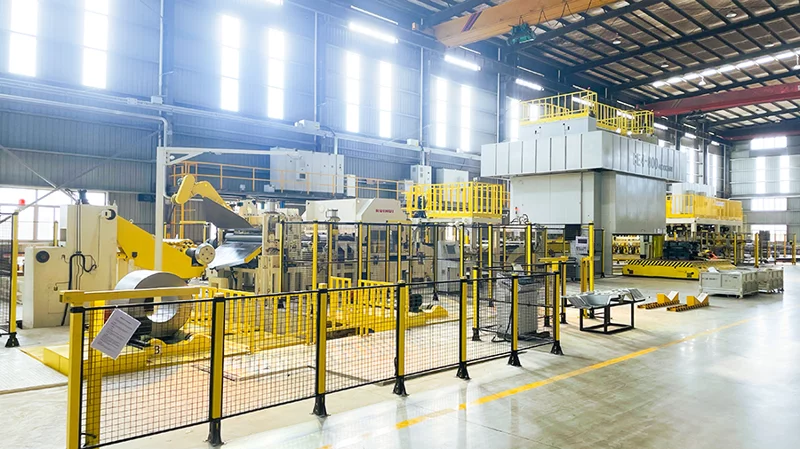
Fifthly, proper palletizer sizing. The receiving trolley shall accommodate maximum‑dimension sheets without overhang. Sufficient load‑capacity prevents trolley deformation under full load, and lifting stroke covers the maximum target stack height.
In summary, stacking neatness is jointly determined by trolley motion, tapping units, stable conveying, incoming‑sheet flatness and equipment‑specification matching. Well‑configured palletizers deliver square, neatly‑aligned stacks for convenient storage, transport and destacking.
Guangdong Ruihui Intelligent Technology Co., Ltd. has over 20‑year experience in stamping automation and is a national Specialized, Refined, Differential and Innovative “Little Giant” enterprise. Headquartered in Dongguan, it has more than 400 employees including over 80 R&D engineers. Ruihui palletizers support both gravity stacking and magnetic stacking with conventional or magnetic belts. Receiving‑trolley displacement precisely follows sheet thickness, and adjustable‑force tapping devices adapt for various sheet gauges. The equipment is widely deployed at the outlet of blanking lines for automotive, home‑appliance and hardware industries. Nearly 5,000 sets of Ruihui‑manufactured equipment operate at domestic and overseas customer sites, serving well‑known OEMs and Tier‑one suppliers such as BYD, Geely, Volkswagen, Tesla, BMW, Mercedes‑Benz, Honda and Jaguar Land Rover.
With years of hands-on experience, I have honed my skills in navigating the complexities of global commerce, offering invaluable insights and solutions to address customer needs. My commitment to excellence and dedication to customer satisfaction ensure that I deliver exceptional service, guiding clients through every step of the trading process with confidence and proficiency.
You may also like
Related News
Latest Update