

What is a multi-press tandem linear transfer robot stamping line
Share to : 


In multi-press tandem stamping, workpieces must be transferred between presses. How to transfer them quickly and reliably is the key issue for such a line. In industries such as home appliances, 3C, and telecommunications, many medium-to-large sheet metal parts have relatively regular shapes and large batch sizes, with high requirements for transfer speed. For these scenarios, the multi-press tandem linear transfer robot stamping line is a widely applied solution. So what exactly is this line, and how do multiple presses achieve synchronized loading and unloading? Let's clarify it here.
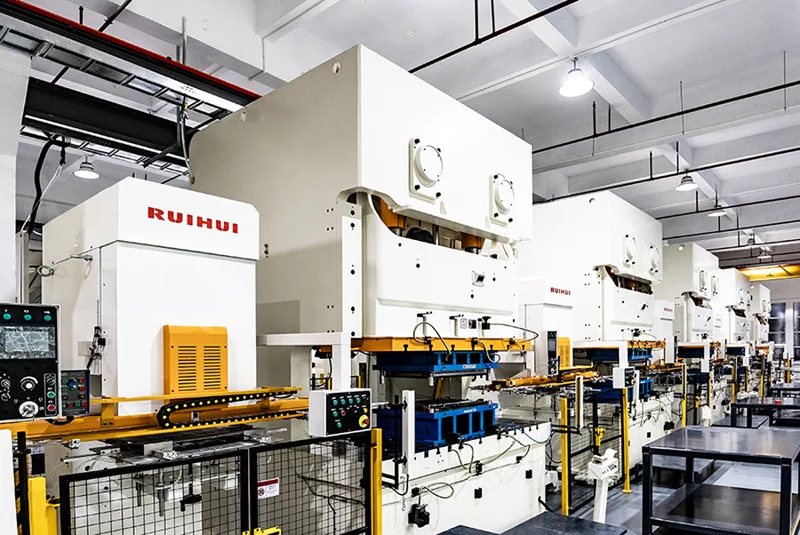
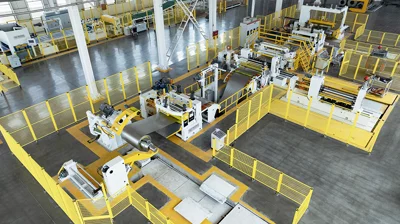
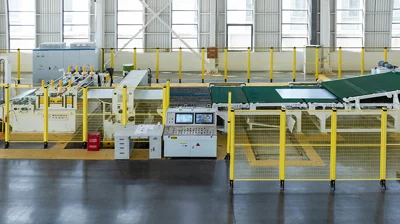
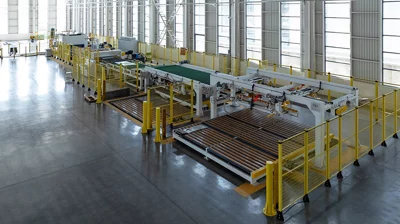
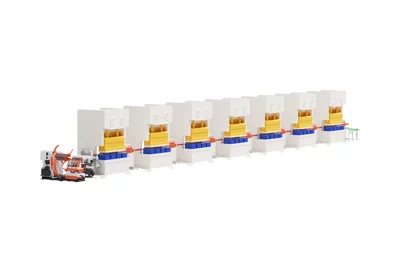
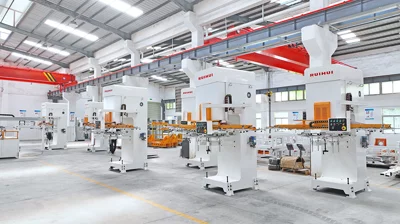
A multi-press tandem linear transfer robot stamping line arranges multiple presses in a row according to the process sequence, with each press handling one operation. Between every two presses, a linear transfer robot handles loading and unloading transfer. Feeding equipment is provided at the front end, and collection equipment at the back end. The entire line, from blank loading to finished part collection, runs fully automatically.
The role of the linear transfer robot is that of a "material handler" between two presses. Its motion is mainly forward/backward and up/down within a plane, with a relatively simple structure: after the previous press completes its stroke, the linear transfer robot reaches into the die to remove the workpiece, transfers it laterally to the next press, places it in position, and exits the die area. The next press then begins its stroke. Pick, transfer, place—cycle after cycle, the entire line runs continuously.
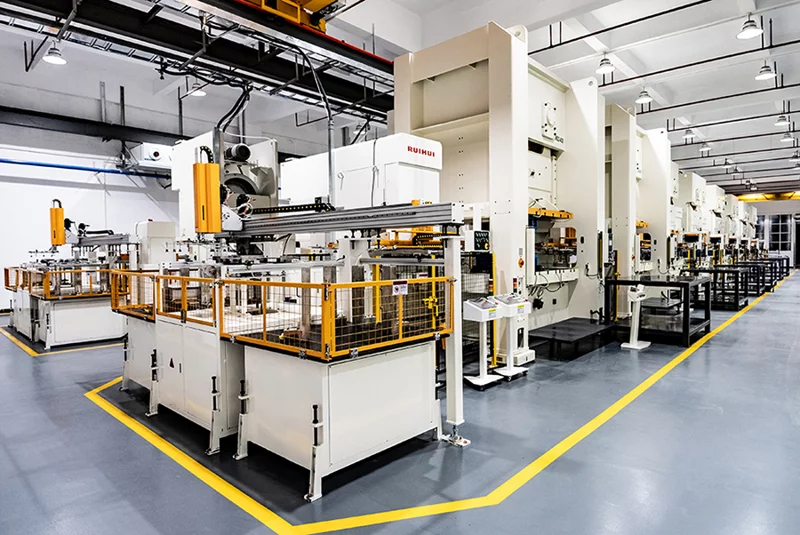
The synchronized loading and unloading of multiple presses relies on unified, coordinated timing. Each linear transfer robot has signal interlocks with the press before and after it: to pick up a part, the robot must wait until the previous press's slide has risen to the top position; the next press may only stroke after the robot has placed the part and exited. All signal interactions must be precisely coordinated for the entire line to run synchronously, without the press waiting for material or the robot crashing into the die.
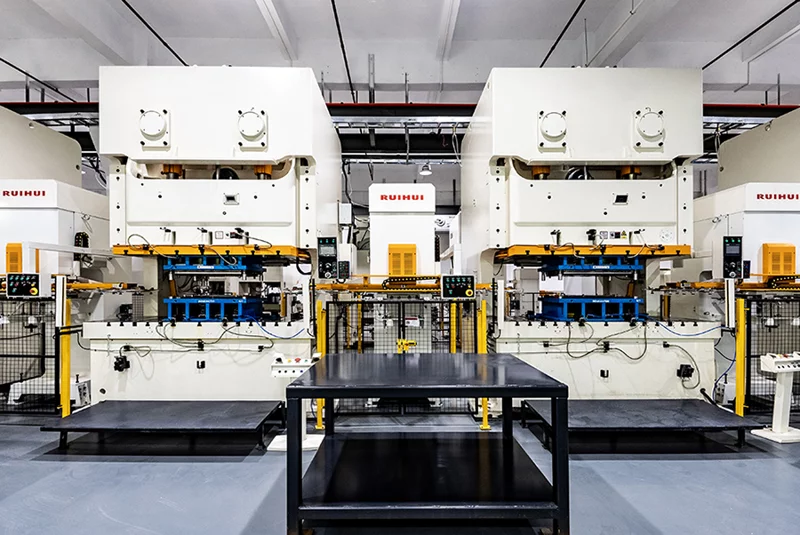
Why are linear transfer robots used for this type of production line? Because they have a simple structure, few moving parts, low inertia, and fast acceleration/deceleration. Their greatest feature is high transfer speed. For sheet metal parts with relatively regular shapes that do not require complex flipping, the linear transfer robot picks and delivers—clean and efficient—achieving very high cycle rates. For high-volume sheet metal production, speed translates directly into capacity, and the linear transfer robot's speed advantage becomes a capacity advantage.
Besides speed, linear transfer robots offer several other advantages. First, reliability: fewer motion axes and fewer transmission components mean a low failure rate and easy maintenance—ordinary maintenance technicians can service them, ensuring long-term continuous operation of the line. Second, precise positioning: servo motor drive combined with high-precision linear guide rails and encoder feedback provides high repeat positioning accuracy, so every part is placed in the same position, ensuring stable stamping quality. Third, compact layout: the linear transfer robot is installed between two presses, occupying little space and making the entire line more compact. Fourth, simple operation: touchscreen control with intuitive parameter settings allows workers to get up to speed quickly.
The multi-press tandem linear transfer robot stamping line is mainly used for producing medium-to-large sheet metal parts with large batch sizes and relatively regular shapes. Home appliances, 3C, and telecommunications are the primary application scenarios. Whether to use a single press or multiple presses depends mainly on the user's existing process—whether they already have one press or several. The press and die arrangement is planned first based on the part's process characteristics, and then automation is configured accordingly. Replacing manual loading and unloading with automation is the fundamental problem this line solves—workers no longer need to carry material back and forth between two presses. Physical labor is reduced, efficiency is improved, and safety is ensured.
Guangdong RuiHui Intelligent Technology Co., Ltd. has been deeply engaged in the field of stamping automation for over twenty years. It is a national "Specialized and Sophisticated" "Little Giant" enterprise, headquartered in Dongguan, with more than 400 employees and over 80 R&D personnel. RuiHui's linear transfer robots use servo drive and high-precision linear guide rails, offering a wide load range, high operating speed, and high positioning accuracy. They are widely used in multi-press tandem stamping lines and can be customized based on the customer's press spacing and workpiece dimensions, with complete line integration from front-end feeding to back-end collection. RuiHui has supplied multi-press tandem stamping automation lines to numerous home appliance, 3C, and telecommunications enterprises. With nearly 5,000 sets of equipment operating at customer sites both domestically and internationally, serving well-known OEMs and first-tier suppliers such as BYD, Geely, Volkswagen, Tesla, BMW, Mercedes-Benz, Honda, and Land Rover Jaguar, RuiHui has rich practical experience.
With years of hands-on experience, I have honed my skills in navigating the complexities of global commerce, offering invaluable insights and solutions to address customer needs. My commitment to excellence and dedication to customer satisfaction ensure that I deliver exceptional service, guiding clients through every step of the trading process with confidence and proficiency.
You may also like
Related News
Latest Update