

How to Configure Linear Transfer Robots for Multi-Press Tandem Lines Installation Method Between Each Press
Share to : 


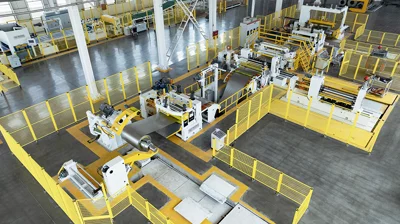
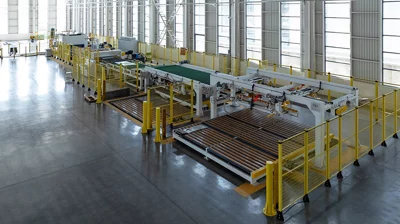
For a stamping line with multiple presses in tandem, how the linear transfer robots are configured and installed directly determines whether the line runs fast and stable. If the configuration is unreasonable, at best the cycle time cannot improve; at worst, pick-and-place operations jam and the entire line stops. For configuring linear transfer robots in a multi-press tandem line, several key points need to be clarified.
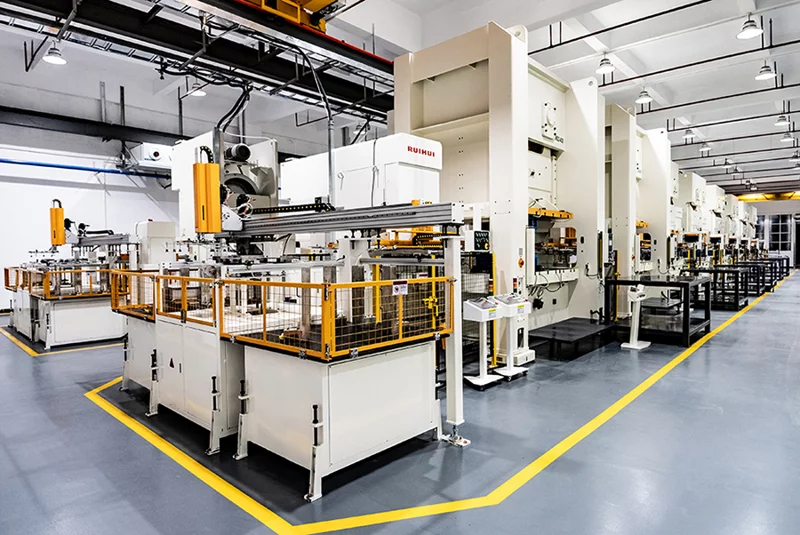
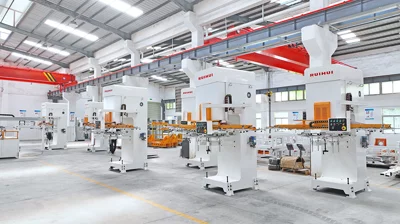
First, quantity configuration. Multiple presses are arranged in tandem according to the process sequence. The number of linear transfer robots is usually one between every two presses. For example, with five presses in tandem, there are four transfer links between operations, so four linear transfer robots are needed. For front-end loading and back-end collection, it also depends on whether destacking, feeding, and collection equipment are required. The total number of robots on the line is determined by the number of operations and the scale of the production line. There is no fixed number—matching is the key.
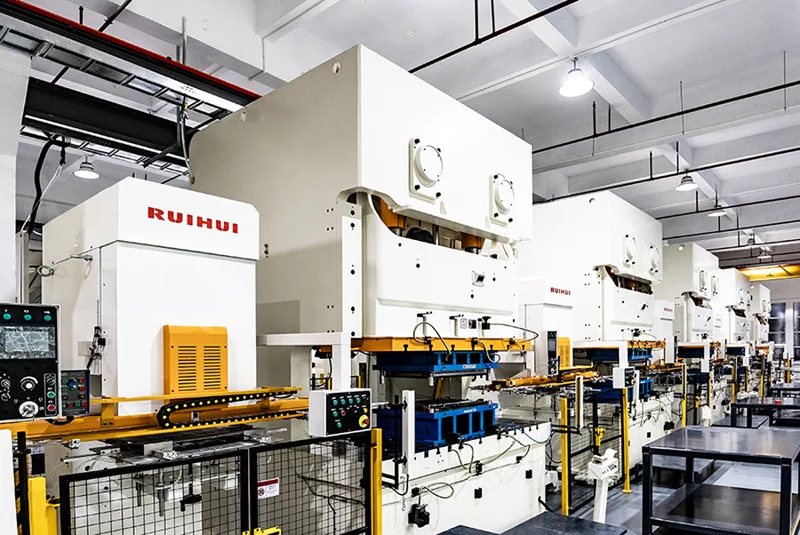
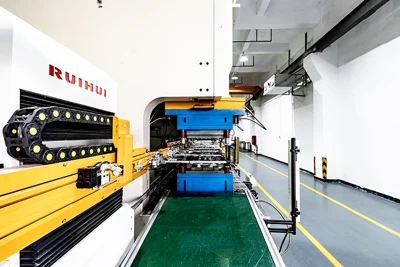
Next, installation position. The linear transfer robot is installed between two presses. The specific installation position must consider two factors: first, the press spacing. The robot's travel must cover the distance for picking and placing parts between the two presses. Once the press spacing is fixed, the robot's mounting base position and travel are determined accordingly. Second, the die position. The robot reaches into the die to pick and place parts, so its working range must align with the die's feed position. During installation, repeated verification is required to ensure the robot can accurately reach the workpiece inside the die. The mounting base must be stable—when the robot runs at high speed, inertial forces are generated, and an unstable base will vibrate, affecting positioning accuracy.
Then, installation height and angle. The installation height of the linear transfer robot must match the press's die working surface. The robot's pick-and-place plane must be consistent with the die's feed plane so that workpiece transfer is smooth. In terms of angle, the linear transfer robot mainly moves horizontally and is generally installed facing the press directly, with its motion direction aligned with the press's feed direction. In special cases where angle or height adjustment is needed, customized designs can be made, but the basic principle is to make the robot's motion path as short and smooth as possible.
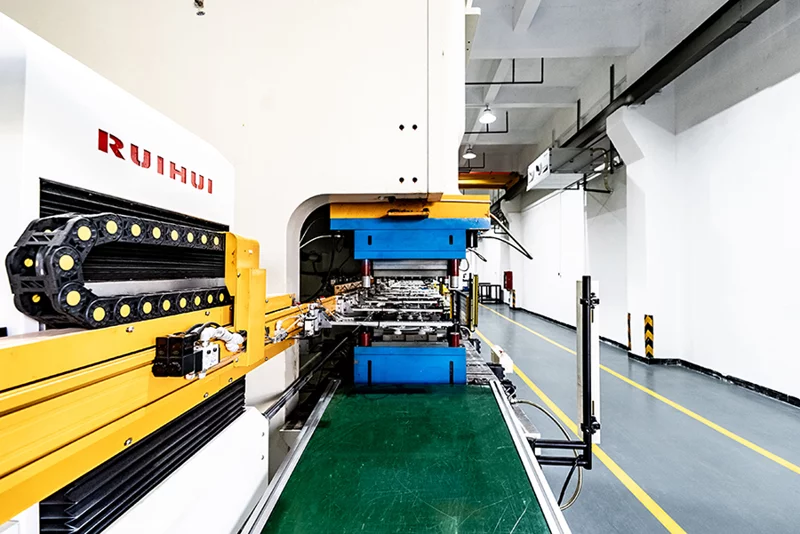
During configuration, load matching must be calculated clearly. The linear transfer robot's load must be calculated based on the workpiece weight plus the gripper weight, with a safety margin. At high speeds, inertial forces are greater than static weight, so sufficient load margin is important. If the load is insufficient, the robot will vibrate at high speed, positioning will be inaccurate, and in severe cases the mechanical structure may be damaged.
Travel matching also requires attention. The robot's travel must cover the distance between two presses plus the up/down travel needed for picking and placing parts. If the travel is insufficient, the robot cannot reach the workpiece inside the die; if the travel is too long, it affects operating speed. The most reliable approach is to provide the press spacing and die dimensions to the manufacturer and let them calculate the appropriate travel.
There is also gripper configuration. For flat parts, vacuum suction cups are used. The number and position of the suction cups are designed according to the workpiece shape to ensure secure holding and even force distribution. Irregular parts may require dedicated clamping jaws. The gripper should preferably use a quick-change structure, making it easy to replace when changing products and saving changeover time.
Finally, commissioning. After the linear transfer robot is installed, it must be commissioned online with the presses to verify the timing coordination of picking, placing, and retracting, and to verify whether the entire line's cycle time can meet the target. Commissioning is the last step of configuration and the most important one. If the timing coordination is not properly tuned, no matter how good the earlier configuration is, it will be useless.
Guangdong RuiHui Intelligent Technology Co., Ltd. has been deeply engaged in the field of stamping automation for over twenty years. It is a national "Specialized and Sophisticated" "Little Giant" enterprise, headquartered in Dongguan, with more than 400 employees and over 80 R&D personnel. RuiHui's linear transfer robots use servo drive and high-precision linear guide rails, offering a wide load range, high operating speed, and high positioning accuracy. The mounting base, travel, and gripper can all be customized according to the customer's press spacing, die position, and workpiece characteristics. RuiHui also provides online commissioning services. RuiHui has supplied multi-press tandem linear transfer robot stamping lines to numerous home appliance, 3C, and telecommunications enterprises. With nearly 5,000 sets of equipment operating at customer sites both domestically and internationally, serving well-known OEMs and first-tier suppliers such as BYD, Geely, Volkswagen, Tesla, BMW, Mercedes-Benz, Honda, and Land Rover Jaguar, RuiHui has rich experience in configuration and commissioning.
With years of hands-on experience, I have honed my skills in navigating the complexities of global commerce, offering invaluable insights and solutions to address customer needs. My commitment to excellence and dedication to customer satisfaction ensure that I deliver exceptional service, guiding clients through every step of the trading process with confidence and proficiency.
You may also like
Related News
Latest Update