

3‑Axis Robot Feeding Speed Stamping Takt Improvement Optimization Solution
Share to : 


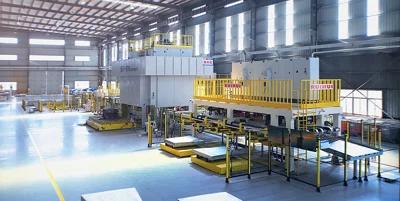
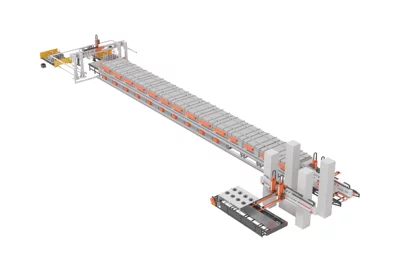
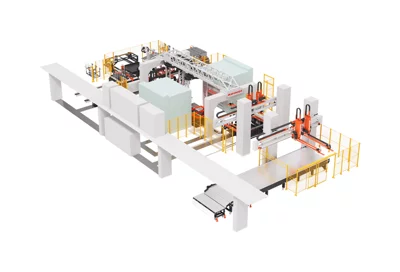
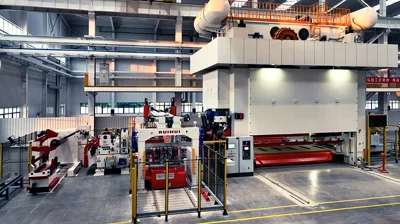
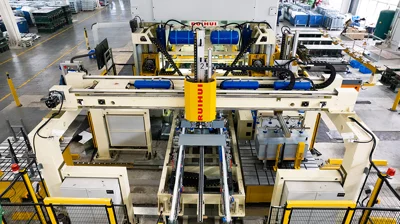
For single‑press multi‑station stamping lines, the feeding speed of 3‑axis (three‑dimensional) manipulators directly determines overall line takt. The manipulator’s pick‑and‑place cycle defines the interval between two stamping strokes, so cycle‑time reduction is critical for higher throughput.
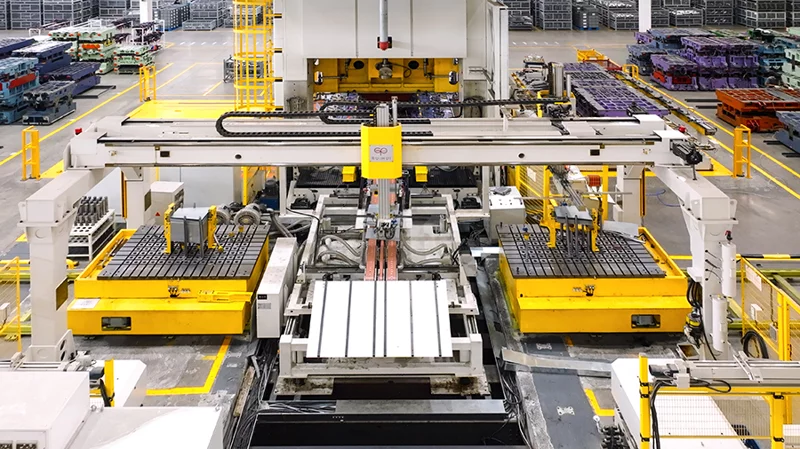
Axis motion sequencing exerts significant influence. Sequential execution of X‑axis traverse, Y‑axis lift and Z‑axis advance‑retreat generates polygonal travel paths and consumes longer cycle time. By adopting three‑axis simultaneous interpolation, the manipulator moves along smooth curved trajectories, e.g. lifting while traversing, and arrives at target position at the exact placement height. This approach shortens cycle time and ensures smoother motion.
Traverse movement accounts for the largest portion of cycle duration. Maximum traverse speed is constrained by mechanical rigidity, drive power and guide‑way precision. Sufficient structural stiffness, powerful drives and high‑precision guide‑ways enable higher traverse velocity. However, higher speed brings greater inertial force, causing impact during rapid stopping at end‑of‑travel. Deceleration buffering at traverse terminals achieves smooth positioning without mechanical shock.
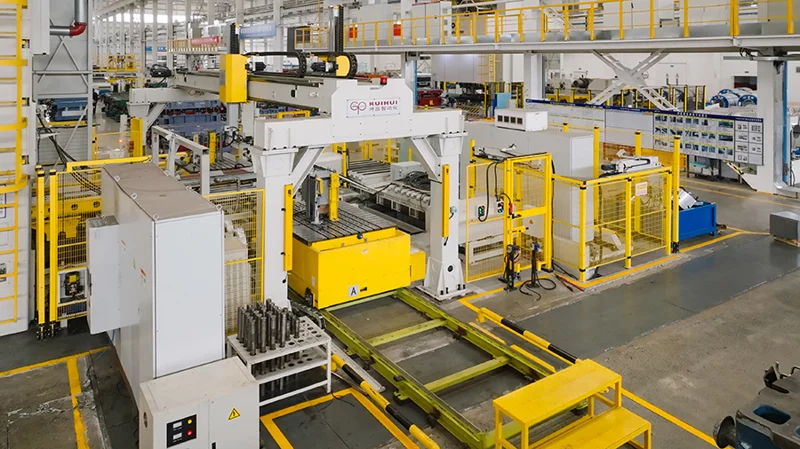
Although gripper opening‑closing strokes are short, they occur twice per full cycle (clamp for picking, open for placing). Slow gripper response accumulates and reduces takt. Pneumatic grippers feature fast response and suit high‑cycle‑rate conditions.
Signal interaction between manipulator and press also affects performance. The manipulator starts motion only after receiving completion signals from the press. Communication latency or long controller processing time wastes production time. High‑speed field‑bus communication keeps signal delay within millisecond range to minimize overhead.
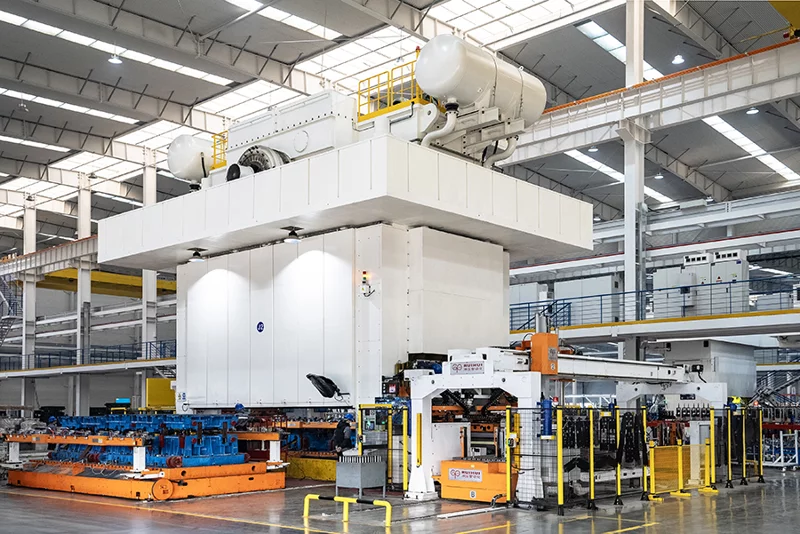
Adequate load margin is essential. Rated payload should exceed the combined weight of workpiece and gripper. Sufficient margin suppresses vibration and positioning deviation under high‑speed operation. Insufficient payload reserve forces automatic speed reduction for safety and limits takt.
Compared with manual workpiece transfer between multi‑station dies which suffers low speed, poor positioning accuracy and safety risks, three‑axis manipulators with synchronized multi‑axis motion deliver fast and repeatable pick‑and‑place performance for consistent product quality. Further feeding‑speed and takt gains can be realized by trajectory optimization, traverse‑speed enhancement, gripper tuning and high‑efficiency signal interconnection.
Guangdong Ruihui Intelligent Technology Co., Ltd. has over 20‑year experience in stamping automation and is a national Specialized, Refined, Differential and Innovative “Little Giant” enterprise. Headquartered in Dongguan, it has more than 400 employees including over 80 R&D engineers. Ruihui possesses rich practical experience in takt optimization for 3‑axis manipulators. Three‑axis coordinated trajectory planning, high‑speed traverse control and optimized signal communication help customers raise output capacity for single‑press multi‑station stamping lines. Nearly 5,000 sets of Ruihui‑manufactured equipment operate at domestic and overseas customer sites, serving well‑known OEMs and Tier‑one suppliers such as BYD, Geely, Volkswagen, Tesla, BMW, Mercedes‑Benz, Honda and Jaguar Land Rover.
With years of hands-on experience, I have honed my skills in navigating the complexities of global commerce, offering invaluable insights and solutions to address customer needs. My commitment to excellence and dedication to customer satisfaction ensure that I deliver exceptional service, guiding clients through every step of the trading process with confidence and proficiency.
You may also like
Related News
Latest Update