

Analysis of Application Solutions for Motor Silicon Steel Cut-to-Length Lines
Share to : 


In motor manufacturing, silicon steel sheets are the core material—motor cores are built by stacking layer upon layer of silicon steel sheets. The quality of the silicon steel sheets directly affects motor performance, and the first processing step for these sheets in many factories is completed on a cut-to-length line: cutting coiled silicon steel strip into individual sheets at fixed lengths. Silicon steel processing has its own characteristics, and the configuration of the cut-to-length line must be designed specifically for these characteristics.
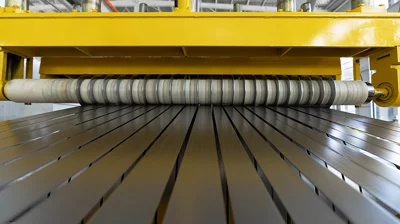
The first characteristic of silicon steel is that it is thin. Motor silicon steel sheets are mostly thin plates measuring a few tenths of a millimeter. The thinner the material, the higher the leveling requirements. Coils stored for long periods develop internal stresses. If leveling is not thorough, the strip will feed with curvature, making the cut-to-length measurement inaccurate and causing dimensional deviations in the cut silicon steel sheets. Therefore, the leveling stage of a motor silicon steel cut-to-length line is critical. Multi-roll leveling combined with appropriate back-up pressure fully eliminates internal stresses in the coil. Once the strip is flat and straight, subsequent shearing accuracy is guaranteed.
The second characteristic of silicon steel is that it is brittle and prone to burrs. If the cut edges of silicon steel sheets have large burrs, the burrs will pierce the insulation layer during stacking, affecting the performance of the motor core and potentially causing motor operation problems in severe cases. Therefore, blade clearance adjustment on the cut-to-length line is very important. Properly adjusted clearance produces clean cuts with minimal burrs. Today's better CNC cut-to-length lines feature automatic blade clearance adjustment: input the material thickness and type, and the system automatically calculates the appropriate clearance, eliminating the need for manual trial-and-error with feeler gauges. Burr control remains stable, and changing material thickness is fast.
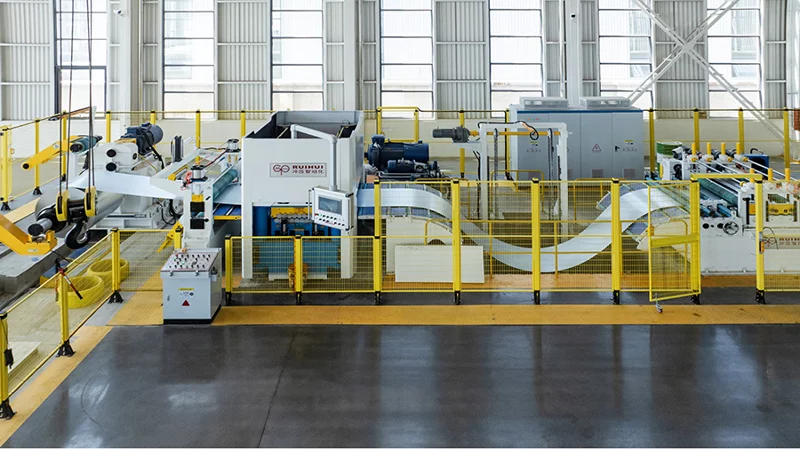
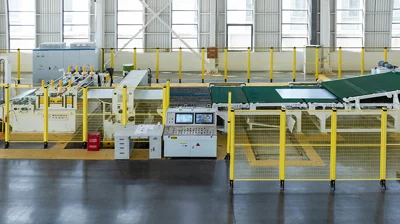
The third characteristic of silicon steel is its surface quality requirements. Silicon steel sheets have an insulation coating on the surface. If this coating is scratched, the insulation performance between stacked sheets will degrade. Therefore, for the stacking stage of a motor silicon steel cut-to-length line, magnetic stacking is generally recommended. Silicon steel itself is magnetic. Using a magnetic conveyor belt, magnetic force holds the sheets firmly against the belt and transports them to the receiving station, where they are gently set down—no bumps or impacts throughout, providing excellent protection for the surface coating. Moreover, silicon steel sheets come in various shapes, and some have special punched-shape requirements. Magnetic stacking also offers better adaptability to sheets of different shapes.
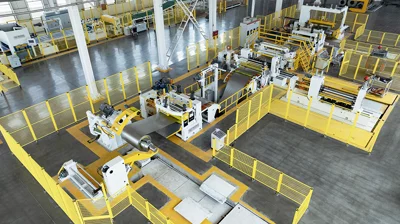
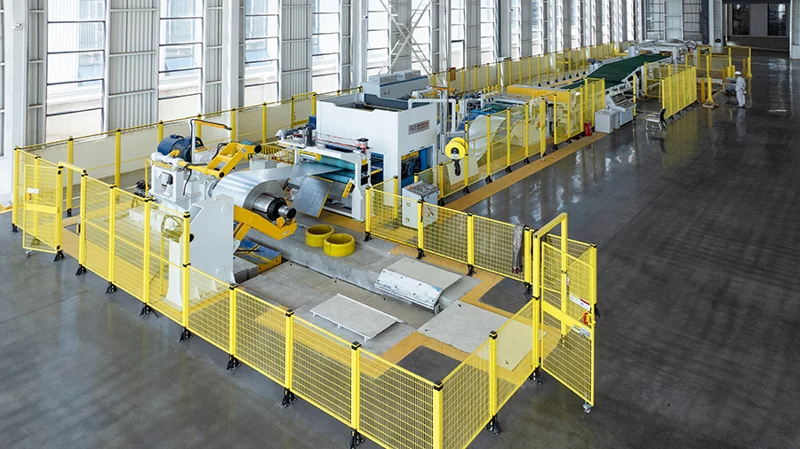
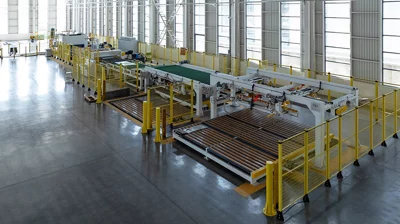
In addition to these targeted configurations, the overall process of a motor silicon steel cut-to-length line is as follows: coil loading, decoiling, leveling, cut-to-length feeding, shearing, and stacking. The entire line can achieve full-process automation. The coil is hoisted onto the decoiler and automatically expanded for tensioning; the strip is automatically threaded in; after leveling, a servo cut-to-length feeder precisely controls the cut length; and the cut silicon steel sheets are automatically stacked. Workers only need to intervene when changing coils—one person can oversee an entire line.
When selecting a motor silicon steel cut-to-length line, several parameters deserve close attention. First, cut-to-length accuracy: silicon steel sheets have strict dimensional requirements, and the accuracy of the cut-to-length feeder determines the consistency of the cut lengths. Second, leveling capability: thin materials demand high leveling performance, so the leveling roll configuration and clearance adjustment capability must be examined. Third, blade clearance adjustment: can it adjust automatically, and how well does it control burrs? Fourth, stacking method: magnetic stacking is recommended for silicon steel to protect the surface coating. Once these key points are confirmed, the configured cut-to-length line can truly meet the processing requirements for motor silicon steel sheets.
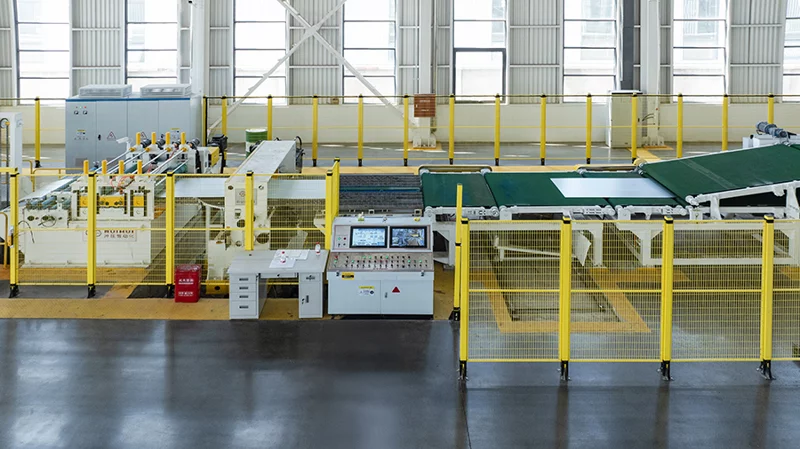
Guangdong RuiHui Intelligent Technology Co., Ltd. has been deeply engaged in the field of stamping automation for over twenty years. It is a national "Specialized and Sophisticated" "Little Giant" enterprise, headquartered in Dongguan, with more than 400 employees and over 80 R&D personnel. RuiHui's cut-to-length lines are maturely applied in the motor industry. Tailored to the characteristics of silicon steel—thin, brittle, prone to burrs, and susceptible to scratches—they are equipped with multi-roll leveling, automatic blade clearance adjustment, and magnetic stacking solutions. Servo cut-to-length feeding ensures shearing accuracy. They are used in motor core silicon steel processing, automotive sheet metal, home appliance sheet metal, and other industries. RuiHui has nearly 5,000 sets of equipment operating at customer sites both domestically and internationally, serving well-known OEMs and first-tier suppliers such as BYD, Geely, Volkswagen, Tesla, BMW, Mercedes-Benz, Honda, and Land Rover Jaguar, with rich experience in the motor industry.
With years of hands-on experience, I have honed my skills in navigating the complexities of global commerce, offering invaluable insights and solutions to address customer needs. My commitment to excellence and dedication to customer satisfaction ensure that I deliver exceptional service, guiding clients through every step of the trading process with confidence and proficiency.
Related Topics:
flying shear lineYou may also like
Related News
Latest Update