

Selection and Configuration Guide for Transformer Core Cut-to-Length Lines
Share to : 


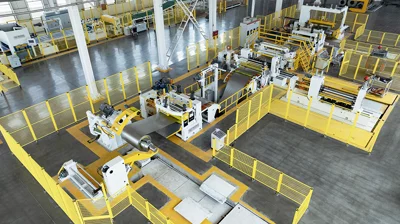
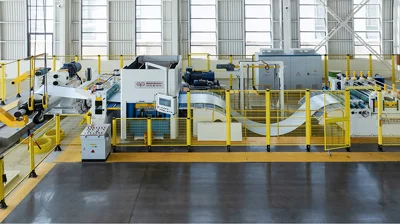
In transformer core production, the core material is silicon steel sheet, and the core is built by stacking layer upon layer of silicon steel sheets. The quality of the silicon steel sheets directly determines transformer performance. The first processing step for silicon steel sheets in many factories is completed on a cut-to-length line—cutting coiled silicon steel strip into individual sheets at fixed lengths. The selection and configuration of a cut-to-length line for transformer cores differ from those of ordinary sheet metal cut-to-length lines in several specific ways.
First, consider cut-to-length accuracy. Transformer core silicon steel sheets have extremely strict dimensional requirements. When stacked, sheet after sheet must fit together perfectly. If dimensional deviations are too large, the core cannot be assembled properly, and transformer performance suffers. Therefore, the cut-to-length feeding accuracy of the line is the top priority in selection. Servo cut-to-length feeding with encoder feedback is the basic configuration. The shearing length accuracy must meet the requirements for transformer silicon steel sheets—this is a hard specification.
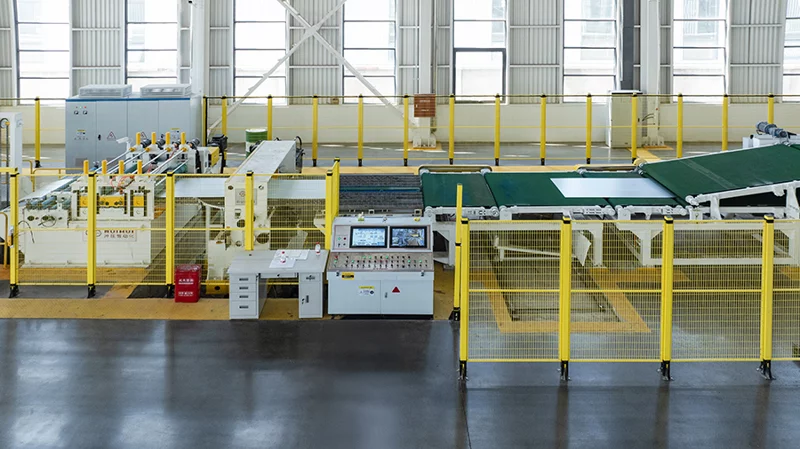
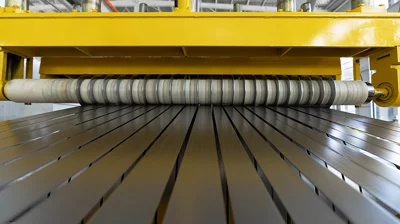
Second, consider leveling capability. Silicon steel strip is thin. Coils stored for long periods develop significant internal stresses, and the strip easily retains curvature. If leveling is not thorough, the cut-to-length measurement becomes inaccurate, and the cut silicon steel sheets have dimensional deviations. The silicon steel strip used for transformer cores is thin and more sensitive to leveling accuracy. The leveling roll configuration and clearance adjustment capability must be carefully examined. Thin material leveling requires a precision roll system and controllable pressure—it must not deform the silicon steel sheet.
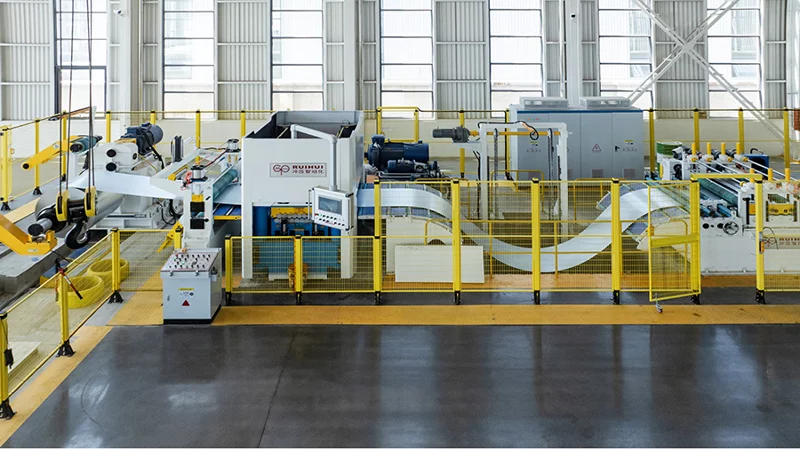
Third, consider shearing quality. Silicon steel is brittle, and the cut edges are most vulnerable to burrs. Silicon steel sheets with large burrs will pierce the insulation layer during stacking, affecting the insulation performance of the core and potentially causing transformer problems in severe cases. Therefore, blade material and clearance adjustment are critical. A cut-to-length line with automatic blade clearance adjustment lets you input material thickness and type, and the system automatically calculates the clearance. Burr control remains stable, and changing material thickness is fast. This configuration is very practical in transformer core production.
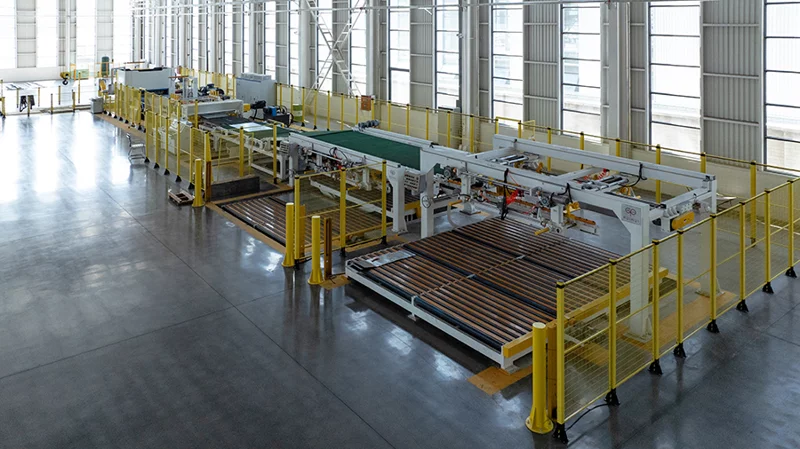
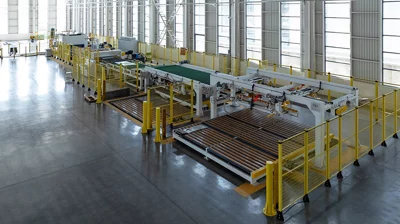
Fourth, consider the stacking method. Silicon steel sheets have an insulation coating on the surface. If the coating is scratched, the insulation performance of the core is affected. Therefore, magnetic stacking is recommended for the stacking stage. Silicon steel itself is magnetic. Using a magnetic conveyor belt, magnetic force holds the sheets firmly and transports them to the receiving station before gently setting them down—no bumps or impacts throughout, providing excellent protection for the coating. Silicon steel sheets come in various shapes, and magnetic stacking also offers better adaptability to sheets of different shapes.
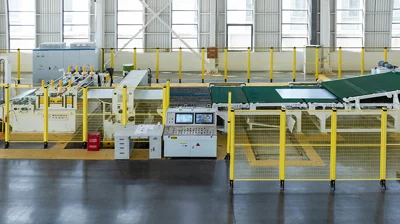
Fifth, consider the degree of automation. Transformer core production involves large batch sizes. If the cut-to-length line has a high degree of automation, the entire process from coil loading to shearing and stacking runs automatically. Workers only need to intervene when changing coils—one person can oversee an entire line, achieving high production efficiency and saving labor. Supporting features such as automatic loading trolleys and automatic stack changing should also be considered.
Sixth, consider the control system. Transformer silicon steel sheets come in many specifications, and different specifications have different dimensional parameters. A cut-to-length line with recipe management can store parameters for different specifications as recipes, recalled directly when changing specifications—convenient and less prone to errors. The ease of operation of the control system also directly affects daily usage efficiency.
Guangdong RuiHui Intelligent Technology Co., Ltd. has been deeply engaged in the field of stamping automation for over twenty years. It is a national "Specialized and Sophisticated" "Little Giant" enterprise, headquartered in Dongguan, with more than 400 employees and over 80 R&D personnel. RuiHui's cut-to-length lines have mature applications in the transformer core silicon steel sheet processing industry. Servo cut-to-length feeding ensures shearing accuracy; multi-roll leveling is optimized for thin materials; automatic blade clearance adjustment controls burrs; magnetic stacking protects the silicon steel sheet surface coating; and the entire line has a high degree of automation, with optional automatic loading trolleys and a recipe management system. They are widely used in core silicon steel sheet processing for motors, transformers, and other applications. RuiHui has nearly 5,000 sets of equipment operating at customer sites both domestically and internationally, serving well-known OEMs and first-tier suppliers such as BYD, Geely, Volkswagen, Tesla, BMW, Mercedes-Benz, Honda, and Land Rover Jaguar, with rich experience in silicon steel sheet processing.
With years of hands-on experience, I have honed my skills in navigating the complexities of global commerce, offering invaluable insights and solutions to address customer needs. My commitment to excellence and dedication to customer satisfaction ensure that I deliver exceptional service, guiding clients through every step of the trading process with confidence and proficiency.
You may also like
Related News
Latest Update