

Automation Retrofitting for Automotive Stamping Plants How to Choose the Right Supplier
Share to : 


Automation retrofitting in an automotive stamping plant is entirely different from buying new equipment. With new equipment, you simply follow standard specifications. But retrofitting is like "renovating an old house"—the line layout is fixed, the dies are already in place, and the processes have been running for over a decade. On this existing foundation, you need to remove manual labor, increase efficiency, and stabilize yield—which is far more complex than building a new line from scratch. That's why choosing the right supplier is even more critical than choosing the right equipment.
First, see if the supplier knows how to "diagnose."
A reliable retrofit supplier won't throw a solution and a quote at you right away. Instead, they'll send people to spend a few days on your shop floor—observing your part materials, die layout, current bottleneck operations, what your operators find most troublesome, and whether you have future changeover plans. It's the same principle as a good doctor—would you take medicine from someone who prescribes without even taking your pulse? Automotive stamping is characterized by large parts, multiple operations, and tight precision requirements. If a supplier starts proposing solutions without even carefully reviewing your part drawings, chances are they're applying a generic template—and you can rule them out immediately.

Second, look for "adaptation" capability, not just "replacement" capability.
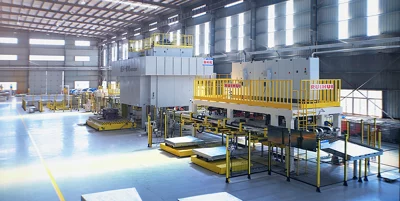
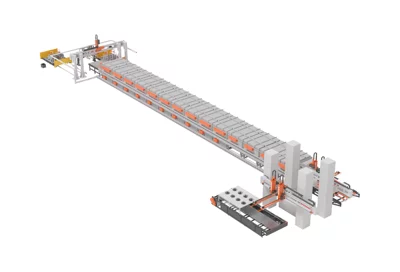
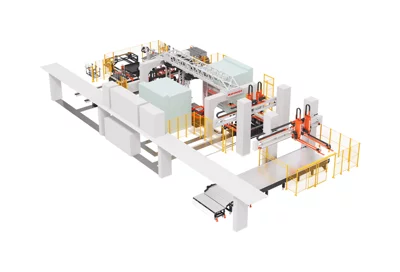
Many suppliers like to push "full-line replacement" solutions, claiming they're hassle-free. But for most stamping plants, the existing presses, dies, and conveyors represent significant capital investment—replacing everything is simply not realistic. Truly professional retrofitting leverages existing equipment by adding robots, upgrading control systems, and optimizing motion logic. For example, replacing manual inter-station transfer with 3-axis transfer robots for within-die handling, or using link-type transfer robots to move parts across machines on multi-press tandem lines—breathing new life into old presses.
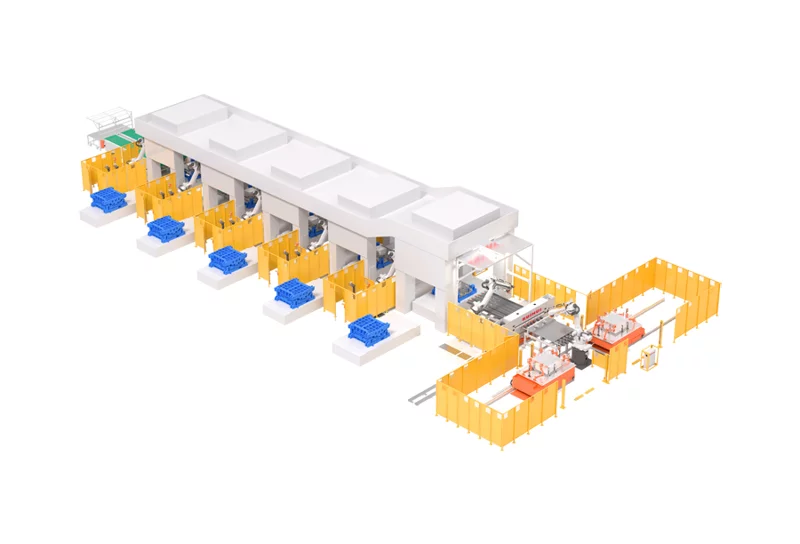
So when evaluating suppliers, assess whether they only know how to "replace with new" or whether they can "revitalize existing assets." The latter is where real technical expertise is tested.
Real-world case studies are more convincing than technical specifications.
When reviewing a supplier's case studies, make sure they're highly similar to your own production line. Automotive stamping parts fall into categories such as body panels, structural parts, and chassis components—each with different die layouts, material thicknesses, and precision requirements. If a supplier shows you case studies from home appliance housings, take it with a grain of salt—the scale and precision requirements of appliance parts are very different from automotive parts. Whenever possible, ask the supplier to arrange an on-site visit so you can see how long the equipment has been running, how stable it is, how long a changeover takes, and what the shop floor workers' real feedback is.
It's also worth noting that suppliers typically follow one of two technical paths: one uses imported brand-name robots for integration—offering good stability but at higher cost and longer commissioning time; the other uses domestic control systems for customized development—offering better cost-effectiveness but requiring the supplier to have strong in-house R&D capabilities. Neither is inherently better; the choice depends on your budget and production line complexity.
After-sales response speed is the bottom line that automotive stamping plants cannot compromise on.
Automotive stamping lines typically run 24/7 on two or even three shifts—every minute of downtime is a loss. When selecting a supplier, be sure to ask: How soon can an engineer arrive on-site after a breakdown is reported? Does the spare parts inventory include commonly worn components? Is there on-call support during holidays? Some suppliers boast "24/7 response" before signing the contract, but when a real failure occurs, they keep you waiting for two days—and once you've experienced that pain, you won't forget it.
Here's a useful tip: Ask the supplier about their most recent emergency service call—what the issue was, how long it took to resolve, and what the root cause was. If they can provide concrete details, it shows they have real hands-on experience. If their answer is vague, they're probably more talk than substance.
Finally, don't overlook whether the control system is "open architecture."
Automotive stamping plants face rapid product iteration—today you're making parts for Model A, and tomorrow you may need to switch to Model B. If the supplier locks you into a closed system—where every product change requires paying them to reprogram or modify hardware—the hidden costs will add up quickly. A good retrofit solution should leave sufficient interfaces at the control system level, allowing operators to adjust parameters via the touchscreen themselves during changeovers, without having to call the supplier every time.
Guangdong RuiHui Intelligent Technology Co., Ltd. has many years of deep experience in automotive stamping automation. RuiHui's 3-axis transfer robot and link-type transfer robot solutions have served the supply chains of globally renowned automotive manufacturers including BYD, Geely, Volkswagen, Tesla, and others, with extensive practical case studies in both single-press multi-station retrofits and multi-press tandem line integration. RuiHui's complete line solutions don't just stack equipment—they optimize from the process source, integrating the three-in-one feeder, transfer robots, and material collection system through a unified control system to ensure long-term stable operation. Of course, the final choice should be based on your workshop's specific conditions—comparing multiple suppliers and visiting multiple on-site cases is never a waste of time.
In summary: when choosing a retrofit supplier, first check their diagnostic capability, second their adaptation capability, third their relevant case studies, and finally their after-sales reliability. Screen through these four criteria, and you're essentially guaranteed to make the right choice.
With years of hands-on experience, I have honed my skills in navigating the complexities of global commerce, offering invaluable insights and solutions to address customer needs. My commitment to excellence and dedication to customer satisfaction ensure that I deliver exceptional service, guiding clients through every step of the trading process with confidence and proficiency.
You may also like
Related News
Latest Update