

Automotive Sheet Metal Production Line – Application Case of Sheet Tilter for Workpiece Turning
Share to : 


The automotive sheet metal production line is one of the most mature application areas for tilters. The stamping processes for automotive body panels and structural parts are complex, involving many steps and large materials, and the need for intermediate turning is particularly common. Let's look at a real‑world scenario to see exactly how a tilter is used.
The automotive side outer panel is a typical example. Side panels are quite large—usually over two meters long and more than one meter wide—made from steel or galvanized sheet with a thickness of 0.7 to 1.2 mm. The blanking line cuts the coil into individual side‑panel blanks and stacks them into piles. However, the blanks come out of the blanking line with the top side facing up, while the first operation on the subsequent stamping line—drawing—requires the blanks to enter the die with the back side facing up, because the oiled surface needs to align with the punch. If you feed them without turning, the oiling direction is wrong, and the drawing process is prone to cracking, causing the yield rate to drop directly.
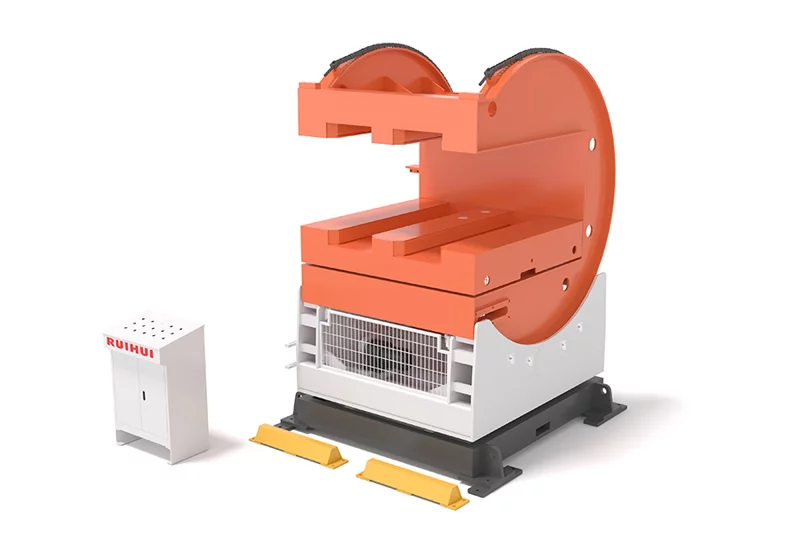
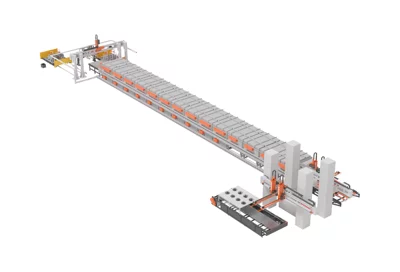
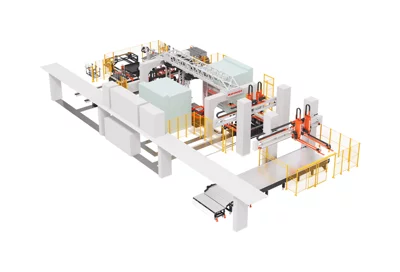
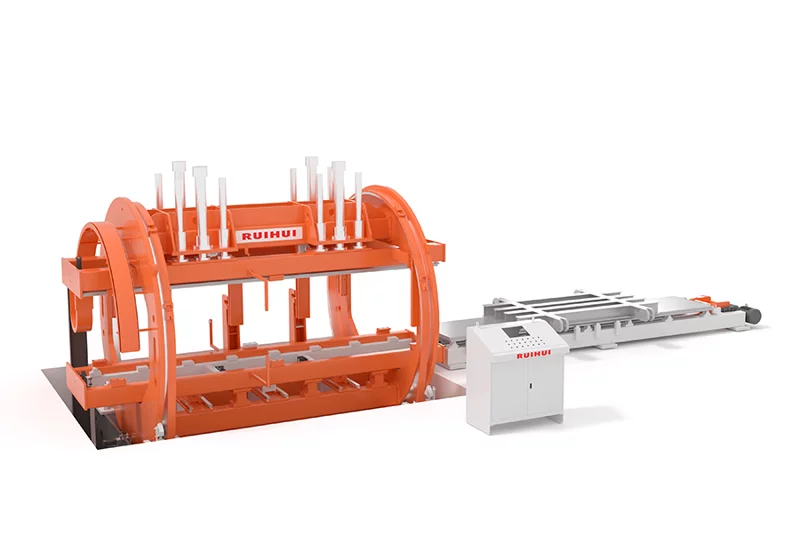
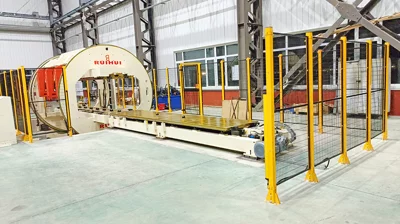
How was this handled before? Manual turning? A single sheet is one to two meters long—two people can barely lift it, and a stack has dozens of sheets—simply impossible. Using an overhead crane? The slings would bite into the edges, causing curling and scratches, and if the crane operation was not careful, the entire stack could collapse, sending all sheets to the scrap pile. Then came the tilter, and this problem was solved. A forklift delivers the entire stack of sheets onto the tilter table, the clamping device secures it, the tilting mechanism rotates the stack smoothly by 180 degrees, and after reaching the correct position, the clamps release. The forklift then picks up the turned stack and delivers it to the loading station of the stamping line. The whole process takes less than two minutes, with no relative sliding between sheets and no surface scratches at all.
Another scenario is the interface between hot stamping and cold stamping lines. For some automotive B‑pillar reinforcement parts, they are first cold‑stamped and then need to be turned over for subsequent laser cutting or welding. B‑pillar parts are over one meter long and weigh several kilograms; manual turning is slow and unsafe. In this intermediate step, the tilter acts as an orientation adjuster, delivering the part in the correct posture to the next process.
Tilters used on automotive sheet metal lines differ from ordinary tilters in several ways. First, they are large—able to handle sheets over two meters long and one meter wide. Second, they have high load capacity—a stack can weigh several hundred kilograms or even one to two tonnes, and the tilter must be able to handle that. Third, surface protection is critical—the appearance surfaces of automotive body panels cannot have any scratches, so the tilter table and clamping components that contact the sheets must be made of soft materials or coated with rubber. Fourth, positioning accuracy is important—the positional deviation of the turned stack must be minimal; otherwise, the subsequent manipulator may misalign when picking up the blanks.
In terms of parameters, the tilters most commonly used in the automotive industry typically accommodate sheet lengths from 700 to 4000 mm, widths from 500 to 1800 mm, and thicknesses from 0.5 to 1.5 mm. The single‑turn stack weight can reach several tonnes, the turning angle is mainly 180 degrees, and the cycle time for one turn is approximately 40 to 110 seconds.
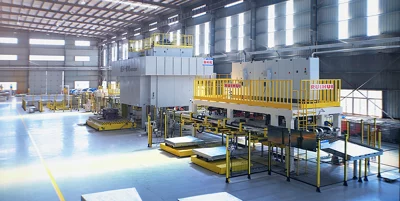
Guangdong RuiHui Intelligent Technology Co., Ltd. has accumulated extensive application cases in automotive sheet metal tilters. Among their stamping automation auxiliary equipment, the large‑sheet tilter is specifically designed for turning stacks of automotive body panels and large structural parts, and it operates in coordination with the feed system, manipulators, and palletizers on the entire stamping line. RuiHui's products have served globally renowned OEMs and Tier‑1 suppliers including BYD, Geely, Volkswagen, Tesla, BMW, Mercedes‑Benz, and Honda. On these customers' production lines, the tilter may not be the most conspicuous piece of equipment, but without it, the connection between upstream and downstream stages would not run smoothly—which shows just how important this "unobtrusive" device really is in actual production.
With years of hands-on experience, I have honed my skills in navigating the complexities of global commerce, offering invaluable insights and solutions to address customer needs. My commitment to excellence and dedication to customer satisfaction ensure that I deliver exceptional service, guiding clients through every step of the trading process with confidence and proficiency.
You may also like
Related News
Latest Update