

How Hot Stamping Loading Unloading Robots Achieve High-Temperature Resistance Key Points for End Effector Material Selection
Share to : 


Hot stamping produces high-strength steel parts, and the blanks must be heated to around 800–900°C. Throughout the production process, the most demanding step for equipment is high-temperature loading and unloading. Once the blank is red-hot, who picks it up and who places it? Only a hot stamping loading/unloading robot can do it. Since the robot must directly contact blanks at 800–900°C, high-temperature resistance becomes the key to whether it can be used at all. So how exactly is the high-temperature resistance of a hot stamping robot achieved? The answer is straightforward: mainly through the high-temperature resistance of the end effector material.
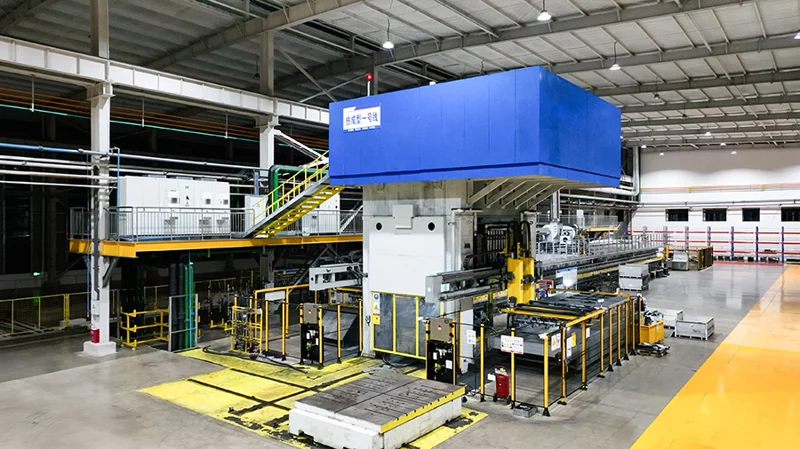
First, let's clarify which part of the robot is most vulnerable to high temperature. The part that contacts the hot blank is the end effector—the component at the end of the robot used to grip the blank. During loading, the end effector must grip the red-hot blank from the furnace outlet, directly contacting temperatures of 800–900°C. During unloading, although the formed part has cooled somewhat, it is still very hot. The end effector is the component that deals with high temperature the most, and its high-temperature resistance determines whether the robot can perform this task.
So how can the end effector resist high temperature? The core lies in the material. Hot stamping robot end effectors are essentially always grippers, made from a high-temperature alloy material. This material is specifically designed for high-temperature conditions. At 800–900°C, while in prolonged contact with hot blanks, it does not deform, soften, or fail, and can still securely grip the blank. This is how high-temperature resistance is achieved—by relying on the material itself to withstand the heat, not on any special design.
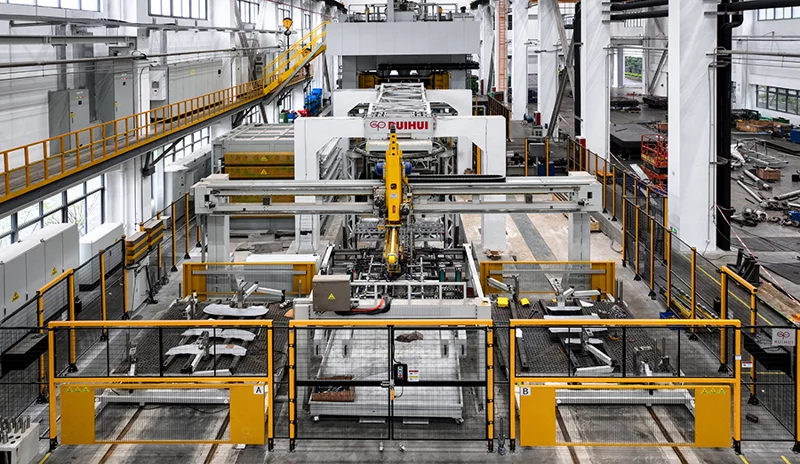
Why are hot stamping robot end effectors essentially always grippers rather than suction cups? Because suction cups rely on vacuum, and their material is rubber or plastic, which cannot withstand 800–900°C—they would melt on contact. Especially during loading, when the blank has just come out of the furnace and is at its hottest, suction cups cannot even touch it. Therefore, hot stamping robot end effectors are essentially always grippers. High-temperature resistance depends mainly on the end effector material itself. This principle is direct: if the material cannot withstand the heat, no design will help.
When selecting end effector materials, several points are critical. First, the temperature rating must cover the highest blank temperature in your production, with sufficient margin. Second, strength at high temperature: when gripping a blank at 800–900°C, the gripper must not soften or deform and must hold securely. Third, wear resistance and service life: under high-temperature conditions with frequent gripping, the end effector must have a sufficient service life and not wear out after a short period. Fourth, thermal fatigue performance: after repeated heating and cooling cycles, the material must not crack or fail from fatigue.
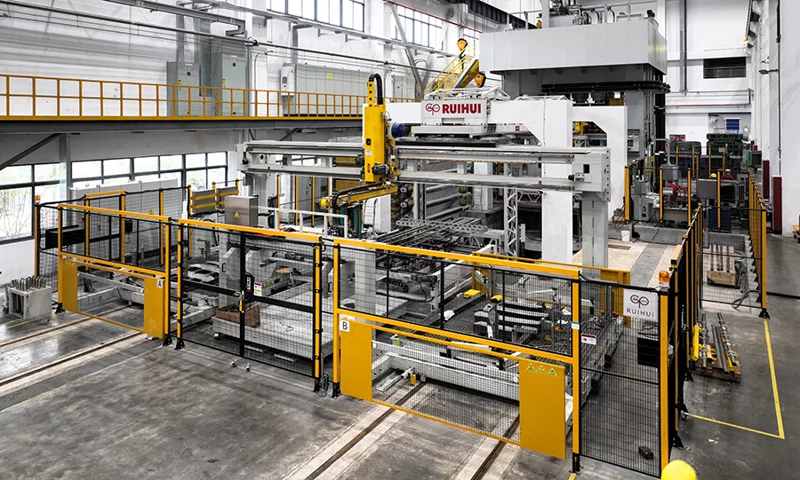
In addition to the end effector material, several auxiliary aspects contribute to the high-temperature resistance of a hot stamping robot. First, the robot as a whole must adapt to the high-temperature environment. When working near high-temperature zones for extended periods, the drive system must have thermal insulation to prevent motors and sensors from being damaged by heat. Second, the control system must be stable. High-temperature environments test electronic components, and the control system must operate reliably under such conditions. Third, cooling measures: some parts require auxiliary heat dissipation to ensure the robot runs continuously without overheating and stopping.
One easily overlooked point is end effector maintenance. Under high-temperature conditions, end effectors wear faster than at room temperature. Their condition should be checked regularly, and worn or deformed parts should be replaced promptly. Do not wait until the gripper can no longer hold the blank securely—by then production will be affected. Spare parts should be kept in sufficient supply and be easy to replace. These details all affect whether the hot stamping line can run continuously and stably.
Guangdong RuiHui Intelligent Technology Co., Ltd. has been deeply engaged in the field of stamping automation for over twenty years. It is a national "Specialized and Sophisticated" "Little Giant" enterprise, headquartered in Dongguan, with more than 400 employees and over 80 R&D personnel. For the high-temperature conditions of hot stamping, RuiHui has developed high-temperature-resistant loading and unloading robots. The end effectors use high-temperature alloy grippers that withstand the heat of hot blanks for extended periods without deforming or failing. The drive system is designed with thermal insulation to ensure the robot operates stably for long periods in high-temperature environments. RuiHui has supplied hot stamping automation lines to numerous automotive parts manufacturers. With nearly 5,000 sets of equipment operating at customer sites both domestically and internationally, serving well-known OEMs and first-tier suppliers such as BYD, Geely, Volkswagen, Tesla, BMW, Mercedes-Benz, Honda, and Land Rover Jaguar, RuiHui has rich experience in the hot stamping field.
With years of hands-on experience, I have honed my skills in navigating the complexities of global commerce, offering invaluable insights and solutions to address customer needs. My commitment to excellence and dedication to customer satisfaction ensure that I deliver exceptional service, guiding clients through every step of the trading process with confidence and proficiency.
Related Topics:
hot stamping formingYou may also like
Related News
Latest Update