

How to Select Six‑Axis Robots for Robot‑Based Stamping Lines Key Points for Payload and Reach Matching
Share to : 


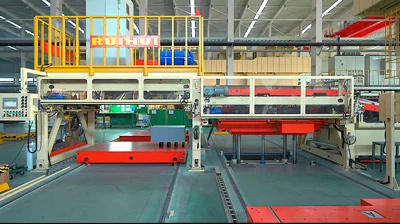
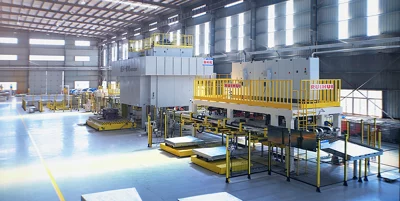
Six‑axis robots act as the core loading‑unloading units for robot‑based stamping lines. Proper robot selection directly determines whether the whole line can operate reliably. Payload‑and‑reach matching is critical for six‑axis robot selection; only when these parameters fit workpieces can robots perform handling tasks. Key matching points for payload and reach are explained as follows.
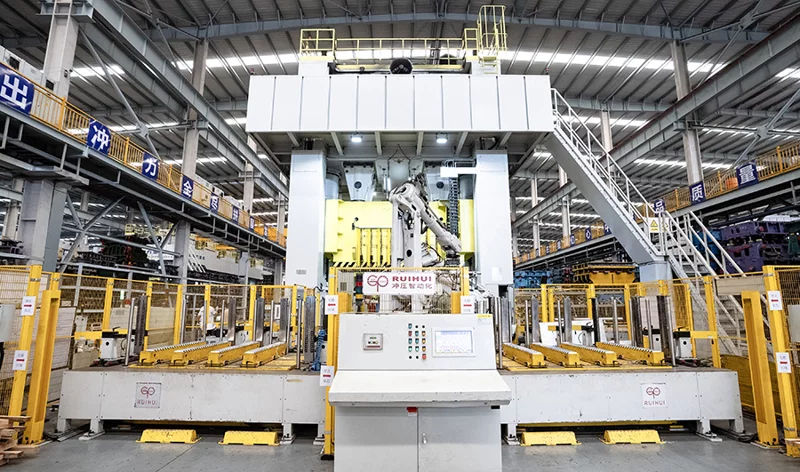
In terms of payload matching, payload refers to the maximum weight a robot can handle. Selection shall be calculated based on the combined weight of workpiece and end‑of‑arm tooling with sufficient safety margin reserved. During high‑speed motion, inertial force generated by workpieces exceeds static weight. Adequate payload margin ensures stable operation. Insufficient payload will cause vibration, positioning deviation, or even alarm shutdown under high‑speed conditions. For large parts such as automotive body panels weighing dozens of kilograms, payload shall be calculated according to the maximum‑weight workpiece instead of average weight.
The weight of end‑of‑arm tooling including grippers and suction cup frames must be included, as these tools consume part of the robot payload. Heavier end‑of‑arm tooling reduces the allowable weight of workpieces. Suppliers shall calculate total payload demand with end‑of‑arm tooling taken into consideration during model selection.
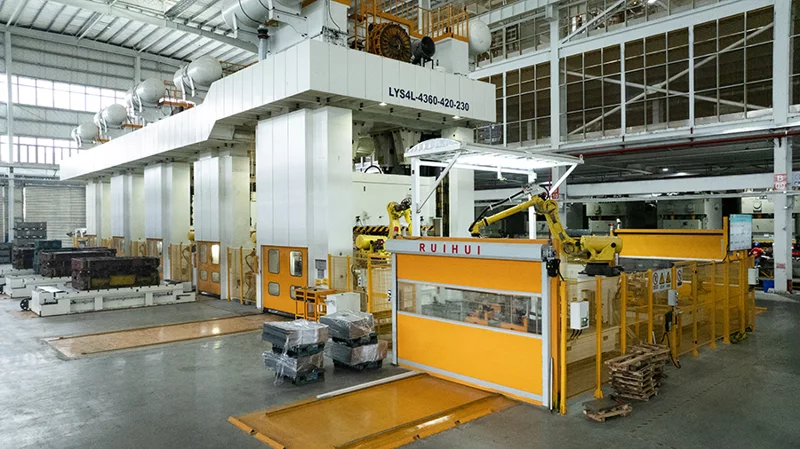
For reach matching, reach means the maximum distance the robot can access and determines whether it can reach workpieces inside dies. It shall be evaluated based on robot working radius. Installed between two presses, the robot must cover both the part‑picking position of the previous station and the part‑placing position of the next station. Insufficient reach will force modification of station layout for the entire line.
Posture shall also be considered for reach matching. Instead of straight‑line extension, the robot rotates joints and adjusts angles for pick‑and‑place operations, so its practical accessible range is smaller than theoretical reach. Sufficient margin shall be reserved to enable stable pick‑and‑place under various postures and avoid unreachable positions.
Apart from payload and reach, other parameters deserve attention. Repeat positioning accuracy guarantees consistent part‑placing positions and product quality. Operating speed determines line takt time; robots with superior motion performance are required for high‑takt production. Six degrees of freedom of six‑axis robots enable flexible posture adjustment to adapt to diverse pick‑and‑place gestures.
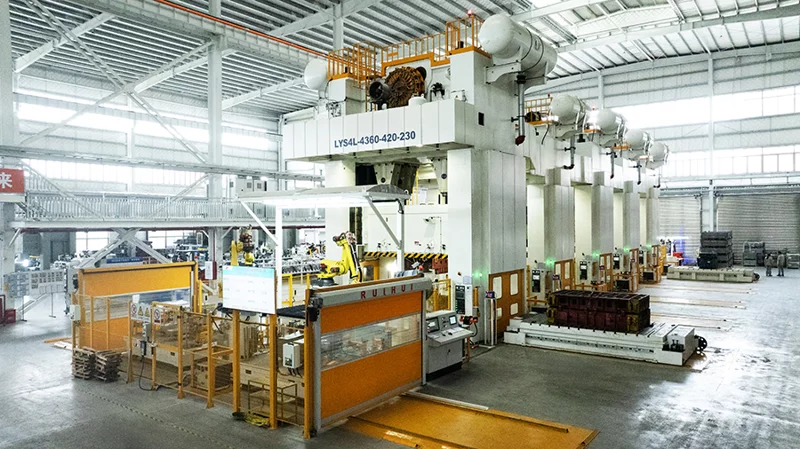
Supporting configuration should also be evaluated. Grippers are customized according to workpiece profiles; vacuum multi‑point suction cups are adopted for body panels. Signal communication between robots and presses shall be implemented with well‑designed time‑sequence coordination and safety interlocks. Provide suppliers with workpiece dimensions, weight and process conditions to obtain customized selection proposals including takt simulation to verify whether robots can finish pick‑and‑place cycles within target takt time.
Robot selection does not mean choosing maximum parameters blindly. Payload, reach, accuracy and speed shall match practical production requirements. Well‑matched robots deliver fast and stable performance; over‑specified models lead to wasted capacity and excessive investment. Clarify actual demands and communicate fully with experienced suppliers to select suitable robots.
Guangdong Ruihui Intelligent Technology Co., Ltd. has more than 20 years of experience in stamping automation and is a national Specialized, Refined, Differential and Innovative “Little Giant” enterprise. Headquartered in Dongguan, it has over 400 employees including more than 80 R&D engineers. When planning robot‑based stamping lines, Ruihui carries out payload‑reach calculation and takt simulation according to workpiece dimensions, weight and process layout. Custom‑designed robot grippers adopt multi‑point vacuum suction for body panels to protect surface quality. Robust signal docking and safety interlocks are realized between robots and presses for turn‑key whole‑line delivery. Nearly 5,000 sets of Ruihui‑manufactured equipment are running at domestic and overseas customer sites. The company serves well‑known OEMs and Tier‑one suppliers such as BYD, Geely, Volkswagen, Tesla, BMW, Mercedes‑Benz, Honda and Jaguar Land Rover, with abundant practical experience in robot‑based stamping lines.
今天 22:57
What are the common types of six-axis robots used in stamping lines?
How to ensure the stability and accuracy of six-axis robots in stamping operations?
Can six-axis robots be used in other manufacturing processes besides stamping?
With years of hands-on experience, I have honed my skills in navigating the complexities of global commerce, offering invaluable insights and solutions to address customer needs. My commitment to excellence and dedication to customer satisfaction ensure that I deliver exceptional service, guiding clients through every step of the trading process with confidence and proficiency.
You may also like
Related News
Latest Update