

What Is a Multi-Press Tandem Robot Stamping Line and How Are Automatic Loading and Unloading Achieved Across Multiple Presses
Share to : 


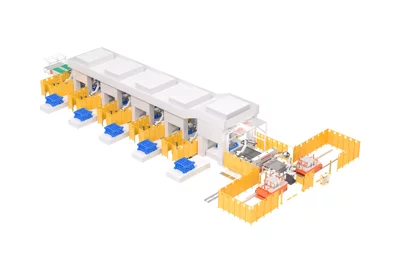
Stamped parts come in different sizes. Some parts require many operations and are large in size. A single press has a limited bed area and cannot accommodate so many die sets, so the operations must be split and performed on multiple presses. Multiple presses are arranged in a row according to the process sequence: the first press performs the first operation, the second press performs the second, and so on—this is called multi-press tandem. The transfer of workpieces along the tandem line—removing from one press and delivering to the next—is the job of robots. Placing robots into this line creates a multi-press tandem robot stamping line.
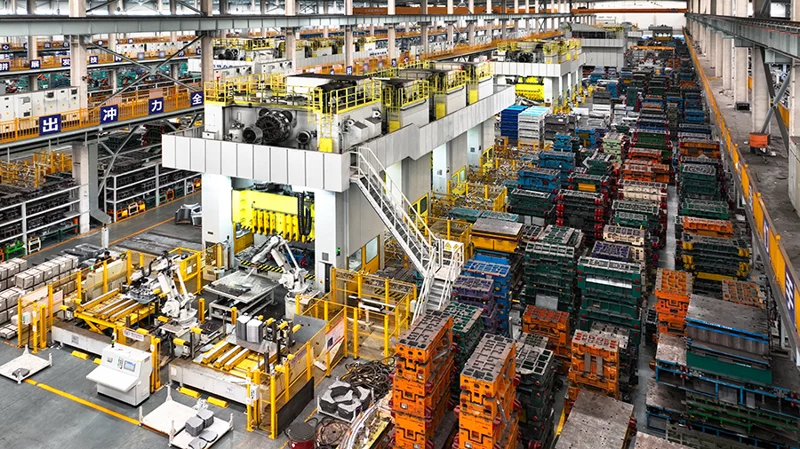
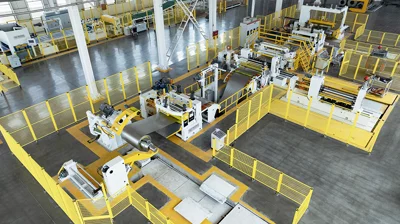
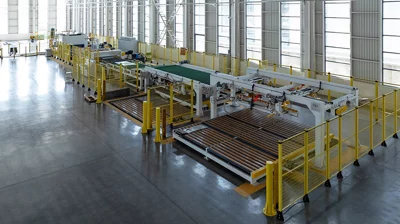
The composition of a multi-press tandem robot stamping line is not complicated: multiple presses are arranged in a row according to the process sequence, each press handling one operation. Between every two presses, a six-axis industrial robot handles loading and unloading transfer. At the front end, destacking and feeding equipment delivers blanks to the first press; at the back end, part collection and stacking equipment automatically gathers finished parts. The entire line, from blank loading to finished part collection, runs fully automatically, with no manual handling of material between presses.
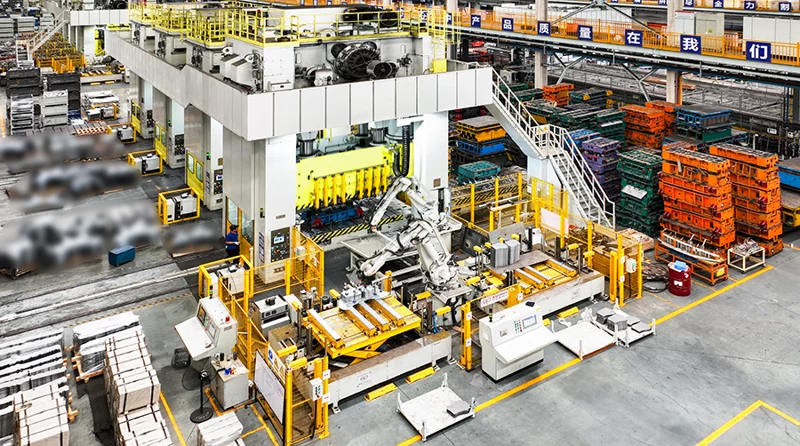
So how exactly does the robot achieve automatic loading and unloading across multiple presses? Its working logic is as follows: after the previous press completes its stroke and the slide rises to the top position, the robot removes the workpiece from the die. The robot carries the workpiece to the next press, positions it above the die, places it in position, and exits the die area. The next press confirms that the robot has retreated to a safe position before beginning its stroke. The robot's pick, transfer, and place actions are strictly coordinated with each press's cycle. Cycle after cycle, the entire line runs continuously.
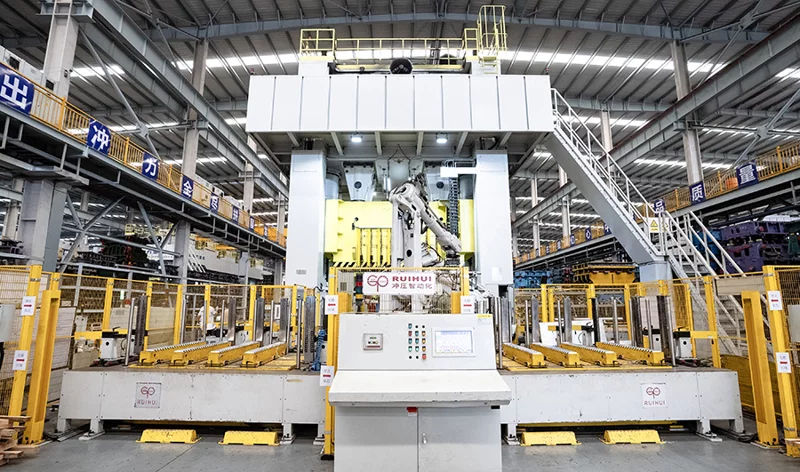
Why are robots used on tandem lines for large, multi-operation parts? Because a robot has six axes—six joints—making its motion extremely flexible. Large sheet metal parts sometimes need to be flipped or angle-adjusted between operations. The robot can perform complex posture adjustments, rotating the workpiece into the required orientation for the next operation before placing it. This flexibility is its core advantage for handling large parts. At the same time, the robot places parts with precise repeatability—every pick and place is consistent—ensuring product dimensional consistency.
Manual handling of large parts is both exhausting and dangerous. The workpieces are large and heavy, difficult for workers to carry, and prone to surface damage during handling. Outer panels have high surface quality requirements—any bump or scratch means scrap. Robots use multi-point vacuum suction cups to pick up parts, distributing force evenly without causing local deformation or surface scratches like manual gripping. After automation, robots do not tire and maintain a stable cycle time, improving efficiency while reducing workers' physical strain.
Safety is one of the greatest improvements of this line. The most dangerous aspect of a stamping shop is manual loading and unloading—especially on large presses with massive dies and high tonnage. Workers reaching into the die area risk severe injury if they make a mistake. The robot tandem line completely replaces human operators in hazardous areas; workers only need to monitor equipment from safe zones. There are comprehensive safety interlocks between the robots and presses: the press will not operate unless the robot has retreated to a safe position, and the robot will not reach into the die unless the press is at a safe angle. Safety fences and light curtains provide additional protection, greatly reducing the risk of workplace injuries.
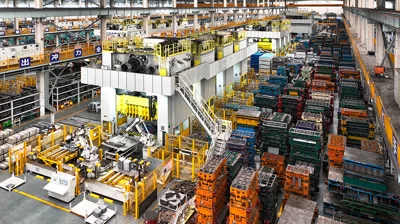
The application of multi-press tandem robot stamping lines is mainly for production scenarios where parts are large, require many operations, and cannot fit on a single press—such as medium-to-large body panels for automotive bodies. Multiple presses in tandem take up more floor space, so adequate space must be reserved during planning. During changeovers, every press requires a die change, and the robot programs must also be adjusted. Therefore, this configuration is better suited for relatively fixed products and larger batch sizes. Whether to use a single press or multiple presses depends mainly on the user's existing process—whether they already have one press or several. The press and die arrangement is planned first based on the part's process characteristics, and then automation is configured accordingly.
Guangdong RuiHui Intelligent Technology Co., Ltd. has been deeply engaged in the field of stamping automation for over twenty years. It is a national "Specialized and Sophisticated" "Little Giant" enterprise, headquartered in Dongguan, with more than 400 employees and over 80 R&D personnel. RuiHui's multi-press tandem robot stamping lines are widely used in the automotive large parts industry. They can be configured with six-axis industrial robots based on product characteristics and cycle time requirements, with complete line integration from front-end destacking and feeding to back-end part collection and stacking. There are comprehensive safety interlocks and timing coordination between the robots and presses. RuiHui has supplied multi-press tandem stamping automation lines to numerous automotive OEMs and first-tier suppliers. With nearly 5,000 sets of equipment operating at customer sites both domestically and internationally, serving well-known companies such as BYD, Geely, Volkswagen, Tesla, BMW, Mercedes-Benz, Honda, and Land Rover Jaguar, RuiHui has rich practical experience.
With years of hands-on experience, I have honed my skills in navigating the complexities of global commerce, offering invaluable insights and solutions to address customer needs. My commitment to excellence and dedication to customer satisfaction ensure that I deliver exceptional service, guiding clients through every step of the trading process with confidence and proficiency.
You may also like
Related News
Latest Update