

Roller Hearth Furnace vs Box Furnace What Are the Differences in Their Application Scenarios in Hot Forming Stamping Lines
Share to : 


In the hot stamping forming process, the heating furnace is the critical piece of equipment that heats materials such as boron steel to the austenitizing temperature. Currently, there are two main types of heating furnaces: roller hearth furnaces and box furnaces. Their working principles and application scenarios differ significantly, and the choice between them directly impacts production line efficiency and product positioning.
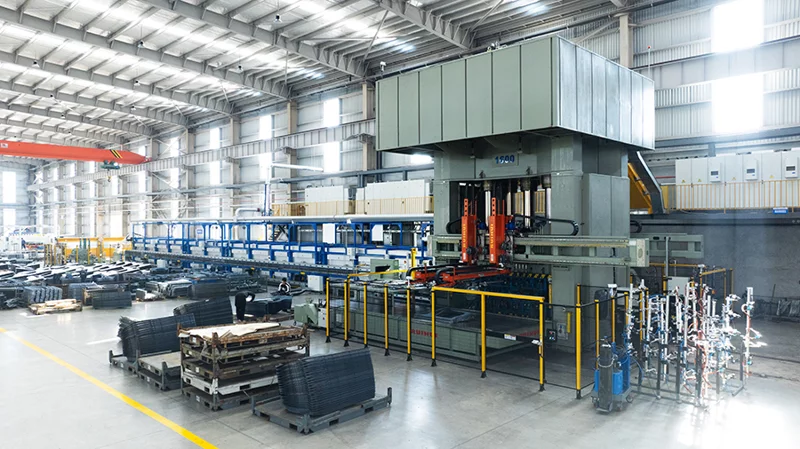
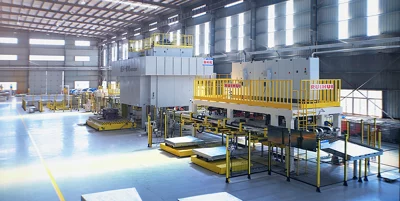
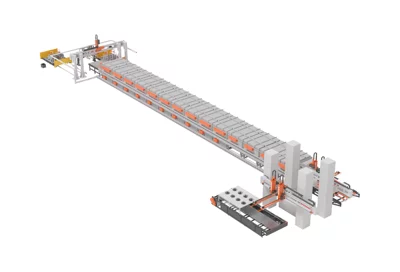
Roller hearth furnaces, also known as continuous heating furnaces, operate on a principle similar to a conveyor belt. Sheets are placed on heat-resistant rollers and move at a constant speed through a long heating zone, reaching the target temperature as they travel. The greatest advantage of this solution is high efficiency and fast cycle times, enabling seamless integration with the stamping production line for fully automated continuous production. It is particularly well-suited for high-volume, single-variety production—such as automotive B-pillars, anti-intrusion beams, and other safety structural parts. These components have relatively regular shapes and are produced in enormous quantities, where the roller hearth furnace's high-speed continuous production capability can be fully utilized.
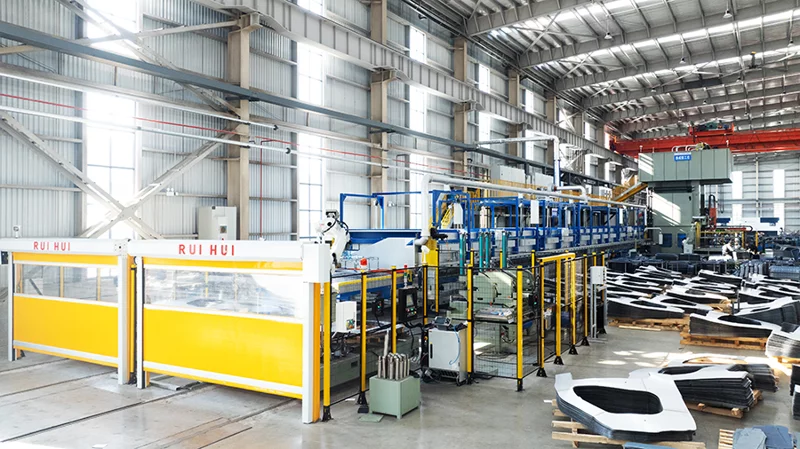
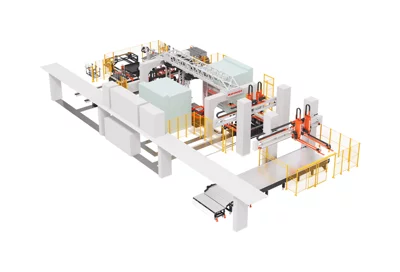
Box furnaces, also known as batch-type furnaces, work more like an oven. A robot with a fork transfers sheets into a closed furnace chamber, the door closes, and the material is heated and held at temperature. After heating is complete, the door opens and the fork retrieves the sheet. The advantage of this solution lies in its flexibility—the atmosphere and temperature field inside the furnace are easier to control precisely, making it suitable for heating parts with complex geometries or extremely demanding temperature uniformity requirements. Additionally, box furnaces can easily achieve a "one-to-many" configuration, where one furnace serves multiple presses, or multiple furnaces serve one press, offering greater production scheduling flexibility. It is better suited for multi-variety, small-batch, or pilot production runs.
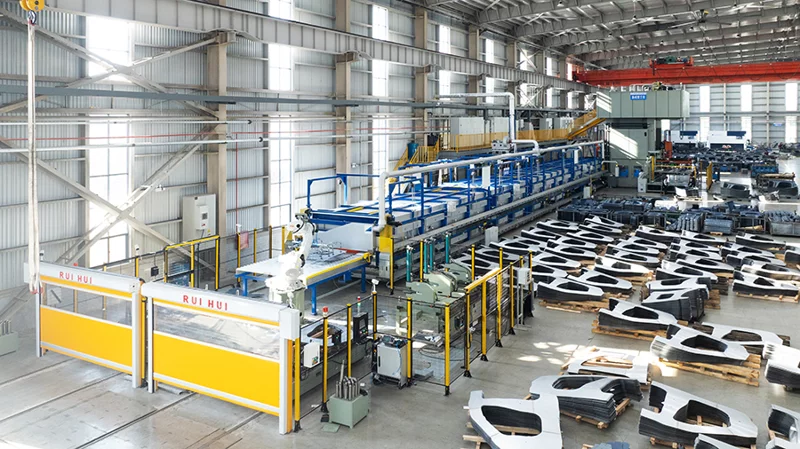
In terms of floor space, roller hearth furnaces require a long heating tunnel and therefore occupy a larger footprint. Box furnaces, by contrast, have a more compact structure and take up relatively less space.
Guangdong RuiHui Intelligent Technology Co., Ltd. also has a strong presence in the hot forming automation field. RuiHui provides loading/unloading automation solutions matched to either roller hearth furnaces or box furnaces, based on the customer's product characteristics and production scale. Whether it's a roller hearth line focused on maximum efficiency or a box furnace cell emphasizing flexible production, RuiHui delivers stable and reliable robots and control systems to ensure precise coordination between heating and stamping operations.
In summary, roller hearth furnaces are suitable for high-volume, high-efficiency continuous production, while box furnaces are better suited for multi-variety, high-precision, or small-batch flexible production. Enterprises should make their choice based on their own product plans and production capacity requirements.
With years of hands-on experience, I have honed my skills in navigating the complexities of global commerce, offering invaluable insights and solutions to address customer needs. My commitment to excellence and dedication to customer satisfaction ensure that I deliver exceptional service, guiding clients through every step of the trading process with confidence and proficiency.
You may also like
Related News
Latest Update