

Application Solution for Three-in-One Feeders in Automotive Stamping Lines
Share to : 


Automotive stamping parts are notoriously demanding in terms of quality—even a slight deviation in dimensional accuracy can cause problems in subsequent welding and assembly. The very first quality checkpoint for stamped parts lies in the feeding process. Whether the strip is fed steadily and accurately directly determines whether the stamped parts meet specifications. That's why in automotive stamping lines, the feeding link is never taken lightly.
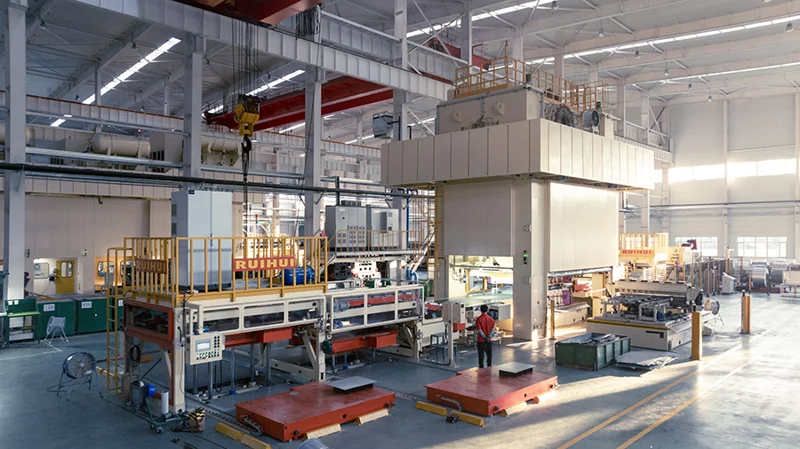
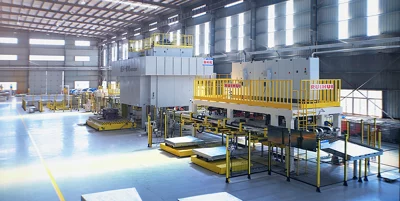
Automotive stamping mostly uses coil stock—steel coils are brought into the workshop, and the front-end process of decoiling, leveling, and feeding into the die used to be handled by separate equipment with manual intervention in many factories. Coil loading required overhead cranes and manual alignment; the strip head had to be manually threaded through the leveler; and during setup, each machine was adjusted independently, making coordination time‑consuming and labor‑intensive. Moreover, manual feeding speed limited the press cycle, so the press would often wait for material, preventing higher production rates.
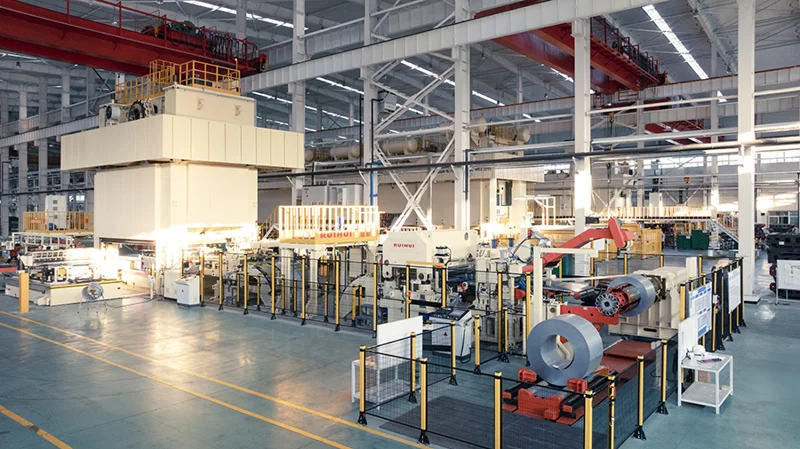
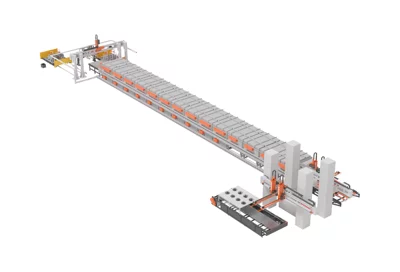
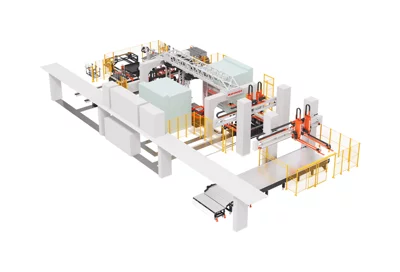
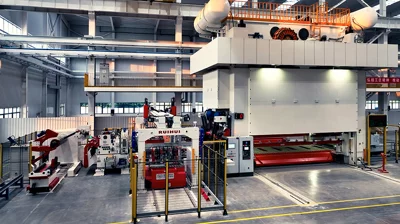
Today, the three‑in‑one feeder has become a widely adopted solution in automotive stamping lines. It integrates decoiling, leveling, and feeding into a single machine. Once the coil is hoisted into place, it automatically expands for tensioning, the strip head is guided automatically into the leveling zone, and after leveling, the strip feeds directly into the die without manual intervention. What most appeals to automotive manufacturers is the precision and stability of this solution. With servo motor drive and encoder feedback, feed pitch is accurately controlled. Moreover, because the leveling rolls and feed rolls are mounted on the same frame, the strip path is short and well‑supported, eliminating the long transition zones that cause wandering and vibration in separate equipment. Automotive stamping involves high‑frequency cycling and frequent start‑stop actions; the servo system responds quickly, reducing slip and overshoot, ensuring consistent feeding performance.
The three‑in‑one solution for automotive stamping lines is typically equipped with several additional features. One is an automatic coil loading trolley—since coils are heavy, the trolley automates loading without requiring crane operators to slowly align the coil, improving safety and convenience. Another is an oiling (lubrication) device: automotive sheet metal requires even oil application before stamping to protect the die and aid forming. The three‑in‑one can integrate oiling right into the feeding process, so the strip is coated automatically and more uniformly than manual brushing. There is also scrap handling for coil ends—with an automatic shearing function, operators no longer need to trim the coil ends manually with cutters.
For automotive stamping lines, cycle time is equally critical. The three‑in‑one feeder's servo drive responds quickly, and its feeding speed can keep pace with the press's continuous stamping, so feeding never becomes a bottleneck that forces the press to wait. From coil loading to finished part collection, once the front‑end runs smoothly, the entire line can truly achieve its target production rhythm.
When selecting equipment, automotive manufacturers should pay closest attention to matching their range of material widths and thicknesses. Automotive sheets range from thin gauges of 0.x mm to several millimeters, and each specification places different demands on the leveling rolls and feed rolls. Also crucial is compatibility with the press and die—parameters like feed pitch and feed height must align with the actual site conditions. It is far more reliable to communicate these requirements clearly with an experienced equipment supplier and let them propose a tailored solution, rather than trying to figure out everything from a datasheet on your own.
Guangdong RuiHui Intelligent Technology Co., Ltd. has over twenty years of experience in stamping automation. It is a national "Specialized and Sophisticated" "Little Giant" enterprise, headquartered in Dongguan, with more than 400 employees and over 80 R&D staff. RuiHui's three‑in‑one feeders are maturely applied in automotive parts stamping lines. Featuring an integrated decoiling‑leveling‑feeding design, servo drive for precise feeding, and optional automatic coil loading trolleys, oiling devices, and other configurations, they can be customized to match the material width/thickness range and press parameters of any automotive stamping line. RuiHui has supplied stamping automation equipment to numerous automotive OEMs and first‑tier suppliers, with nearly 5,000 sets running at customer sites both domestic and international. Their equipment has served well‑known companies such as BYD, Geely, Volkswagen, Tesla, BMW, Mercedes‑Benz, Honda, and Land Rover Jaguar, giving them extensive hands‑on experience with automotive stamping lines.
For the automation upgrade of an automotive stamping line, feeding is the first step—and the most fundamental one. Once the front‑end feeding is done right, the first line of defense for stamping quality is established, and the entire line's automation transformation gains a solid foundation.
With years of hands-on experience, I have honed my skills in navigating the complexities of global commerce, offering invaluable insights and solutions to address customer needs. My commitment to excellence and dedication to customer satisfaction ensure that I deliver exceptional service, guiding clients through every step of the trading process with confidence and proficiency.
You may also like
Related News
Latest Update