

Selection Guidelines for Three-in-One Feeders for High-Strength Steel Stamping
Share to : 


High-strength steel stamping has become increasingly common in recent years, appearing everywhere in automotive parts and structural components. Stamping high-strength steel places special demands on the feeding process—it is completely different from ordinary steel plate. When selecting a three-in-one feeder for high-strength steel, several points must be thought through clearly; otherwise, the equipment will fail to perform once purchased.
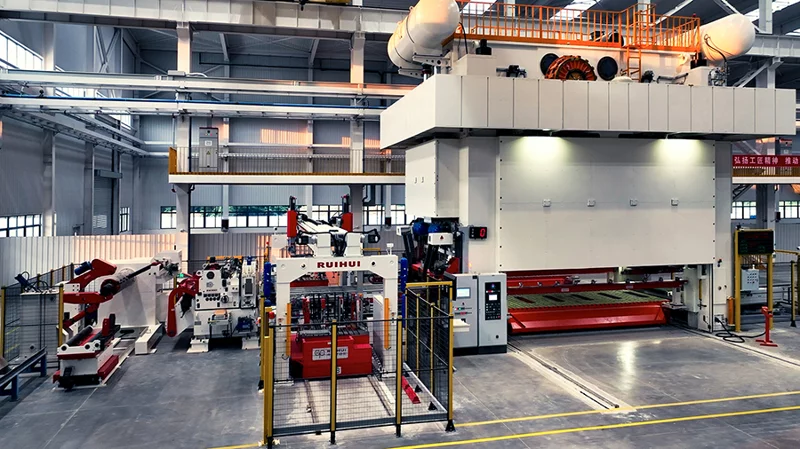
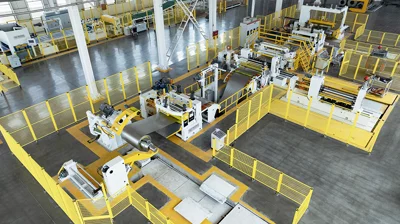
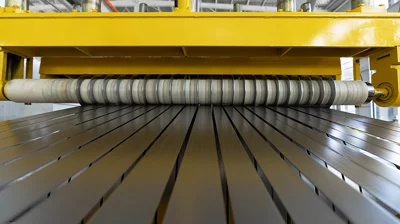
The first key point is that leveling capability must be sufficiently strong. High-strength steel has high yield strength and high hardness, and the internal stresses in coils are greater than those in ordinary steel, making leveling particularly difficult. The leveling rolls of an ordinary three-in-one feeder cannot flatten it; the strip enters with curvature, feeding becomes unstable, and stamping quality cannot be guaranteed. During selection, confirm the configuration of the leveling mechanism: roll diameter should be large, the number of rolls sufficient, and the frame sturdy enough to apply adequate straightening force to high-strength steel. Some manufacturers offer customized leveling structures for high-strength steel, such as reinforced roll sets and enlarged roll diameters—this should be a key question during selection.
The second key point is that the feeding drive must be powerful enough. High-strength steel strip is hard and heavy, and the feed rolls must be able to handle it. The power and torque of the servo motor must match the feeding requirements of high-strength steel. There must be no slipping during feeding—once slipping occurs, the feed pitch becomes inaccurate and the stamping position shifts. A high-power servo motor combined with sufficient downward pressure is required to feed high-strength steel strip steadily into the die.
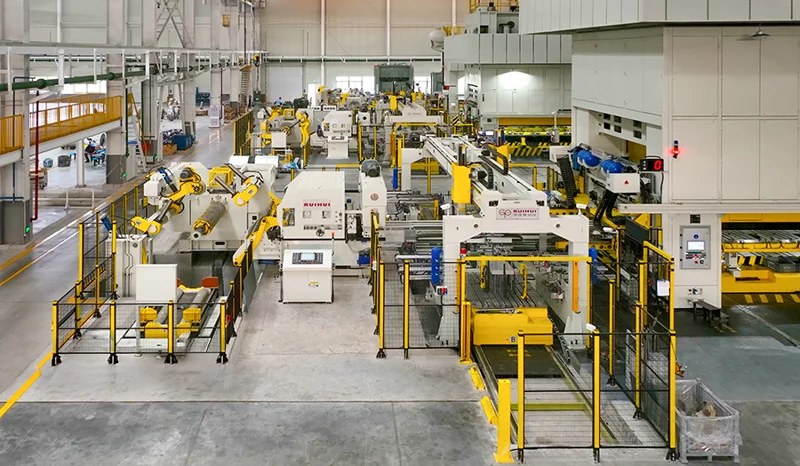
The third key point is feeding accuracy. Many high-strength steel parts are automotive structural or safety components with strict dimensional tolerances. The accuracy of the feed pitch directly determines the consistency of the stamping position. Real-time encoder feedback and closed-loop control are essential. During selection, confirm whether the equipment's actual accuracy can meet the tolerance requirements of high-strength steel parts.
The fourth key point is the material thickness range. High-strength steel includes both thin and thick sheets, ranging from a few tenths of a millimeter to several millimeters. During selection, inform the manufacturer of your actual thickness range so that the clearance adjustment range of the leveling rolls and feed rolls covers your needs. Do not choose a machine that can only handle thin sheets and then jam when switching to thicker material.
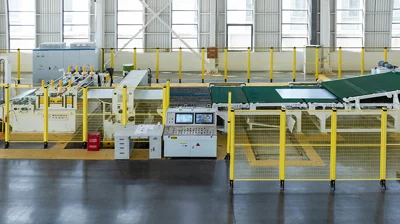
The fifth key point is safety configuration. High-strength steel strip is wide and hard. If an abnormality occurs during feeding and is not handled properly, problems can easily arise. Equipment features such as die protection, double-sheet detection, and strip deviation alarms are essential in high-strength steel stamping scenarios. Automatic shutdown upon feeding abnormalities ensures both die and personal safety.
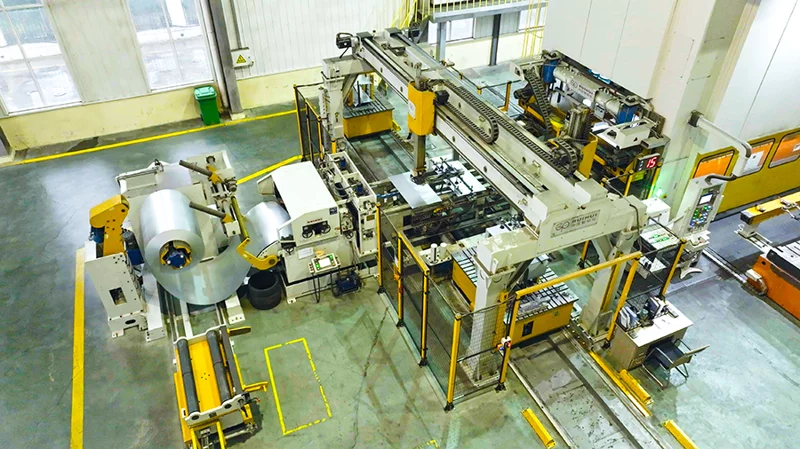
The sixth key point is surface protection. Although high-strength steel is not as soft as aluminum sheet, many high-strength steel parts still have surface quality requirements. The three-in-one feeder integrates decoiling, leveling, and feeding into one machine, with the material completing its transfer inside the equipment, reducing opportunities for external contact and scratches. This is beneficial for protecting the surface quality of high-strength steel parts.
Finally, the selection approach. A three-in-one feeder for high-strength steel stamping essentially matches the equipment's capabilities to the characteristics of high-strength steel—high strength requires powerful leveling and strong feeding; strict accuracy requires precise control. Clearly communicate the strip material, thickness range, accuracy requirements, and cycle time requirements to the manufacturer, and let an experienced manufacturer propose a targeted configuration. This is far more reliable than guessing from a specification sheet.
Guangdong RuiHui Intelligent Technology Co., Ltd. has been deeply engaged in the field of stamping automation for over twenty years. It is a national "Specialized and Sophisticated" "Little Giant" enterprise, headquartered in Dongguan, with more than 400 employees and over 80 R&D personnel. RuiHui's three-in-one feeders have specialized technical solutions for high-strength steel stamping. Reinforced leveling roll sets can handle the internal stresses of high-strength sheet, high-power servo motors ensure feeding without slipping, servo drive with encoder feedback ensures feeding accuracy, and die protection and double-sheet detection are standard. They have mature applications in high-strength steel stamping production for automotive parts and structural components. RuiHui has nearly 5,000 sets of equipment operating at customer sites both domestically and internationally, serving well-known OEMs and first-tier suppliers such as BYD, Geely, Volkswagen, Tesla, BMW, Mercedes-Benz, Honda, and Land Rover Jaguar, with rich experience in high-strength steel stamping.
With years of hands-on experience, I have honed my skills in navigating the complexities of global commerce, offering invaluable insights and solutions to address customer needs. My commitment to excellence and dedication to customer satisfaction ensure that I deliver exceptional service, guiding clients through every step of the trading process with confidence and proficiency.
You may also like
Related News
Latest Update