

Difference Between Truss-Type Manipulator and 6-Axis Robot in Tandem Stamping
Share to : 


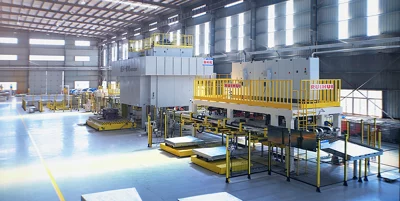
In metal stamping, tandem stamping lines are one of the common production lines. The accuracy and efficiency of workpiece transfer between multiple presses are key factors affecting product quality and overall production efficiency. When selecting manipulators, common options include truss-type manipulators and 6-axis robots. Each has its own features in terms of structural design and application flexibility. This article will help you understand these two solutions.
Structure
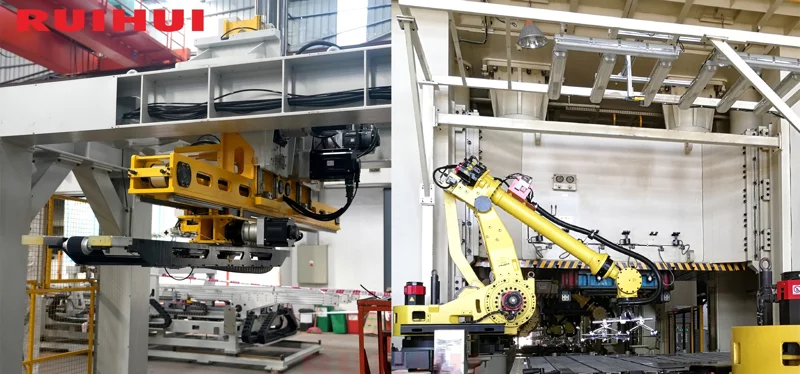 (Truss-type manipulator and 6-axis robot.)
A truss manipulator is installed on a truss frame structure, which can perform linear movements in the up-down and forward-backward directions. A 6-axis robot has six independently movable joints, moving similarly to a human arm, and possesses greater degrees of freedom of movement. The structural rigidity of a truss manipulator is higher than that of the 6-axis robot.
Flexibility
1. Workpiece Transfer
In terms of workpiece transfer flexibility, truss manipulators are less flexible than 6-axis robots. Their motion is limited to vertical and horizontal movement, but this simple motion pattern enables faster transfer speeds. In contrast, 6-axis robots offer multiple degrees of freedom. They can flip, rotate, and tilt workpieces easily. This high flexibility is ideal for handling complex-shaped parts.
2. End Effector Replacement
For gripping workpieces of different shapes or sizes, the end effector needs to be changed. Truss-type manipulators require manual end effector replacement by the operator, which is not only time-consuming but also potentially introduces human error and safety hazards. In contrast, 6-axis robots support automatic changing. When frequent switching of production content is required, the automation advantages of 6-axis robots can reduce labor costs and improve efficiency.
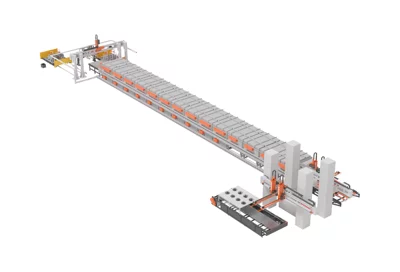
(This is the truss manipulator tandem stamping line.)
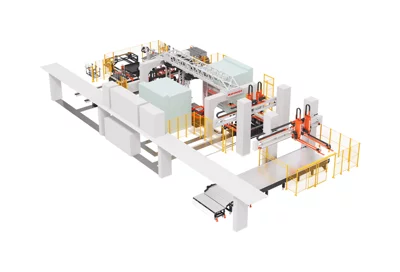
(This is the 6-axis robot tandem stamping line.)
Adjustment and Maintenance
Truss manipulators have a relatively simple structure, clear motion logic, and relatively concentrated fault points, making them easier to debug and maintain. They also require less time for debugging or troubleshooting. In contrast, 6-axis robots have a more complex structure and control logic. This requires a high level of experience and skill from technical personnel. Once a problem occurs, it typically takes a much longer time and more labor costs to resolve.
This is a comparison of truss manipulators and 6-axis robots in a tandem stamping line. If you have any questions or would like to learn more, please contact us. Thank you for reading.
| Item | Truss Manipulator | 6-Axis Robot |
| Cost | Moderate | High |
| Footprint | Relatively Large | Moderate |
| Speed | Moderate | Relatively Slow |
| Flexibility | Moderate | High |
| Adjustment and Maintenance | Moderate | Troublesome |
With years of hands-on experience, I have honed my skills in navigating the complexities of global commerce, offering invaluable insights and solutions to address customer needs. My commitment to excellence and dedication to customer satisfaction ensure that I deliver exceptional service, guiding clients through every step of the trading process with confidence and proficiency.
You may also like
Related News
Latest Update