

How do Decoilers Safely and Efficiently Complete Work
Share to : 


In metal stamping, production often begins with decoiling coil materials, and the quality of the decoiling process directly affects all subsequent operations. Meanwhile, some coils are extremely heavy, making manual operation difficult and potentially dangerous. This article will help you understand the main components of a decoiler and how they ensure safe and efficient operation.
Coil Loading Trolley
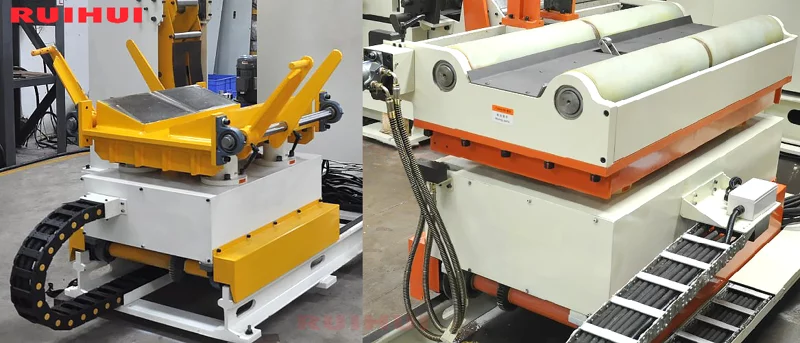
The coil loading trolley is responsible for delivering the coil to the uncoiler mandrel. Equipped with a photoelectric detection system, it can place the coil onto the uncoiler mandrel more accurately. The trolley surface can be either V-shaped or roller-type. The V-shaped design helps minimize coil movement, ensuring stable loading. The roller design can serve as a support arm to assist in uncoiling heavier coils.
Decoiler Mandrel
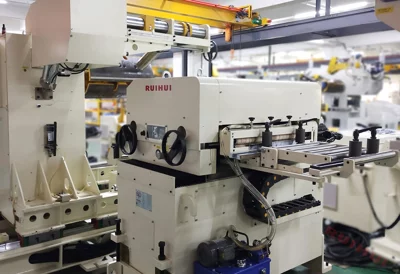
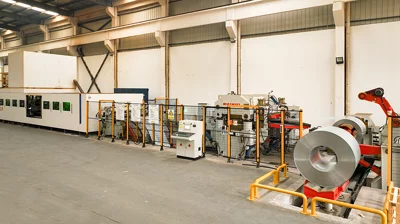
The decoiler mandrel clamps firmly onto the inner diameter of the coil through an expansion mechanism, providing stable support and rotation. It should be noted that some decoiler mandrels do not have their own drive and rely on downstream equipment for rotation. Expansion methods can be hydraulic or manual. For heavier coils, hydraulic expansion is recommended.
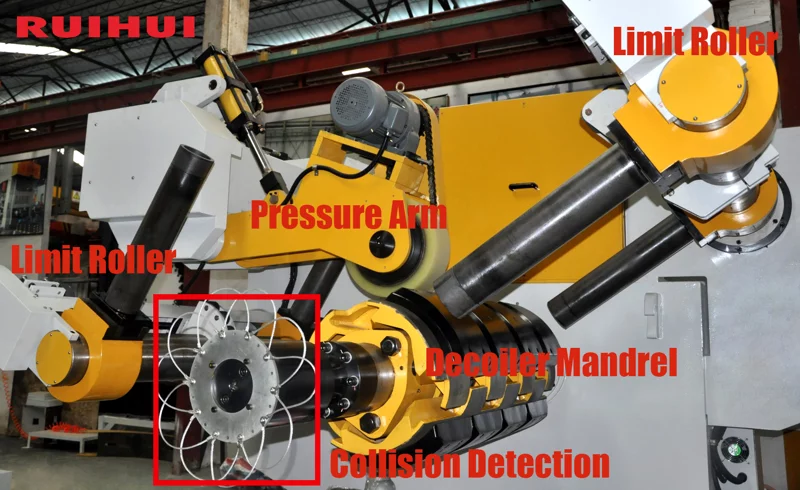 (This image shows the decoiler mandrel, collision detection, limit roller, pressure arm.)
Collision Detection
The collision detection device is located at the end of the decoiler mandrel. During the decoiling, if the coil deviates from the mandrel's center and touches the collision detection device, the system will immediately issue a warning signal. If in automatic feeding mode, the decoiler will stop feeding to prevent damage to the equipment or coil.
Pressure Arm
The pressure arm prevents the material from suddenly springing back due to tension when cutting the binding strap. It also reduces coil vibration during the decoiling process, ensuring stable machine operation. The rollers on the pressure arm can be either powered or unpowered. Powered rollers can provide additional driving force for the decoiling process.
Limit Roller
The limit roller is responsible for securing the coil to prevent misalignment or displacement during the decoiling process. If the coil is narrow and light, it is easily shifted by external forces. In such cases, using a double limit roller is recommended.
In general, we need to select the decoiler based on the actual parameters of the coil. If you are interested in decoilers or have any questions, you can contact us. Thank you for reading.
With years of hands-on experience, I have honed my skills in navigating the complexities of global commerce, offering invaluable insights and solutions to address customer needs. My commitment to excellence and dedication to customer satisfaction ensure that I deliver exceptional service, guiding clients through every step of the trading process with confidence and proficiency.