

How to Choose Between Large Press Tandem Stamping and Transfer Die Stamping
Share to : 


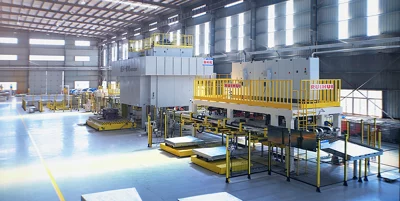
In modern manufacturing, stamping is one of the core technologies for metal forming, especially for the production of large parts, such as automobile body panels and appliance housings. Large press tandem stamping and transfer die stamping are two common automated stamping production lines. This article will help you understand them.
Working Principle
Both large press tandem stamping and transfer die stamping operate on the principle of forming workpieces through multiple processes, suitable for producing parts with complex shapes. But their specific forms differ.
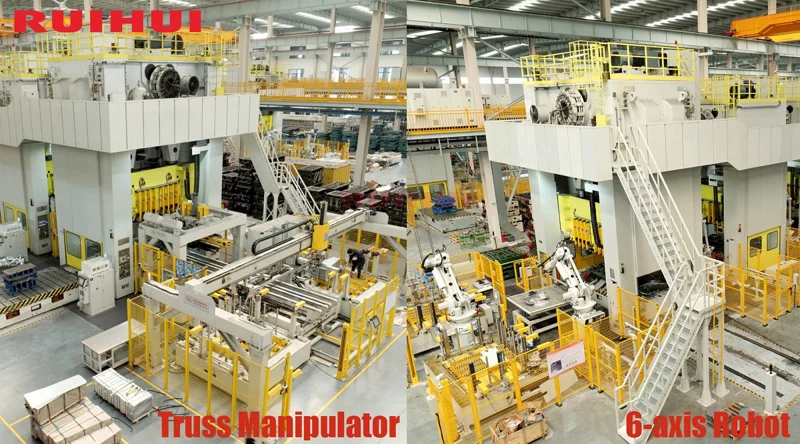 (The tandem line can be equipped with either truss-type manipulators or 6-axis robots.)
A large press tandem stamping line consists of multiple presses and manipulators connected in series, resulting in a large footprint for the entire production line. Each press is equipped with a single die and is responsible for a specific process.
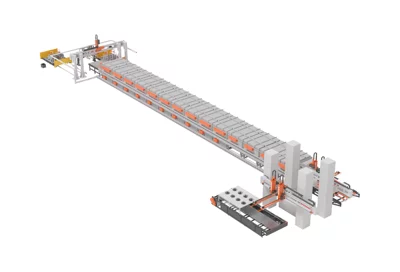
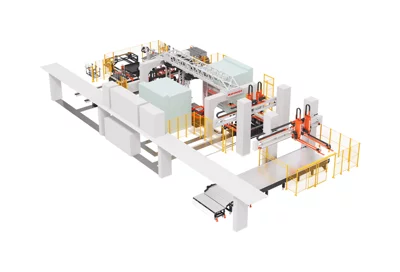
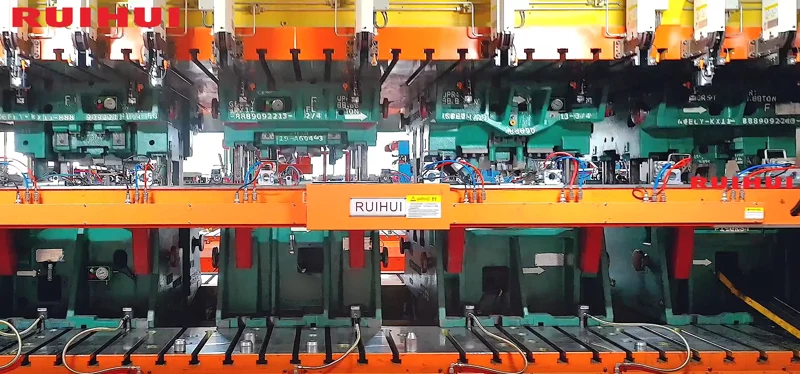 (This is the transfer die stamping.)
A transfer die stamping line is formed on a single press equipped with multiple dies, and the workpiece is transferred by a 3-axis transfer system, offering a more compact footprint.
Production Ability
1. Speed
In a large press tandem stamping line, the presses and robots are independent, allowing for stamping at different paces. If a 6-axis robot is used to place or remove workpieces from the die at an angle, the transfer speed will be even slower. A transfer die stamping line can concurrently complete stamping at multiple stations, with each workpiece transfer completed concurrently by the 3-axis transfer system, making its production speed faster than press tandem stamping.
(This is the large press tandem stamping line using truss-type manipulators.)
(This is the large press tandem stamping line using 6-axis robots.)
2. Workpiece Size
In a large press tandem stamping line, each press is equipped with only one die, providing sufficient space for larger die designs. This makes it suitable for medium- to large-sized workpieces.
In a transfer die stamping line, multiple dies are installed within a single press, resulting in limited space and constraints on die size. Therefore, it is more suitable for medium- or small-sized workpieces.
(This is a comparison of large press tandem stamping(Robobeam, 6-axis robot) and 3-axis transfer stamping.)
| Item | Large Press Tandem Stamping | 3-Axis Transfer Stamping |
| Footprint | Relatively Large | Moderate |
| Speed | Relatively Slow | Moderate |
| Forming Ability | Excellent | Excellent |
| Workpiece Size | Medium or large | Medium or small |
In general, large press tandem stamping lines have a greater advantage in producing larger workpieces, such as automotive body side panels. Transfer die stamping lines are suitable for mass production of small to medium-sized workpieces, such as automotive door inner panel parts and washing machine shells. If you are interested in them or have any questions, you can contact us. Thank you for reading.
(This is a truss destacking 3-axis stamping line.)
With years of hands-on experience, I have honed my skills in navigating the complexities of global commerce, offering invaluable insights and solutions to address customer needs. My commitment to excellence and dedication to customer satisfaction ensure that I deliver exceptional service, guiding clients through every step of the trading process with confidence and proficiency.
You may also like
Related News
Latest Update