

How to Select a 3D Transfer Robot Key Points for Matching Payload Stroke Speed and Accuracy
Share to : 


The 3D transfer robot is the core of a single-press multi-station stamping line. Whether it is selected well directly determines the efficiency and stability of the entire line. How should you select a 3D transfer robot? Several key parameters must be properly matched: payload, stroke, speed, and accuracy. When these four parameters align with your product process, the equipment will run smoothly.
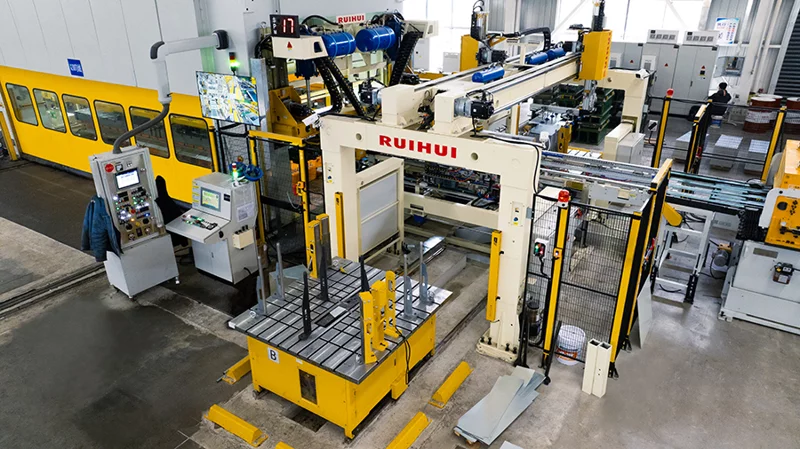
The first is payload matching. The 3D transfer robot moves workpieces, so its load capacity must be calculated based on the workpiece weight plus the end effector weight, with a safety margin. At high speeds, inertial forces are greater than static weight, so sufficient payload margin is important. If the payload is insufficient, the robot will vibrate at high speed, positioning will be inaccurate, and in severe cases the mechanical structure may be damaged. If the payload is too large, capacity is wasted and investment costs increase. The most reliable approach is to inform the manufacturer of your workpiece weight range and let them match the appropriate payload class.
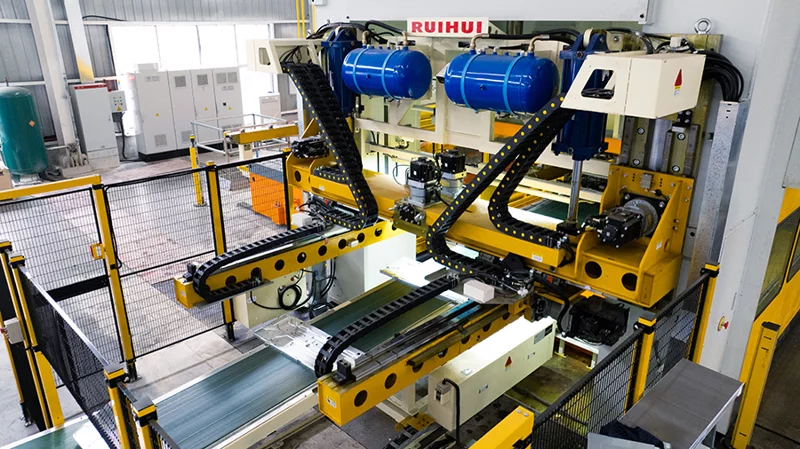
The second is stroke matching. The stroke must cover the pick-and-place distance between dies. A 3D transfer robot has strokes in three directions: the left-right stroke determines how many stations it can cover, the forward-backward stroke determines how deep it can reach into the die, and the up-down stroke determines the pick-and-place height. If the stroke is insufficient, the robot cannot reach the workpiece inside the die, and the number of stations on the entire line is limited. Provide the die layout and station spacing to the manufacturer so they can calculate the appropriate stroke configuration.
The third is speed matching. The speed of the 3D transfer robot directly determines the cycle time of the entire line. The speed must match the target cycle time. If the cycle time requirement is demanding, the robot's acceleration/deceleration performance and operating speed must keep up. But faster is not always better—if the speed is too high, the workpiece may sway during motion, affecting placement position. A balance must be found between speed and stability. Have the manufacturer perform a cycle time simulation to verify whether the pick-and-place actions can be completed within the target cycle time.
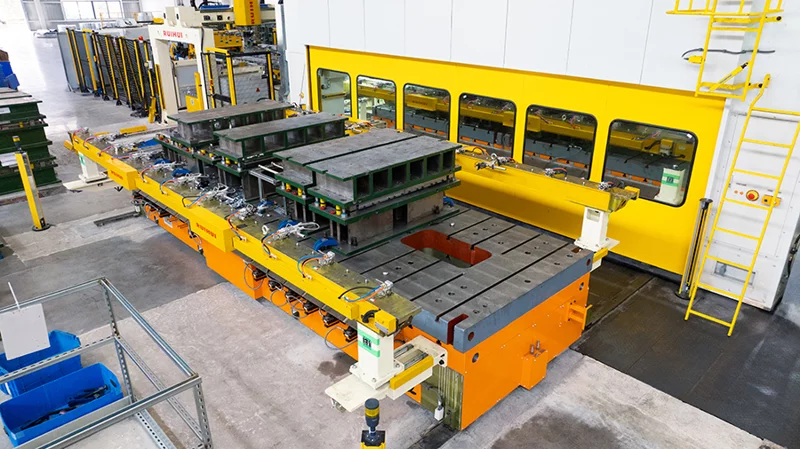
The fourth is accuracy matching. The repeat positioning accuracy of the 3D transfer robot determines the consistency of workpiece placement, directly affecting product dimensional consistency. For products with high accuracy requirements, the robot's repeat positioning accuracy must be sufficiently high. A three-axis linear motion structure, servo drive, and high-precision linear guide rails are the basic configuration for ensuring accuracy. During selection, ask clearly about the equipment's actual repeat positioning accuracy and see whether it meets your product's tolerance requirements.
In addition to these four core parameters, several supporting factors should also be considered during selection. First, compatibility with the press: the robot's signal interfacing and safety interlocks with the press must be compatible. Second, end effector configuration: different workpieces require different end effectors, and the end effector design should be considered together during selection. Third, ease of use of the control system: touchscreen operation and intuitive parameter settings help workers get up to speed quickly, improving daily efficiency. Fourth, the manufacturer's service capability: installation and commissioning, after-sales support, and spare parts supply must all be examined.
Finally, the selection approach. Selecting a 3D transfer robot is essentially about matching the equipment's capabilities to your product process. Think clearly about your workpiece dimensions and weights, station layout, target cycle time, and accuracy requirements, and communicate fully with an experienced manufacturer. Let them propose a targeted selection solution—this is far more reliable than guessing from a specification sheet.
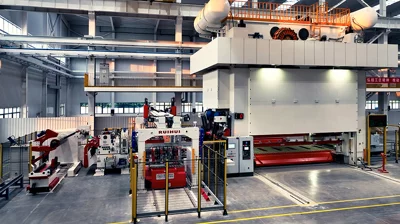
Guangdong RuiHui Intelligent Technology Co., Ltd. has been deeply engaged in the field of stamping automation for over twenty years. It is a national "Specialized and Sophisticated" "Little Giant" enterprise, headquartered in Dongguan, with more than 400 employees and over 80 R&D personnel. RuiHui's 3D multi-station transfer robots use a three-axis linear motion structure with servo drive and high-precision linear guide rails. Load capacities range from a few kilograms to several hundred kilograms. Stroke and speed can be customized according to the customer's station layout and cycle time requirements. They offer high repeat positioning accuracy and comprehensive safety interlocks with the press. RuiHui provides full service from selection evaluation to installation and commissioning. With nearly 5,000 sets of equipment operating at customer sites both domestically and internationally, serving well-known OEMs and first-tier suppliers such as BYD, Geely, Volkswagen, Tesla, BMW, Mercedes-Benz, Honda, and Land Rover Jaguar, RuiHui has rich experience in multi-station automation.
With years of hands-on experience, I have honed my skills in navigating the complexities of global commerce, offering invaluable insights and solutions to address customer needs. My commitment to excellence and dedication to customer satisfaction ensure that I deliver exceptional service, guiding clients through every step of the trading process with confidence and proficiency.
You may also like
Related News
Latest Update