

Three-Axis Motion of a 3D Transfer Robot Description of the Pick-and-Place Action Flow Between Dies
Share to : 


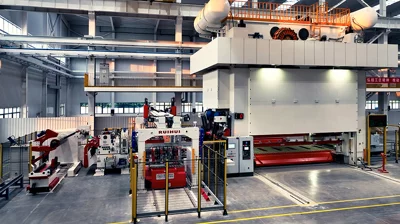
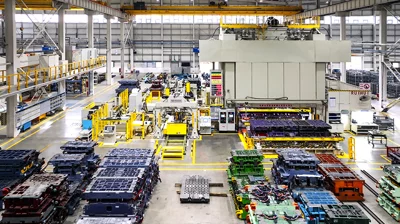
In a single-press multi-station stamping line, the 3D transfer robot's job is to move workpieces back and forth between dies. The term "3D" in its name refers to motion in three directions—X-axis lateral transfer, Y-axis lifting, and Z-axis advance/retract. Together, these three axes complete a full pick-and-place cycle.
First, let's clarify the role of each axis. The X-axis is the lateral transfer direction, responsible for moving the workpiece horizontally from one station to the next. The Y-axis is the lifting direction, responsible for raising and lowering the gripper—lowering to the workpiece position inside the die when picking, and lowering to the die cavity position when placing. The Z-axis is the advance/retract direction, responsible for extending the gripper into the die and withdrawing it. Each axis controls one direction, and combined they can complete pick-and-place at any position in three-dimensional space.
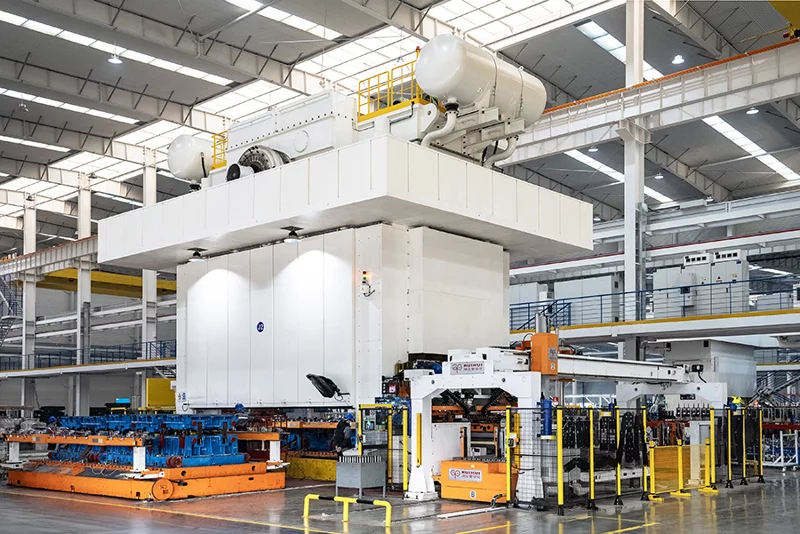
A complete pick-and-place cycle consists roughly of the following steps.
Step one: Z-axis advances. The gripper extends from the waiting position toward the interior of the die. At this point, the press slide has already risen to top dead center, the die is open, and there is space for the gripper to enter.
Step two: Y-axis lowers. The gripper descends to the height of the workpiece. This height is determined by the die and workpiece positions and may differ slightly from station to station. The control system stores the pick-up height parameters for each station.
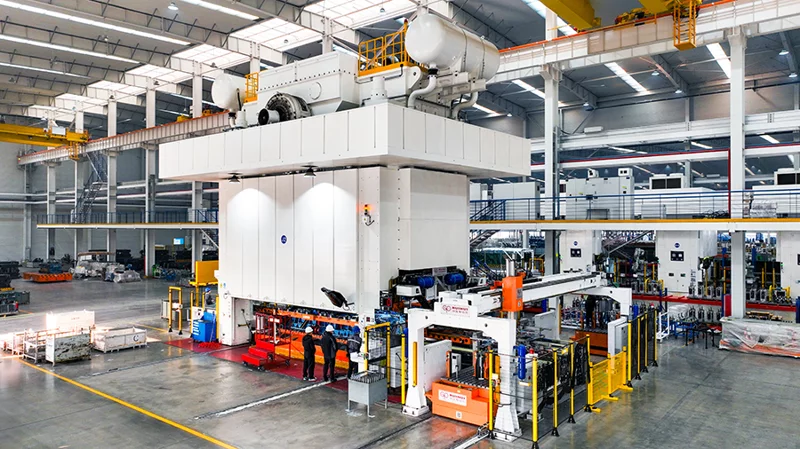
Step three: Gripper closes. The gripper closes and clamps the workpiece. The clamping force must be sufficient—not so loose that the workpiece drops, and not so tight that it deforms the workpiece. For thin sheet parts, the clamping force must be controlled quite precisely.
Step four: Y-axis rises. The gripper rises with the workpiece, leaving the die cavity. Only after reaching a safe height can lateral transfer begin; otherwise, the workpiece will collide with the die.
Step five: Z-axis retracts. The gripper withdraws from the die with the workpiece, retreating to a safe area outside the die.
Step six: X-axis transfers laterally. The gripper moves horizontally with the workpiece to the position of the next station. The lateral transfer distance is the center-to-center distance between the two stations, which is fixed and determined by the die layout.
Step seven: Z-axis advances. The gripper extends into the die of the next station with the workpiece.
Step eight: Y-axis lowers. The gripper places the workpiece into the specified position in the die cavity.
Step nine: Gripper opens. The workpiece remains in the die, and the gripper releases.
Step ten: Y-axis rises and Z-axis retracts. The gripper rises and withdraws, returning to a safe position, ready for the next cycle.
Step eleven: X-axis returns. The gripper returns to the initial station position to begin the next pick-up cycle.
This sequence may sound like many steps, but in actual operation it is extremely fast. The three axes of the 3D transfer robot are all driven by servo motors with fast response, and the entire pick-and-place cycle may take only one or two seconds. The gap time between the press slide rising and descending is the time window for the robot to complete this sequence. The robot's motion speed must match the press stroke—it must not still be inside the die when the press is about to close.
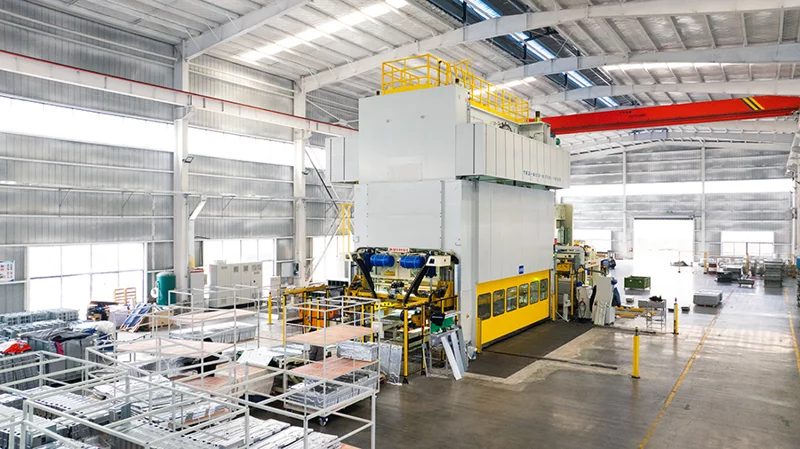
The control system coordinates the entire process. The press slide position is fed back to the control system in real time via an encoder. Based on the slide position, the control system determines when picking can begin and when placing must be completed. At the same time, the motion trajectories of the robot's three axes are optimized to follow the shortest path, reducing idle travel time. The opening and closing of the gripper and the actuation of vacuum or pneumatic circuits are also precisely executed under the control system's timing control.
The application of 3D transfer robots on single-press multi-station lines replaces the manual operation of transferring workpieces between multi-station dies. Manual handling is slow, inaccurate in positioning, and carries safety hazards. The robot's three-axis coordinated motion is fast and precise, and every pick-and-place position is consistent, ensuring product consistency. Workers only need to inspect from outside the production line and do not need to enter the hazardous stamping area.
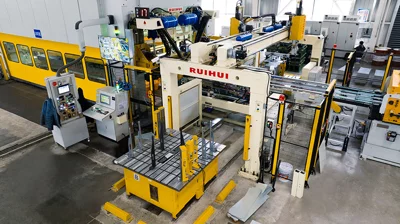
Guangdong RuiHui Intelligent Technology Co., Ltd. has been deeply engaged in the field of stamping automation for over twenty years. It is a national "Specialized and Sophisticated" "Little Giant" enterprise, headquartered in Dongguan, with more than 400 employees and over 80 R&D personnel. RuiHui's 3D transfer robots use three-axis servo drive, rack-and-pinion transmission, and precision linear guide rails. The Z-axis is equipped with a balancing cylinder to ensure lifting stability. They have numerous mature applications on single-press multi-station stamping lines. RuiHui has nearly 5,000 sets of equipment operating at customer sites both domestically and internationally, serving well-known OEMs and first-tier suppliers such as BYD, Geely, Volkswagen, Tesla, BMW, Mercedes-Benz, Honda, and Land Rover Jaguar.
With years of hands-on experience, I have honed my skills in navigating the complexities of global commerce, offering invaluable insights and solutions to address customer needs. My commitment to excellence and dedication to customer satisfaction ensure that I deliver exceptional service, guiding clients through every step of the trading process with confidence and proficiency.
You may also like
Related News
Latest Update