

How to Select a Turnover Machine Key Points for Matching Sheet Dimensions and Stack Weight
Share to : 


When it comes time to select a turnover machine, many people's first reaction is to ask about brand and price. In fact, what should be clarified first and foremost is your own sheet conditions and process requirements. A turnover machine flips entire stacks of sheets. The core of selection is matching the machine's load capacity, table dimensions, and flip angle to your sheet dimensions, stack weight, and process requirements. Let's clarify several key points.
First, consider load capacity—that is, stack weight matching. This is the most critical parameter in turnover machine selection. The machine's load capacity must be calculated based on the weight of your largest stack, with a safety margin. Why leave a margin? Because during flipping, the stack's motion generates dynamic loads greater than its static weight. Sufficient capacity margin ensures stable flipping. Do not choose a capacity that is exactly at the limit—when flipping at full load, the stack may sway and cause problems. Inform the manufacturer of your maximum stack weight so they can match a turnover machine with the appropriate load rating.
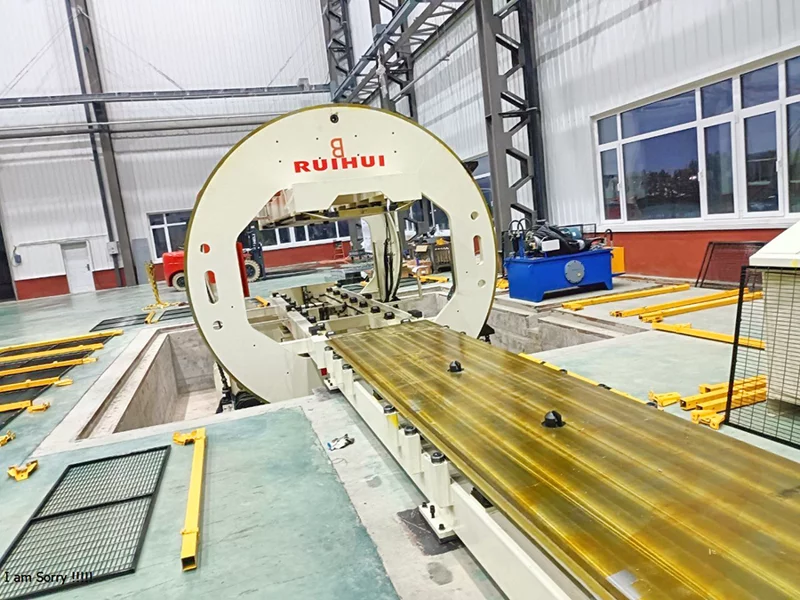
Second, consider the turnover table dimensions—that is, sheet dimension matching. The table must accommodate your largest sheet stack, with length, width, and height all matching. If the sheet dimensions exceed the table, the stack cannot be placed on it or will be unstable; if the table is too large, space is wasted. The table's length and width must cover the bottom surface of the sheet stack, and the height direction must account for the stack height plus the space required by the clamping mechanism. Provide the manufacturer with your maximum sheet dimensions and stack height so they can design a suitable turnover table.
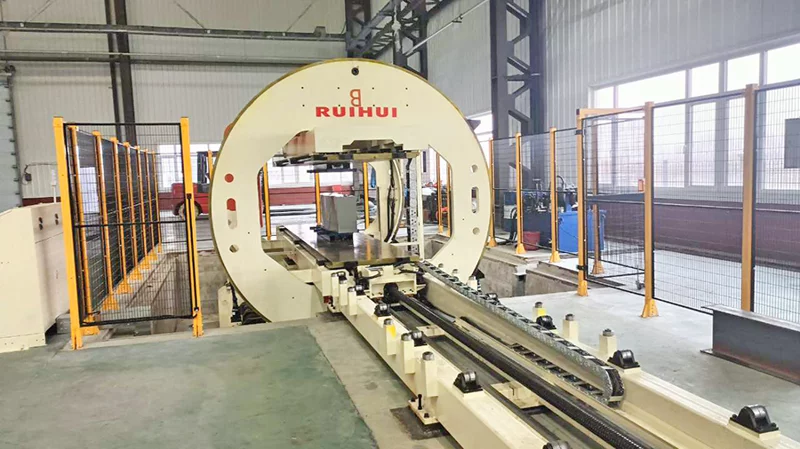
Third, consider the flip angle—that is, process requirement matching. Whether the turnover machine flips 90° or 180° depends on your process requirements. Some operations require a 90° flip to turn the stack in a different direction; others require a 180° flip to turn the stack over. It is best to choose a machine with a flexibly settable flip angle—capable of both 90° and 180°—for greater process adaptability. During selection, clearly explain your flipping needs so the equipment can be configured accordingly.
Fourth, consider the clamping method—that is, flipping stability. During flipping, the stack must be securely fixed; otherwise, dozens of sheets in a stack will slide, shift, or even scatter. The turnover machine's clamping mechanism must hold the stack firmly without loosening or slipping throughout the flip. Stacks of different shapes and heights may require different clamping methods and forces. During selection, inform the manufacturer of the actual stack conditions so the clamping mechanism can be designed appropriately.
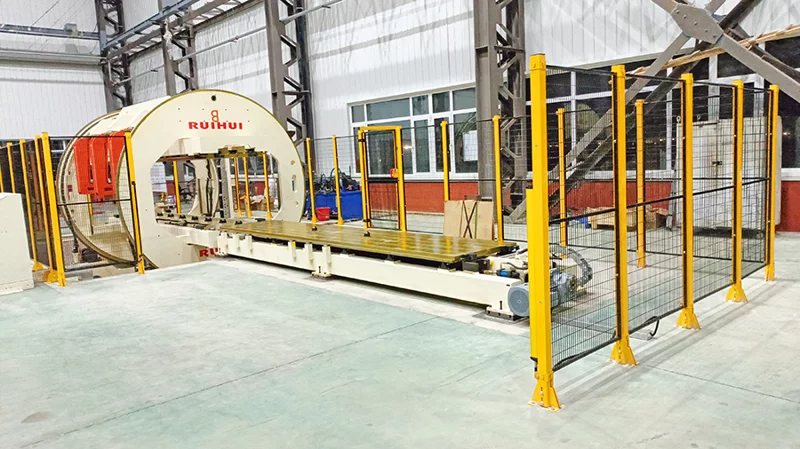
Fifth, consider integration with upstream and downstream logistics. The turnover machine is not isolated equipment; it must integrate with the production line's logistics. How the stack is fed into the turnover machine and how it is discharged after flipping must coordinate smoothly with conveyors, trolleys, and forklifts. The turnover machine's position and infeed/outfeed directions must match the overall line layout—do not create a bottleneck at the turnover machine. During planning, consider the production line's logistics flow as a whole.
Sixth, consider operational stability. The turnover machine flips heavy stacks, so the turnover table, rotation mechanism, and drive system must be sturdy and reliable. Servo-driven flipping provides smooth operation and precise positioning, forming the foundation of flipping quality. Also consider safety protection: the flipping area must be interlocked with other equipment, and personnel must not approach during flipping. Safety design cannot be overlooked during selection.
Finally, the selection approach. Selecting a turnover machine is essentially about matching the equipment's load capacity, dimensions, angle, and stability to your sheet stacks and process. Think clearly about your sheet dimensions, stack weight, flip angle, and production line layout, and communicate with an experienced manufacturer. Let them propose a targeted selection solution—this is far more reliable than guessing from a specification sheet. When the turnover machine is selected correctly, whole-stack flipping truly becomes worry-free.
Guangdong RuiHui Intelligent Technology Co., Ltd. has been deeply engaged in the field of stamping automation for over twenty years. It is a national "Specialized and Sophisticated" "Little Giant" enterprise, headquartered in Dongguan, with more than 400 employees and over 80 R&D personnel. RuiHui's turnover machines use servo-driven flipping mechanisms for smooth flipping and precise positioning. Load capacities range from hundreds of kilograms to several tons for entire stacks. Table dimensions, clamping method, and flip angle can all be customized according to the customer's sheet dimensions, stack weight, and process requirements. They can flip 90° or 180°, and integrate with upstream and downstream conveying equipment. They have mature applications in stack flipping processes in automotive sheet metal, home appliances, hardware, and other industries. RuiHui has supplied turnover machines and supporting automation solutions to numerous stamping and sheet processing companies. With nearly 5,000 sets of equipment operating at customer sites both domestically and internationally, serving well-known OEMs and first-tier suppliers such as BYD, Geely, Volkswagen, Tesla, BMW, Mercedes-Benz, Honda, and Land Rover Jaguar, RuiHui has rich experience.
With years of hands-on experience, I have honed my skills in navigating the complexities of global commerce, offering invaluable insights and solutions to address customer needs. My commitment to excellence and dedication to customer satisfaction ensure that I deliver exceptional service, guiding clients through every step of the trading process with confidence and proficiency.
You may also like
Related News
Latest Update