

How Turnover Machines Flip Entire Stacks of Sheets Handling Stacks Too Heavy for Manual Labor
Share to : 


Anyone in stamping and sheet metal processing knows that the most troublesome tasks in the workshop are often not the ones requiring high technical skill, but the heavy, physically demanding jobs. Flipping an entire stack of sheets is a typical example. A stack of dozens or even hundreds of sheets, weighing hundreds of kilograms or even several tons, is impossible to flip manually, and using an overhead crane is slow and unsafe. The turnover machine is the equipment designed specifically to solve this problem.
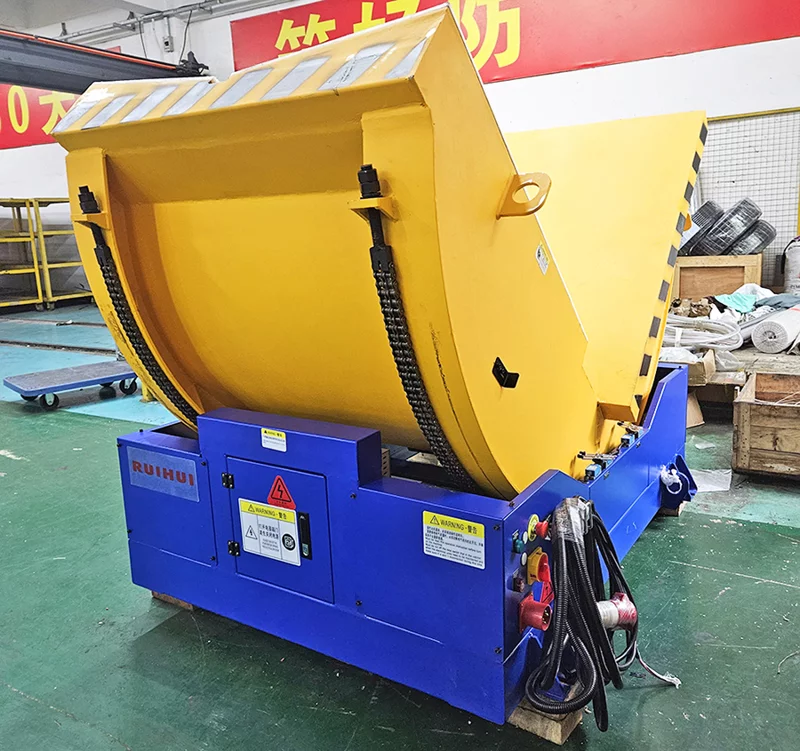
First, let's clarify what the turnover machine flips. It flips an entire stack of sheets—flipping the whole stack by 90° or 180° as required. Note that it is "a stack," not just one or two sheets, but the entire stack flipped together. Why emphasize "entire stack"? Because this is exactly where it differs from other equipment: what is transferred between presses is individual workpieces, one at a time; what the turnover machine flips is an entire stack, one stack at a time. These are completely different tasks. The turnover machine handles the scenario of flipping an entire stack that manual labor cannot manage. It is a separate process in the production line, not an action completed inside the press.
Why can't manual labor handle it? A quick calculation makes it clear. Take a stack of sheets: even if each sheet is 2 mm thick, 100 sheets make 200 mm. Based on common sheet specifications, this stack weighs at least several hundred kilograms, and larger ones can weigh over a thousand kilograms or even several tons. This weight simply cannot be flipped by human power. Flipping it with an overhead crane involves figuring out where to attach the chains, how to lift it, and how to turn it over—all troublesome, and if the stack sways during the flip, it becomes a safety hazard. Therefore, flipping an entire stack is fundamentally not a job for manual labor—it can only be done by equipment.
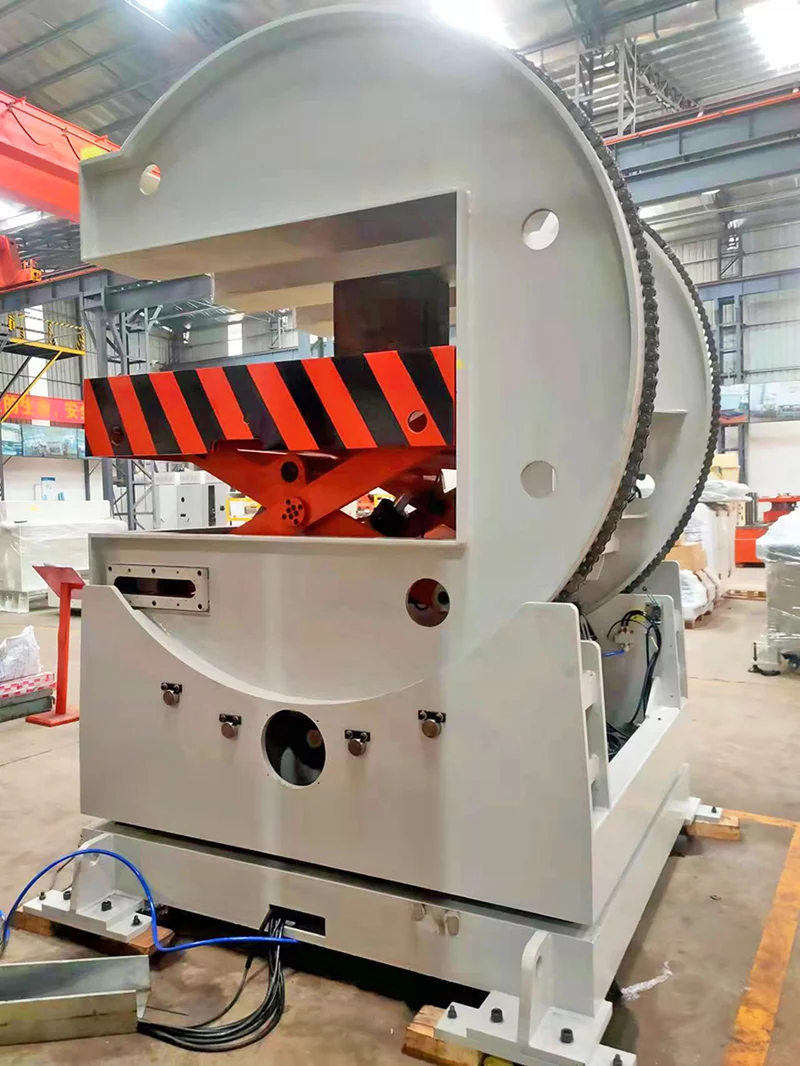
How does the turnover machine flip a stack that manual labor cannot handle? Its working process is as follows: the entire stack of sheets is delivered to the turnover machine's table by conveyor or trolley; the table's clamping mechanism securely holds the stack to prevent shaking or slipping during flipping; then the table's rotation mechanism starts, smoothly flipping the entire stack by 90° or 180°; once in position, the table stops and positions the stack, which is then placed at the discharge position and sent to the next process. The entire process is completed automatically; workers only need to start the program on the control panel.
The core of the turnover machine's solution to this challenge lies in the word "stability." A stack contains dozens of sheets, and during flipping, the greatest fear is scattering and misalignment. If the stack scatters, sheets fall everywhere and must be restacked; if misaligned, the stack becomes uneven, making subsequent retrieval and feeding inconvenient. The turnover machine secures the stack firmly with its clamping mechanism and ensures even force distribution through smooth rotation drive, so the stack does not scatter, shift, or tilt throughout the flip—remaining neat and tidy afterward.
The changes after adopting a turnover machine are tangible. First, what was previously impossible—flipping an entire stack—is now completed at the push of a button. Process requirements are met, and production is no longer bottlenecked by the flipping step. Second, workers are freed from the heavy and dangerous labor of flipping material; they no longer have to handle those heavy, hazardous stacks, greatly reducing safety risks. Third, flipping efficiency is high—flipping an entire stack takes only tens of seconds, and it does not consume manual labor, making the line's cycle time more reliable.
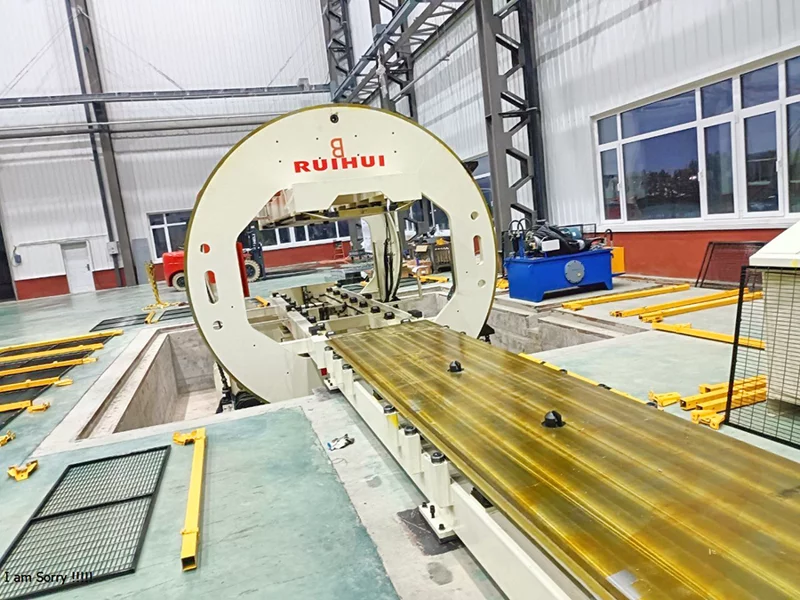
When selecting a turnover machine, several parameters should be considered: first, load capacity—choose based on the weight of your largest stack, with sufficient safety margin; second, table dimensions—it must accommodate your largest sheet stack; third, flip angle—90° or 180°, determined by process requirements; fourth, integration with upstream and downstream logistics—how the stack is fed in and how it is discharged after flipping must coordinate smoothly with conveyors and trolleys.
Guangdong RuiHui Intelligent Technology Co., Ltd. has been deeply engaged in the field of stamping automation for over twenty years. It is a national "Specialized and Sophisticated" "Little Giant" enterprise, headquartered in Dongguan, with more than 400 employees and over 80 R&D personnel. RuiHui's turnover machines feature servo-driven flipping mechanisms for smooth operation and precise positioning, with load capacities ranging from hundreds of kilograms to several tons for whole stacks. They can flip 90° or 180°, and the reliable clamping system ensures stack stability without scattering during flipping. RuiHui's turnover machines are maturely applied in sheet stack flipping processes across automotive sheet metal, home appliance, and hardware industries, and can be customized based on sheet dimensions, stack weight, and process requirements. RuiHui has supplied turnover machines and supporting automation solutions to numerous stamping and sheet processing companies, with nearly 5,000 sets of equipment operating at customer sites both domestically and internationally. Their equipment has served well-known OEMs and first-tier suppliers including BYD, Geely, Volkswagen, Tesla, BMW, Mercedes-Benz, Honda, and Land Rover Jaguar, giving them extensive experience in the field.
With years of hands-on experience, I have honed my skills in navigating the complexities of global commerce, offering invaluable insights and solutions to address customer needs. My commitment to excellence and dedication to customer satisfaction ensure that I deliver exceptional service, guiding clients through every step of the trading process with confidence and proficiency.
You may also like
Related News
Latest Update