

How Does a 3-Axis Transfer Robot Stamping Line Perform in Reducing Labor and Increasing Efficiency
Share to : 


In today's stamping workshops, the topics that business owners talk about most often are probably "difficulty hiring workers" and "rising costs." The old model of having four or five or even more people standing along a line doing manual material handling not only posed significant safety risks, but with wages rising year after year, profit margins have been squeezed considerably. As a result, automation upgrades have become a must. However, many business owners still have doubts: can automation really deliver the promised "labor reduction and efficiency gains"? Especially with a 3-axis transfer robot stamping line—does it actually deliver?
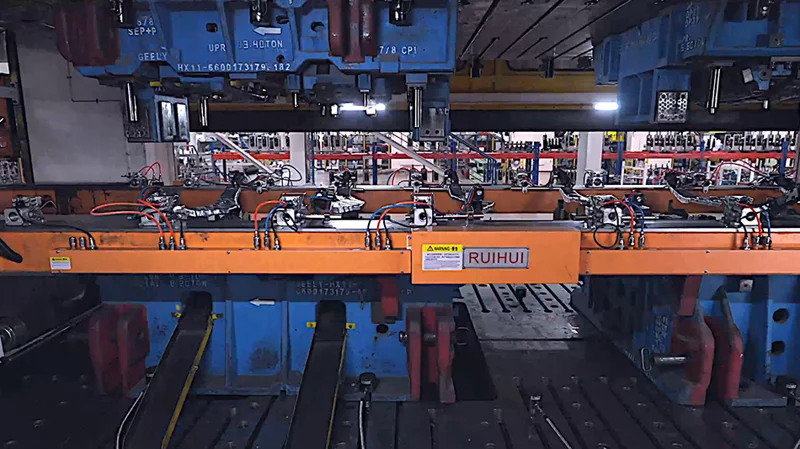
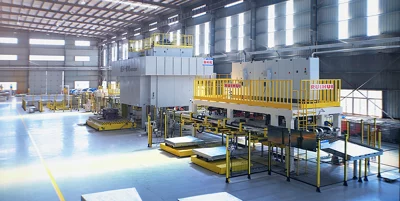
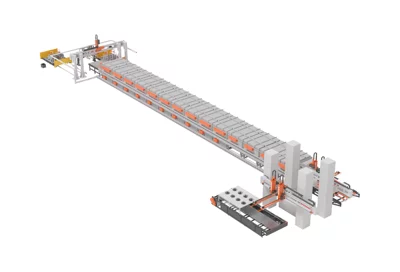
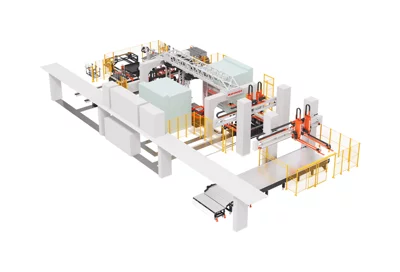
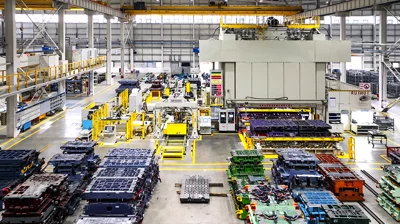
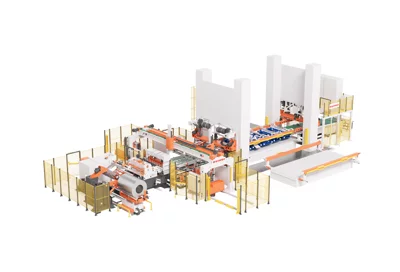
Let's start with the most tangible benefit—labor reduction. In traditional stamping production, almost every step required manual labor: from decoiling and loading coil material, to transferring semi-finished parts between presses, to final product stacking at the end. The inter-process transfer work in particular was not only tedious and physically demanding, but also prone to workplace injuries. The core logic of a 3-axis transfer robot stamping line is to take over this entire sequence of actions. Paired with a three-in-one feeder, it can automatically feed material starting from the coil, and then—inside a single large press (ranging from a few hundred to several thousand tons) with multiple stations—it acts like a pair of tireless "iron hands," precisely grasping workpieces from one station and transferring them to the next, and finally discharging the finished parts automatically.
This means that a line that previously required four or five strong workers may now need only one person for patrolling and monitoring, or even none at all in a fully automated configuration—freeing that person up for other tasks. This isn't just about saving on wages; it also solves the "difficulty of managing people" problem—machines don't have mood swings, don't call in sick, and certainly don't doze off at 2 AM and crush a die. Along with labor reduction, safety hazards are reduced, and because the robot positions parts with high precision, product consistency (and thus quality) is significantly improved.
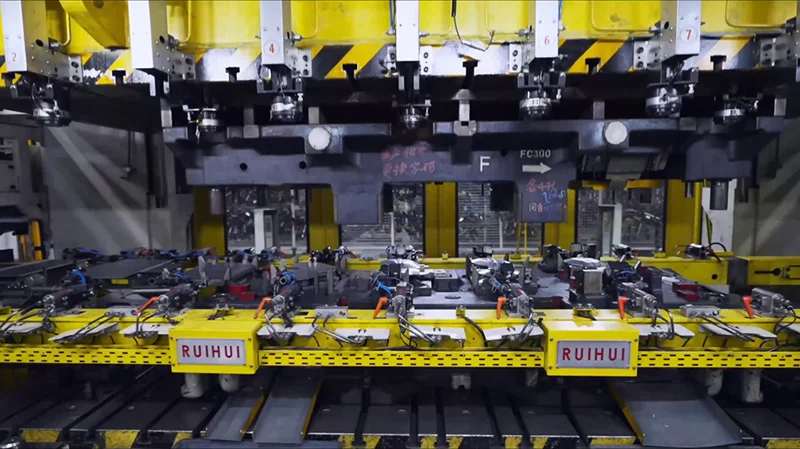
Now let's talk about efficiency gains. Many business owners worry that while a machine may be fast, can it keep up with their specific processes? In fact, the greatest advantage of a 3-axis transfer robot is its ability to complete multiple operations within a single large press. Its motion trajectory is precisely calculated, with X, Y, and Z axes working in coordination—picking, flipping, transferring, and placing all in one smooth sequence. Compared to manual labor, the robot maintains a constant cycle time and can operate 24 hours a day without stopping, directly boosting production efficiency.
Even more importantly, it drastically reduces intermediate waiting time. No matter how skilled a manual worker is at transferring parts, there is always a time lag when moving from one press to the next. In contrast, the 3-axis transfer robot shuttles directly between dies with virtually no pause. Feedback from customers who have already implemented the system shows that production efficiency typically increases by over 30% after switching to a 3-axis transfer robot. At the same time, because positioning is so precise, the scrap rate drops sharply, resulting in significant material cost savings—this is another direct benefit of improved product consistency.
Of course, this type of equipment cannot be used straight out of the box without preparation. It imposes strict requirements on die layout and press tonnage, which is why choosing the right solution provider is critical. When implementing a complete line solution, professional providers like Guangdong RuiHui Intelligent Technology Co., Ltd. typically start from the process fundamentals. They not only supply the 3-axis transfer robot, but also fully integrate the control logic of the front-end three-in-one feeder, decoiler, and back-end collection system. This "whole-line synergy" capability—built on years of practical experience—is far more effective at ensuring long-term stable operation than simply stacking equipment together.
In summary, the performance of a 3-axis transfer robot stamping line in reducing labor and increasing efficiency is beyond doubt. This isn't automation for automation's sake—it tangibly helps you lower labor costs, reduce safety risks, improve efficiency, and lower scrap rates through better product consistency. For business owners who want to thrive in this industry for the long haul, the math works out in every way.
With years of hands-on experience, I have honed my skills in navigating the complexities of global commerce, offering invaluable insights and solutions to address customer needs. My commitment to excellence and dedication to customer satisfaction ensure that I deliver exceptional service, guiding clients through every step of the trading process with confidence and proficiency.
You may also like
Related News
Latest Update