

How to Choose Between Powered Decoiler and Non-Powered Decoiler
Share to : 


Decoilers play a crucial role in stamping production. They can be divided into many different types, including powered and non-powered, single-head and double-headed. This article will help you understand powered decoilers and non-powered decoilers, and provide some selection advices.
About Powered Decoiler
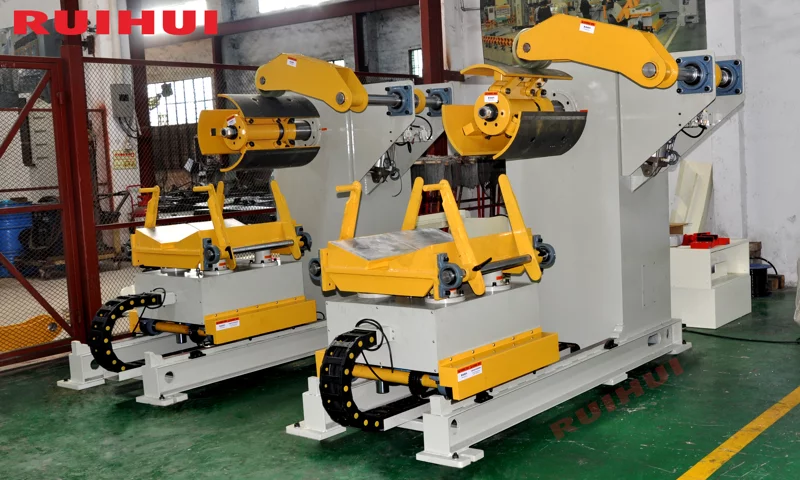 (RUIHUI's powered decoiler ME-500B.)
Advantages
1. Can Be Used as a Recoiler
The powered mandrel can rotate in the opposite direction of decoiling, allowing coil rewinding at the end of production.
2. Precise Tension Control
The rotation speed can be actively adjusted, enabling accurate tension control. This helps prevent loose winding, scratching, and ensures stable decoiling quality.
Disadvantages
Requires Speed Coordination
When downstream equipment has its own drive, both speeds must stay synchronized: If the decoiling speed is too fast, the coil may pile up or become loose. If the decoiling speed is too slow, excessive tension may occur, causing surface damage.
About Non-Powered Decoiler
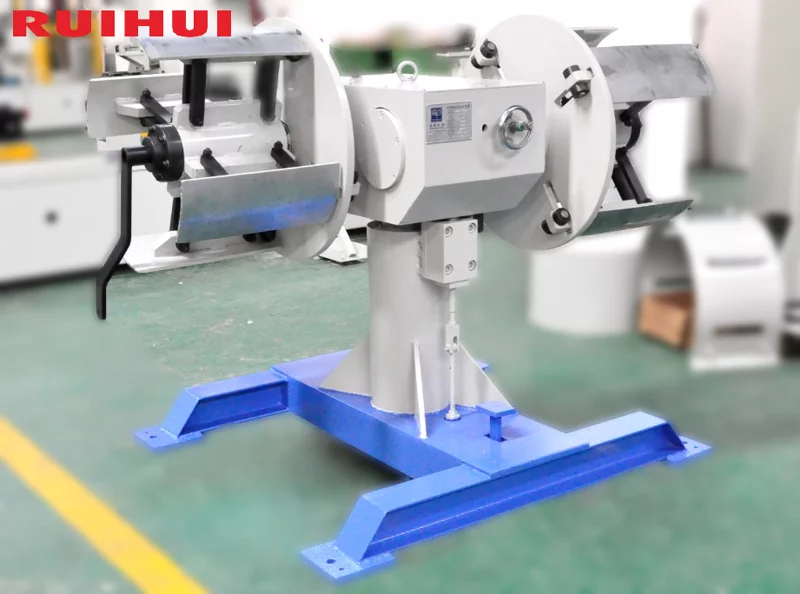 (RUIHUI's non-powered decoiler MDW-200.)
Advantages
1. Relatively Higher Decoiling Speed
The coil is pulled by downstream equipment. The stronger the pulling force, the faster the decoiling speed. This allows quick response in high-speed stamping lines.
2. Simple Structure and Lower Maintenance Cost
Non-powered decoiler has no motor. The machine relies mainly on mechanical components, which makes maintenance easier, more stable, and more cost-effective compared to a motorized decoiler.
Disadvantages
1. Not Suitable for Thin Materials
Since the coil is passively pulled, the force is more direct and less buffered. Thin materials may suffer from scratches or surface damage.
2. Depends on Downstream Equipment
If the downstream machine does not provide enough pulling force, the production cannot proceed. This places higher requirements on the downstream equipment driving force.
In general, powered decoilers are suitable for medium-speed processing and are widely applicable to most production scenarios. They offer greater flexibility compared to unpowered decoilers, but the cost is also higher. Non-powered decoilers are suitable for fast-paced processing of medium materials, and they are not recommended for thin sheet processing. If you are interested in decoilers or have any questions, you can contact us. Thank you for reading.
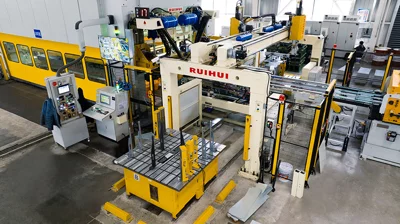
(This is a powered decoiler with a loading trolley.)
With years of hands-on experience, I have honed my skills in navigating the complexities of global commerce, offering invaluable insights and solutions to address customer needs. My commitment to excellence and dedication to customer satisfaction ensure that I deliver exceptional service, guiding clients through every step of the trading process with confidence and proficiency.