

Technology Used on Coil Straightener and Sheet Destacker in Aluminum Stamping
Share to : 


In the stamping industry, aluminum is widely used in the production of automobiles, home appliances, and electronic products due to its lightweight and high ductility. However, the physical properties of aluminum also place higher demands on processing equipment. This article will help you understand the functional design of coil straightening and sheet destacking in aluminum stamping.
Properties of Aluminum
1. Compared to steel, aluminum in common applications is generally softer and more sensitive to external forces, making it more prone to indentations and scratches.
2. Aluminum is a paramagnetic metal with extremely weak magnetism. It has almost no magnetic attraction and cannot be attracted by a magnet like magnetic metals such as carbon steel.
Aluminum Strip Straightening
1. Multiple Small-Diameter Polishing Rollers
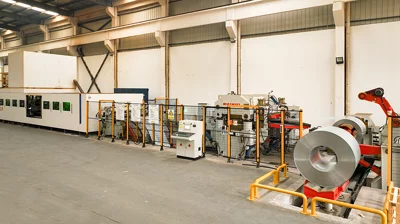
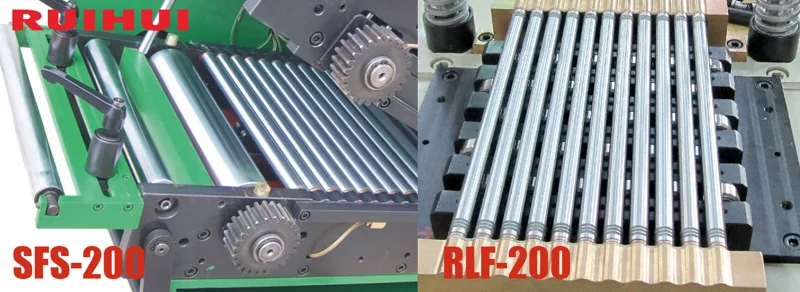 (Here is RUIHUI's straightener SFS-200 and RLF-200. You can see the straightening rollers have a small diameter, appearing slender.)
Aluminum coil straightening machines typically use multiple small-diameter leveling rollers, each precision-polished. This design evenly distributes pressure, reducing localized stress concentration and effectively preventing indentations or curling of the aluminum strip during straightening.
2. Liftable Upper Straightening Roller
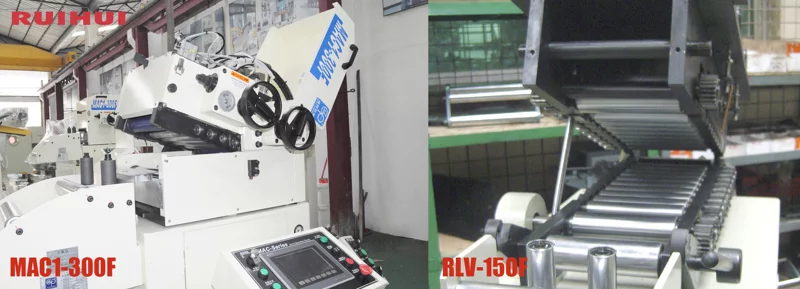 (Here is RUIHUI's NC straightener feeder MAC1-300F and straightener RLV-150F. You can see the upper straightening rollers are lifted.)
The upper straightening rollers are usually designed to be lift-up. This allows easy cleaning. It effectively prevents surface scratches on the aluminum strip caused by trapped foreign particles.
3. High-Precision Straightening Adjustment
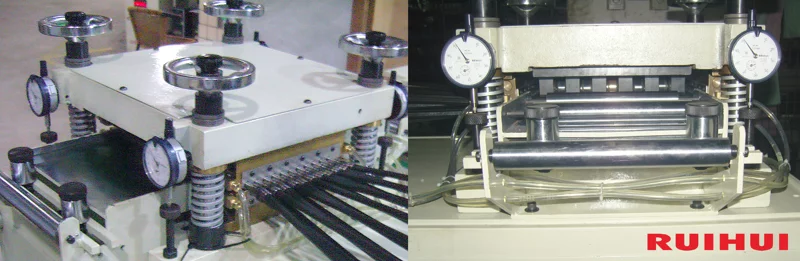 (Here is the straightening adjustment device of RUIHUI's straightener RLF.)
For aluminum strip straightening machines, the straightening adjustment is typically designed by a four-point manual handwheel system. Each adjustment point can be set individually to ensure precise parallel alignment of the leveling rollers. The adjustment accuracy is displayed by a dial indicator, ensuring stable and consistent straightening quality.
Aluminum Sheet Destacking
1. Sheet Separation
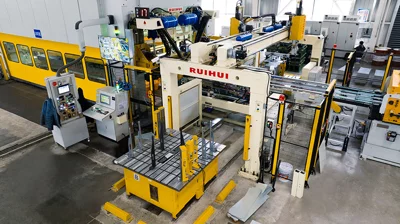
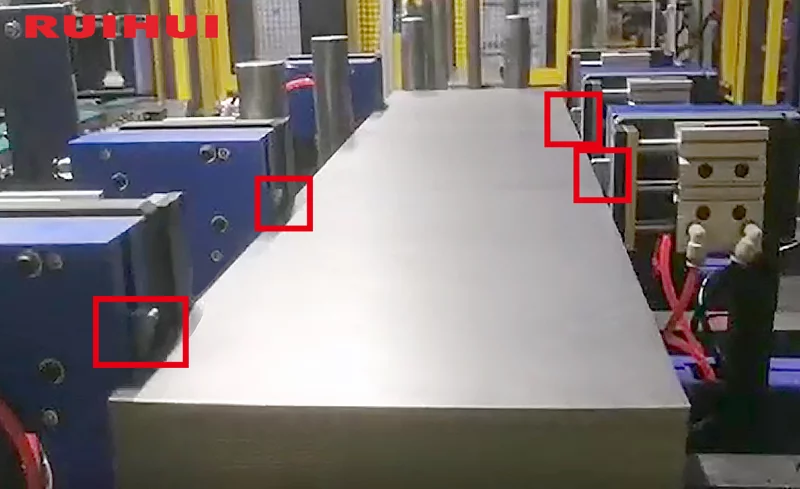 (Here is a mechanical sheet-separating device; you can see the ejected serrated blades.)
During destacking, the top few sheets of the stack are first separated. Then, the suction cups at the end of the destacking manipulator pick up the sheets. Magnetic metal sheets can use a magnetic separation device to finish separating. Aluminum sheets use a mechanical serrated separation device. The serrated plates directly contact the sheets, simulating manual peeling. If needed, an additional air-blowing device can assist separation by blowing into the gaps created by the serrated plates.
2. Sheet Conveyor
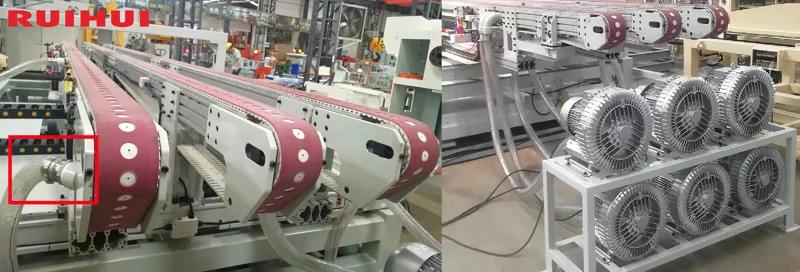 (You can see multiple small holes on the conveyor belt and an external vacuum pump.)
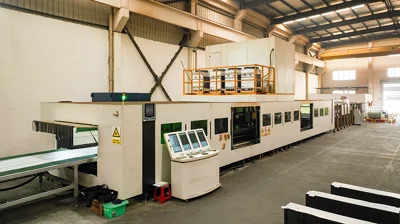
After picking up the sheets, the destacking manipulator places them on a conveyor to the press entry, where a 3-axis transfer handles further transfer. Magnetic sheets can use a magnetic conveyor to finish conveying. For aluminum sheets, the conveyor can be designed with vacuum suction, using multiple small holes set on the conveyor belt to achieve vacuum adsorption.
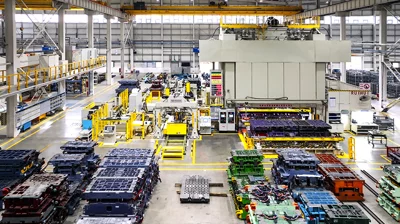
(Here is a video of the aluminum destacking. It is a truss destacking stamping production line. RUIHUI's destacking system has two designs: truss destacking and top suction destacking.)
With years of hands-on experience, I have honed my skills in navigating the complexities of global commerce, offering invaluable insights and solutions to address customer needs. My commitment to excellence and dedication to customer satisfaction ensure that I deliver exceptional service, guiding clients through every step of the trading process with confidence and proficiency.