

Understanding Three Different Types of Blanking Lines
Share to : 


In metal stamping, the sheet is stamped into shape, and the quality and precision of the sheet metal directly affect the quality of the final product. These sheet metals typically originate from coil blanking lines, where the coils are decoiled, straightened, and then stamped or cut. Common blanking lines include: cut to length blanking lines, press blanking lines, and laser blanking lines. This article will help you understand these three different types of blanking lines.
Cut to Length Blanking Line
Overview
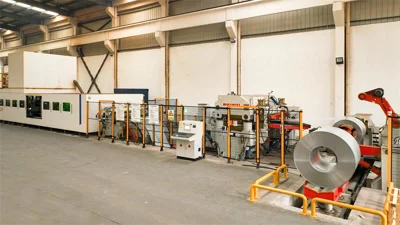
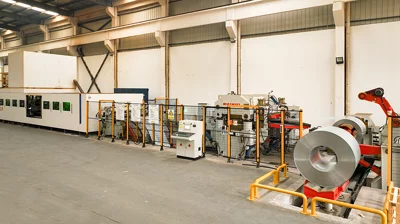
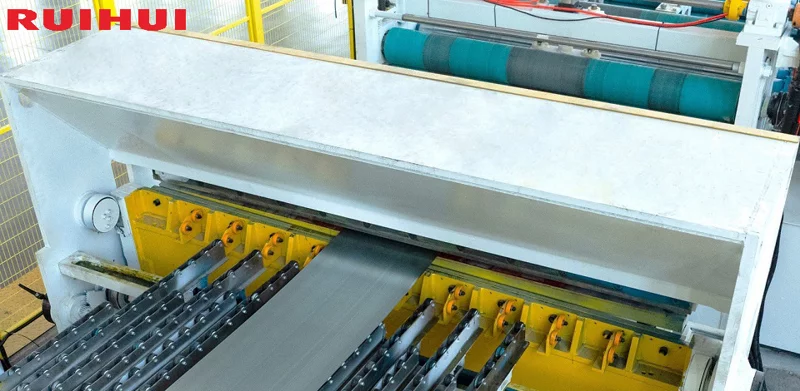 (This is a shearing machine for cut to length blanking line.)
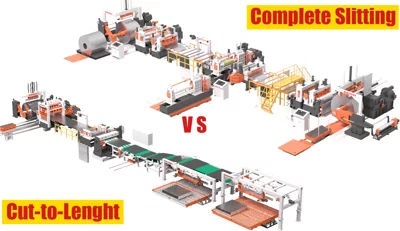
The cut to length blanking line uses a shearing machine to cut coiled material into sheets of fixed length. Based on the working mode of the shearing machine, it can be divided into oscillating shear or horizontal shear. Based on the movement mode of the metal strip, it can be divided into stop-and-shear and continuous shear.
Features
1. Relatively simple equipment structure, low cost, and easy maintenance.
2. Produces sheets with parallel or beveled edges, ensuring high consistency.
3. High speed, suitable for large-scale production of standardized sheets.
(Here is a oscillating shear blanking line.)
Press Blanking Line
Overview
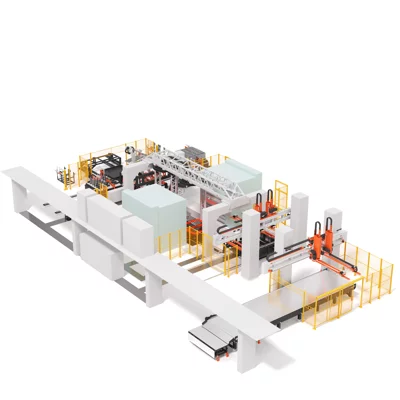
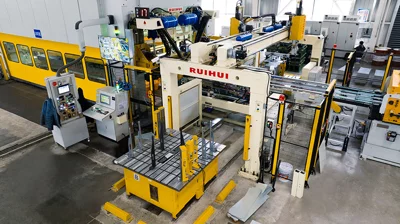
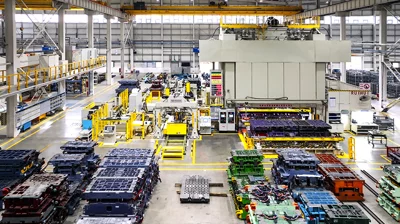
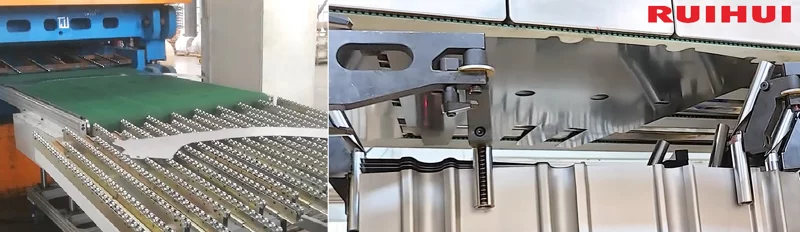 (There are irregularly shaped sheets obtained through press blanking line.)
A press blanking line uses a stamping press to complete the blanking process. It can perform punching and trimming to obtain simple, irregularly shaped sheets.
Features
1. By changing the dies, different simple shapes of sheets can be obtained.
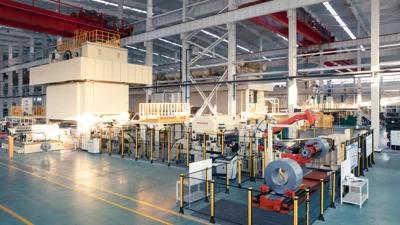
2. Moderate speed, determined by the stamping process, suitable for the production of various sheet materials. For regular metal sheets, the blanking speed of the high-speed press blanking line can reach 70 SPM.
(This is the press blanking line; you can see the irregularly shaped sheets.)
(This is the high-speed press blanking line.)
Laser Blanking Line
Overview
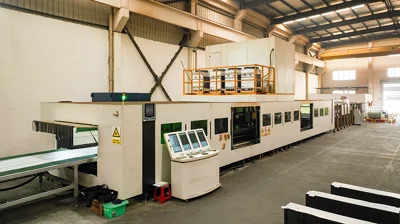
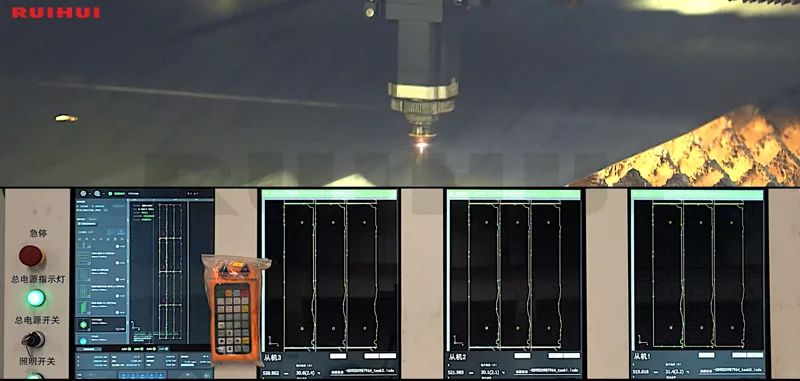 (This is the laser cutting system.)
Laser blanking lines use laser cutting to complete the blanking process. The CAD software completes the design of the part shape, the CAM software sets parameters (such as cutting layout, path, and laser power) based on the CAD drawing, and finally generates G-code. The CNC system executes the G-code to perform laser cutting.
Features
1. No molds required; product specifications and shapes can be quickly changed.
2. Moderate speed, but high material utilization when blanking complex shapes.
(This is the laser blanking line.)
This is a comparison of RUIHUI's three blanking lines. If you are interested in them or have any questions, you can contact us. Thank you for reading.
| Item | Cut-to-Length Blanking | Press Blanking | Laser Blanking |
| MAX Coil Width | 2000 mm | 1850 mm | 2250 mm |
| Coil Thickness | 0.4~4.0 mm | 0.5~3.2 mm | 0.6~3.5 mm |
| Sheet Shape | Straight or oblique cut | Simple irregular edges, Rectangle or hypotenuse | Various shapes (simple or complex) |
With years of hands-on experience, I have honed my skills in navigating the complexities of global commerce, offering invaluable insights and solutions to address customer needs. My commitment to excellence and dedication to customer satisfaction ensure that I deliver exceptional service, guiding clients through every step of the trading process with confidence and proficiency.